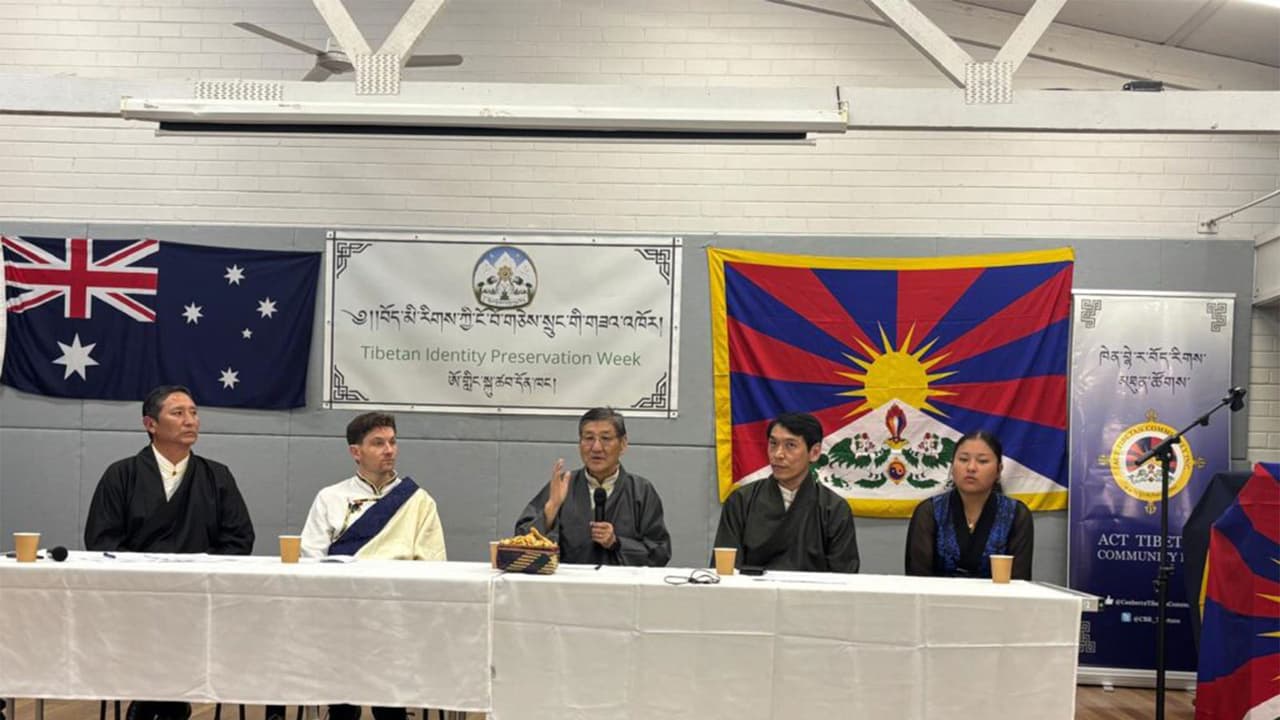
Concerns over preserving Tibetan national identity, language, and culture were raised during Tibetan National Identity Preservation Week in Canberra. Speakers discussed the impact of Chinese policies and the need to strengthen cultural education.
Concerns over the preservation of Tibetan national identity, language and culture were highlighted during Tibetan National Identity Preservation Week in Canberra, where speakers discussed what they described as the continuing impact of Chinese policies on Tibetans and the need to strengthen cultural and linguistic education.
According to the Central Tibetan Administration (CTA), the event was held in Canberra on September 23 and featured presentations by experts followed by a question-and-answer session with members of the Tibetan community. The CTA reported that Representative Karma Singey delivered the keynote address, explaining the significance of observing Tibetan National Identity Preservation Week and outlining the developments that led the Kashag to designate the final week of September for the annual observance.
Expert Analysis on Tibetan Identity
Legal and Political Impact
The CTA reported that Sonam Norbu Dagpo, former Chief Justice Commissioner of the Tibetan Supreme Justice Commission (TSJC), spoke about Chinese policies in Tibet and their alleged impact on Tibetan identity since China’s occupation of Tibet. Dagpo also discussed China’s “Law on Promoting Ethnic Unity and Progress”, passed earlier this year.
According to the CTA report, Dagpo noted that although the legislation applies to nationalities across the People’s Republic of China, he argued that it has particular implications for Tibetans and their efforts to preserve their distinct identity.
Economic and Demographic Perspective
The CTA further reported that Tenzin Lhadar Ringapontsang, an economist and policy advisor who has served with Australia’s Department of Finance, the Treasury, the Reserve Bank of Australia and the Prime Minister’s Department, examined the preservation of Tibetan identity from an economic perspective.
Lhadar highlighted the importance of maintaining a stable birth rate and population, arguing that demographic continuity is an important factor in preserving Tibetan identity over generations.
The event was jointly organised by the Tibet Information Office and the ACT Tibetan Community, with the CTA reporting that the programme formed part of the annual Tibetan National Identity Preservation Week observance. (ANI)
(Except for the headline, this story has not been edited by Asianetnews Editorial staff and is published from a syndicated feed.)