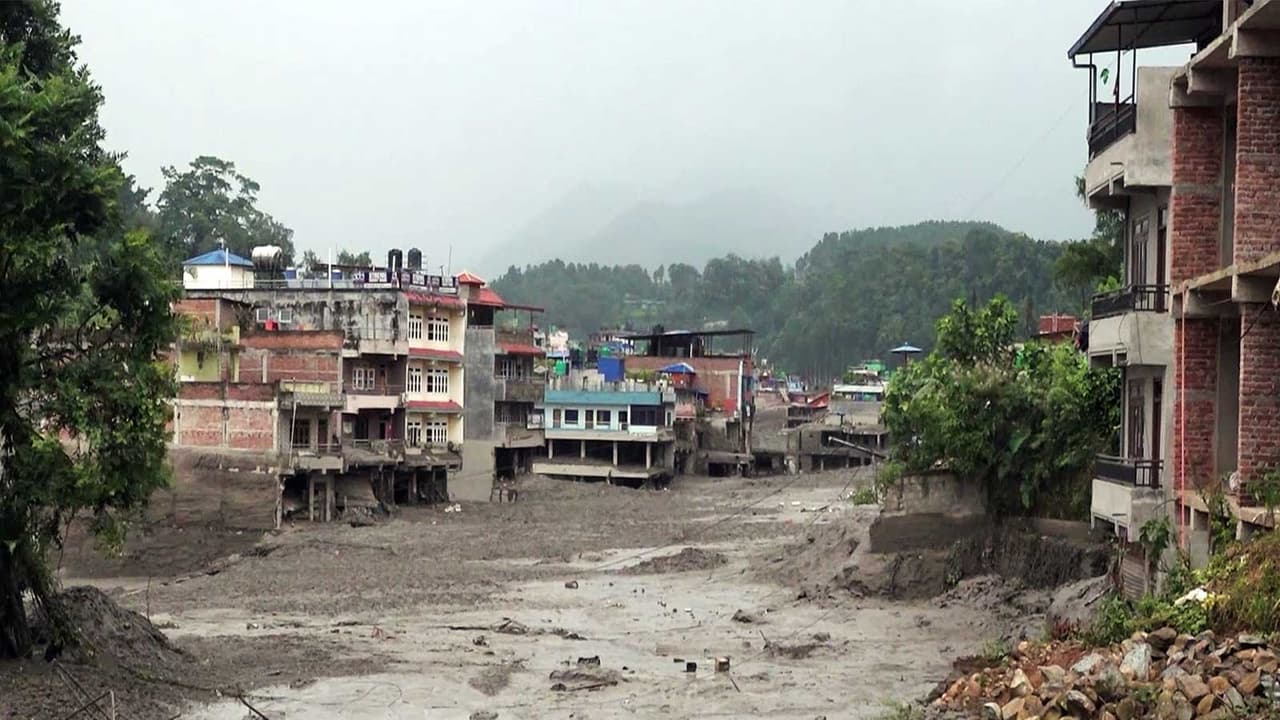
A catastrophic flash flood on the Tibet-Nepal border is a stark warning from a destabilising cryosphere. An analysis in The Diplomat highlights the dangerous intersection of geology, climate shifts, infrastructure, and fragmented oversight.
The catastrophic flash flood that struck the Tibet-Nepal border on August 26 serves as a stark warning from a rapidly destabilising cryosphere, demanding a complete shift in how cross-border environmental risks are handled, according to an extensive analysis published in The Diplomat.
According to The Diplomat, the disaster highlighted the dangerous intersection of geological fragility, climate shifts, infrastructure growth, and fragmented environmental oversight. The commentary stressed that “the Himalayan-Tibetan ecosystem must be approached not merely as an environmental space but as a critical arena of transboundary climate and cryosphere security.”
A Complex Cascading Event
Initial assumptions pointed towards tectonic activity as the catalyst, but subsequent evaluations by the U.S. Geological Survey determined that the seismic tremors resulted from the collapse itself. A massive section of a high-altitude glacier situated at approximately 5,200 metres broke away, dropping roughly 1,200 metres into the valley below. This colossal ice-rock avalanche generated a powerful debris-laden torrent that briefly choked the Lhende Khola River before unleashing a destructive wave downstream.
Rather than a conventional rain-induced flood or an earthquake, experts classify it as a complex high-mountain cascading event involving ice, rock, and steep topography. The disaster underscores a broader environmental crisis across the Hindu Kush Himalayas, where retreating glaciers, shifting weather patterns, and permafrost degradation are multiplying hazards like debris flows and glacial lake outbursts.
Systemic Risk Across Asia’s Water Tower
The Diplomat noted that this event forms part of an emerging pattern of compound Himalayan hazards, mirroring previous incidents such as the July 2025 Bhotekoshi River flood caused by a drained supraglacial lake in Tibet. Because the Tibetan Plateau serves as Asia’s primary hydrological reservoir, upstream environmental disruptions can instantly transform into downstream emergencies across national boundaries.
Highlighting this systemic risk, the publication noted its previous research, the Stockholm Paper “Whither Tibet in the Climate Crisis Agenda?”, which cautioned that Tibet is undergoing profound ecological shifts whose impacts extend far beyond China’s borders.
Infrastructure and Compounded Vulnerabilities
The relationship between large-scale construction and environmental stability forms another critical pillar of the analysis. While The Diplomat explicitly cautioned against unscientific assumptions, stating that “no conclusive evidence currently shows that a particular Chinese infrastructure project directly caused the August 26 glacier collapse,” it warned that intense construction in fragile high-altitude zones compounds natural vulnerabilities.
Road excavations, tunnelling, mining, and hydropower projects established within narrow river corridors can inadvertently heighten exposure to flash floods and slope failures. Consequently, The Diplomat argued that development models suited for stable environments are inadequate for rapidly warming mountainous terrain, urging rigorous scientific assessments and transparent hazard mapping before undertaking major projects in sensitive zones.
Geopolitical Realities and Shared Security
For downstream countries like Nepal, the catastrophe illustrates an uncomfortable geopolitical reality. Because Kathmandu sits below climatic processes beyond its control, managing cross-border environmental safety is a matter of survival rather than politics. The Diplomat maintained that “Timely information sharing on the upstream environment should not be regarded as diplomatic generosity from China,” pointing to the urgent need for institutionalised data sharing, early warning coordination, and joint risk assessments.
This diplomatic principle extends to other regional nations, including India and Bhutan, ensuring that territorial sovereignty does not override the shared safety of neighbouring populations.
A Call for International Cooperation
To prevent future tragedies, The Diplomat called for international frameworks like the UNFCCC to incorporate Himalayan cryosphere security more centrally into adaptation and loss-and-damage discussions. Bringing Tibet into global climate security dialogues is essential for fostering cooperative scientific observation rather than political friction.
Ultimately, The Diplomat stated that when geological hazards and river systems cross international frontiers, environmental vulnerability becomes shared security, warning that ignoring these lessons risks failures in both climate adaptation and diplomacy.
(Except for the headline, this story has not been edited by Asianet Newsable English staff and is published from a syndicated feed.)