flex-fuel
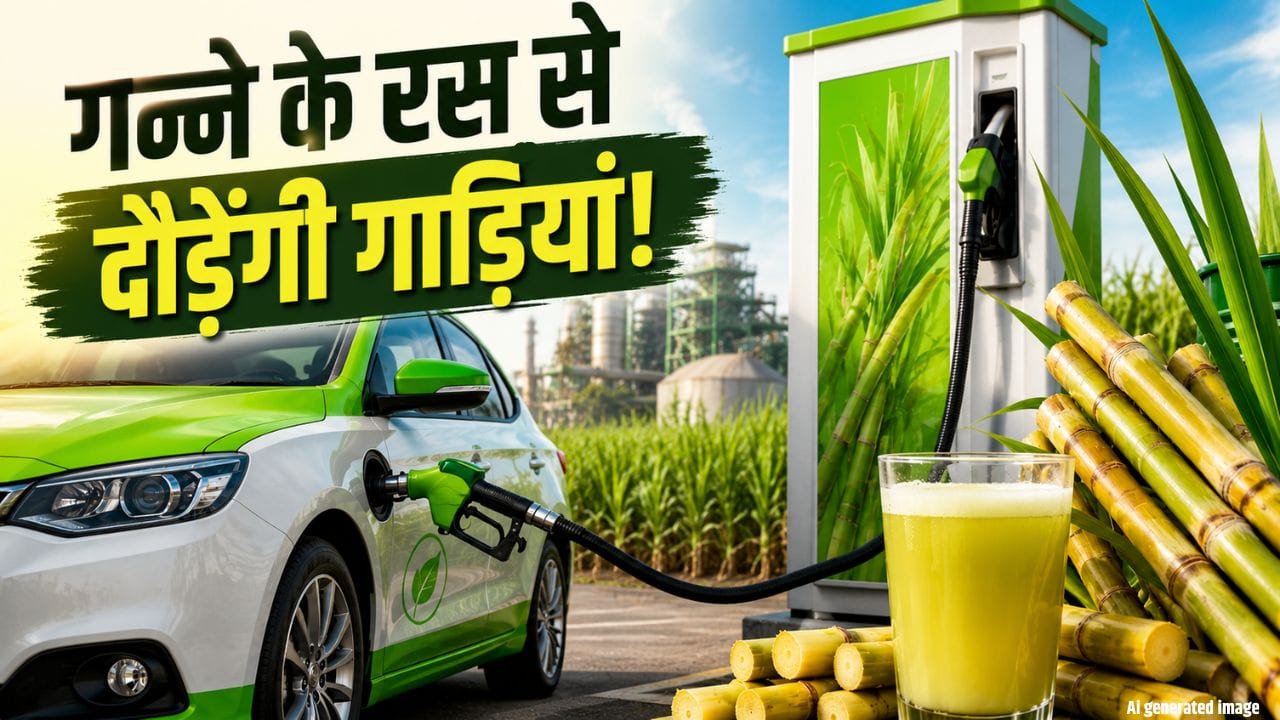
Very soon, vehicles can be seen running on the country’s roads using energy made from sugarcane juice and corn, i.e. ethanol. The government is preparing to rapidly launch Flex-Fuel vehicles in the country, so that our dependence on petrol-diesel-CNG can end. However, just before this revolutionary change, Indian automobile companies have put a big ball in the government’s court. Vehicle manufacturers clearly say that unless the prices of high-ethanol fuel (like E85 and E100) are reduced significantly compared to petrol, customers will not show any interest in adopting these new vehicles.
What are E85 and E100?
First of all it is important to understand what E85 and E100 are. E85 means the fuel contains 85 percent ethanol and only 15 percent petrol, while E100 is completely 100 percent pure ethanol. In the recent discussions held between the Petroleum Ministry, Oil Marketing Companies and the Society of Indian Automobile Manufacturers (SIAM), it has clearly emerged that vehicles will not be sold in showrooms just by changing the technology.
Ethanol has slightly less energy density than petrol, which has a direct impact on the mileage of the vehicle. Auto companies have given the perfect example of Brazil. In Brazil, ethanol is much cheaper than petrol, so people there buy flex-fuel vehicles indiscriminately. In India too, the industry demands that customers should see direct savings in fuel bills, otherwise people will continue to run on E20 (20% ethanol) fuel.
New technology may increase the price of vehicles
High-Ethanol fuel cannot be used in ordinary engines. For this, major technical changes will have to be made in the engine and fuel system of the vehicles, which will increase the cost of the vehicles. To reduce this additional economic burden, the auto industry has demanded a huge cut in GST from the government.
At present, these vehicles also attract 18 to 40 percent tax like normal petrol and diesel vehicles. Big companies like Hero MotoCorp believe that in a price-sensitive market like India, it is very important to get tax exemption in the initial phase. However, the government is currently reluctant to make a big tax cut on cars, because doing so will put these vehicles in direct competition with electric vehicles (which have only 5% GST). At present, there is more hope for policy relief in the two-wheeler segment.
Why is the government putting so much emphasis on flex-fuel?
Why is the government putting so much emphasis on flex-fuel? The direct answer to this lies in the energy security of the country. India imports about 90 percent of its crude oil needs, on which more than $120 billion of foreign exchange is spent every year. A large part of it comes from West Asia, where situations of tension and war often prevail.
According to statistics, about 95-98 percent of the total demand of petrol and 65-70 percent of diesel in the country comes directly from the transport sector. In such a situation, large scale use of ethanol will directly save the country’s money and eliminate dependence on crude oil imports.
dream of 100% ethanol
Bureau of Indian Standards (BIS) has issued new technical standards for high-ethanol petrol (E22 to E30). From Maruti Suzuki, Toyota and Tata Motors to Bajaj and Honda, many auto companies have presented their flex-fuel prototypes to the world. Maruti Suzuki management has also made it clear that the industry is fully prepared to follow the new standards.
On the other hand, ethanol production has also increased rapidly. The production capacity in the country has reached close to 20 billion litres, while the current demand is only around 11 billion litres. But there are challenges in this path also. There is huge consumption of water in making ethanol from sugarcane. In such a situation, former experts of NITI Aayog suggest that the use of agricultural waste (second generation ethanol) will have to be increased so that the environmental balance is also maintained.
Also read- Petrol Diesel Price Today: Latest rates of petrol and diesel released, check the price of your city before filling the tank.