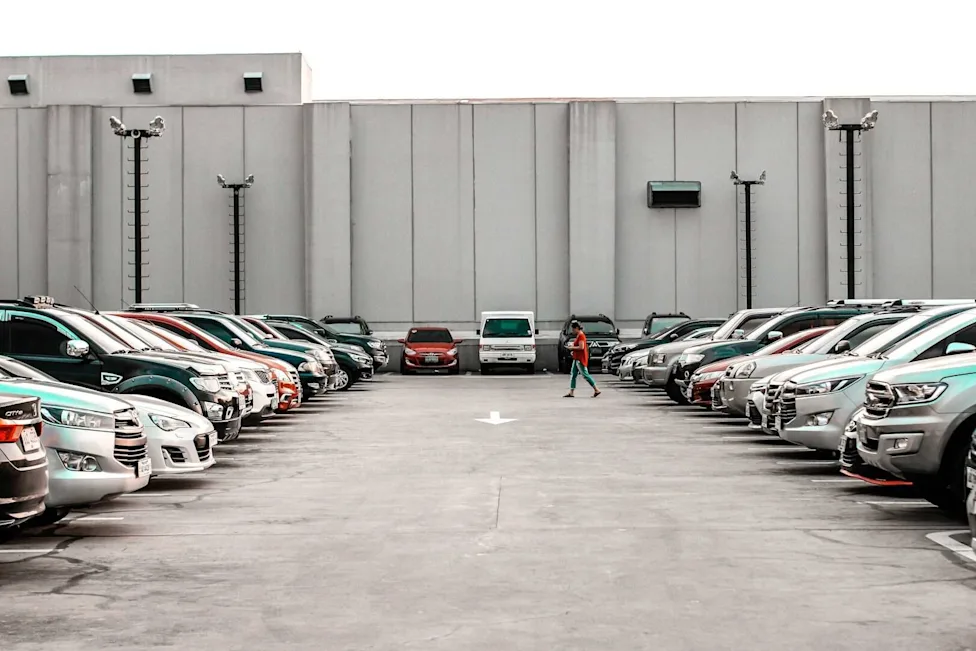
There used to be a kind of car that didn’t ask much of you. It didn’t have a 15-inch touchscreen that needed software updates. It didn’t have ambient lighting with 64 user-selectable colors or a subscription to keep the heated seats warm. It had crank windows, maybe, or if you were feeling fancy, power ones. It cost less than a year of in-state tuition, and it was the thing that got a teenager to their first job, got a single parent to the second shift, got a recent immigrant from the apartment to the warehouse and back. It was the floor of American car ownership. The on-ramp.
That car is gone. Not endangered — gone, in any meaningful sense. In 2017, you could walk into the American new-car market and choose from roughly 36 different models that started under $25,000. As of 2026, that number is about four. Depending on how you count destination charges and which trims technically squeak in under the wire, you might generously get to five. Kelley Blue Book now reports that new vehicles priced under $25,000 account for less than 5 percent of all sales. The entry-level car didn’t get worse. It got deleted.
And the way it died tells you almost everything about who the American car industry has decided it’s actually for.
The numbers that should make you stop
Let’s anchor this, because the headline figures are genuinely staggering once you sit with them.
The average price Americans paid for a new vehicle crossed $50,000 in late 2025 and has hovered around the $49,000–$50,000 mark ever since, according to data from Kelley Blue Book and Cox Automotive. Edmunds clocked the average transaction price at around $47,976 as of mid-2025. Either way, the typical new car now costs roughly twice what the cheapest one on the market does.
Speaking of the cheapest one: that title currently belongs to the Hyundai Venue, a perfectly honest little front-wheel-drive crossover-shaped-hatchback that starts at $21,695 including destination. Behind it you’ve got the Chevy Trax (~$23,495), the Kia K4 (~$23,535), the Nissan Sentra (~$23,845), and the Hyundai Elantra (~$23,870). The Nissan Kicks and the base Toyota Corolla sedan flirt with the line at around $23,925 and $24,120. That’s essentially the whole list. Once you clear $25K, the field opens back up — but $25K was never the point. The point was the bottom rung, and the bottom rung has been sawed off.
Now layer on the financing. The average amount being financed on a new vehicle has climbed into the $30,000–$42,000 range, with new-car interest rates sitting north of 6.5 percent. The average monthly new-car payment has marched from the mid-$500s toward, by some measures, $749 a month — a number that used to be a luxury-lease figure and is now just Tuesday. Repossessions have been creeping back toward Great Recession levels. And the Wall Street Journal reported that roughly one million prospective new-car buyers have simply vanished from the market since the start of the decade. They didn’t trade down. They left.
That’s the part worth repeating: a million people didn’t buy a cheaper new car. They were shown the door entirely.
So what actually killed it?
It’s tempting to find a single villain, but the affordable car didn’t die of one thing. It got crowded out, taxed, regulated, and quietly euthanized by its own manufacturers — usually for reasons that, taken individually, each sound almost reasonable.
The margins killed it first. This is the unsexy, structural cause, and it’s the biggest one. Automakers make very little money on a $22,000 economy car and a great deal of money on a $55,000 crossover. They have finite factory capacity, finite engineering hours, finite dealer floor space. Given the choice between building a Fiesta and building an Escape, the spreadsheet says Escape every single time. Over the last decade, that spreadsheet logic compounded across the entire industry. Ford famously walked away from sedans in North America almost entirely. The cheap car wasn’t losing to a competitor — it was losing to its own company’s more profitable products. Every dollar of investment chased the SUV and the truck, because that’s where the profit lived.
Feature creep killed it next. The modern car comes standard with a suite of equipment that would have been science fiction in a 2010 economy car: multiple airbags, automatic emergency braking, lane-keep assist, backup cameras, big standard touchscreens, tire-pressure monitoring, the works. A lot of this is genuinely good — these are real safety gains, and people don’t die in numbers they used to. But “standard equipment” is a polite phrase for “you no longer have the option to buy the car without it.” The decontented, bare-bones price leader became literally impractical to build, and the cost floor rose with it. The cheapest car you can buy today is more capable than the average car from 2010. It’s also priced like one.
Then the tariffs came and stomped on the corpse. Here’s the brutal geographic fact: the affordable car is disproportionately an imported car. Cox Automotive’s analysis found that the 25 percent tariff on imported vehicles applies to nearly 80 percent of vehicles priced under $30,000. The cheap end of the market is built in Mexico, in South Korea, in places where the labor math allows a sub-$25K car to exist at all. When you put a 25 percent tax on imported cars and parts, you’re not taxing the market evenly — you’re aiming directly at the bottom of it. Reuters estimated the tariffs added on the order of $2,300 per vehicle in cost, and destination fees jumped around 8.5 percent on top. Some foreign automakers have reportedly floated pulling their cheapest models out of the U.S. entirely, because at those margins, why bother. A luxury SUV can eat a tariff. A $20,000 hatchback cannot. The tariff is, functionally, a regressive tax that lands hardest on exactly the buyers with the least room to absorb it.
And the pandemic poisoned the well it would have fled to. When people can’t afford a new car, the historical answer was simple: buy used. But COVID-era production cuts blew a hole in the used market estimated at 7.5 to 8 million vehicles — cars that were never built and therefore never aged into affordable three-year-old inventory. The result is a used market where prices crept toward $30,000 and a clean used Civic costs what a new one used to. The escape hatch is welded shut.
Who actually gets left behind
Here’s where it stops being a car-enthusiast story and becomes a class story, because the disappearance of the cheap new car isn’t felt evenly. It’s felt almost entirely by the people who had the least to begin with.
A new car was never just transportation. For a working-class buyer with thin or damaged credit, a new car was the one reliable, financeable, warrantied asset they could actually qualify for — predictable payments, no surprise transmission, a vehicle that would start at 5 a.m. for a decade. The used market, by contrast, is where you inherit someone else’s problems and pay subprime interest for the privilege. When you delete the affordable new car, you don’t push those buyers toward a slightly older new car. You push them down into the worst, most predatory corner of the used market — high-mileage cars, high-interest “buy here, pay here” lots, loans engineered to be repossessed. The repo numbers climbing toward recession-era levels aren’t an abstraction. They’re people who stretched for a car they couldn’t quite reach because the car they could reach no longer exists.
And the cruel mechanism is that none of the people making these decisions experience the consequences. The product planner choosing the crossover over the sedan, the executive negotiating tariff carve-outs for premium models, the dealer who’d rather not stock a low-margin econobox — for all of them, the affordable car is a rounding error. For the person it served, it was the entire difference between having a job and not being able to get to one. The market optimized itself toward the customers it found most profitable and quietly stopped serving everyone below that line, and because those customers are the least visible and the least powerful, almost nobody with any leverage noticed.
We tell ourselves a comforting story that this is just “the market” — that consumers wanted bigger, taller, more loaded vehicles and the industry simply gave them what they asked for. There’s a grain of truth in it. Americans do love a crossover. But “the market” is not a force of nature. It is a series of choices: to chase margin, to standardize expensive content, to tax imports, to let the used pipeline run dry. Each choice had a beneficiary, and it generally wasn’t the person who needed a $19,000 car.
The part where it doesn’t have to be this way
The grimly funny thing is that the affordable car still can be built. The cheap models that survive aren’t bad — the current Venue, Trax, and Sentra are objectively better cars than the segment offered fifteen years ago. The engineering knowledge exists. The factories exist. The only thing that’s gone missing is the will to prioritize the bottom of the market over the top of it, and the policy environment to make doing so anything other than a money-loser.
So no, the sub-$25,000 new car wasn’t killed by some inevitable law of economics. It was killed by a thousand individually defensible decisions that added up to a single indefensible outcome: a country where the new-car market has a velvet rope, and a million people a year who used to be inside it are now standing on the wrong side, watching the average payment tick past $700 a month, doing math that no longer adds up.
The entry-level car was never the most exciting thing the industry made. It was just the most important. And we let it go extinct without much of a funeral.
A note on sourcing: the figures here are drawn from public reporting by Kelley Blue Book / Cox Automotive, Edmunds, Reuters, and the Wall Street Journal. Pricing and transaction-price data move month to month, so confirm the latest KBB/Cox transaction-price release and the current Edmunds “cheapest new cars” list before publishing.