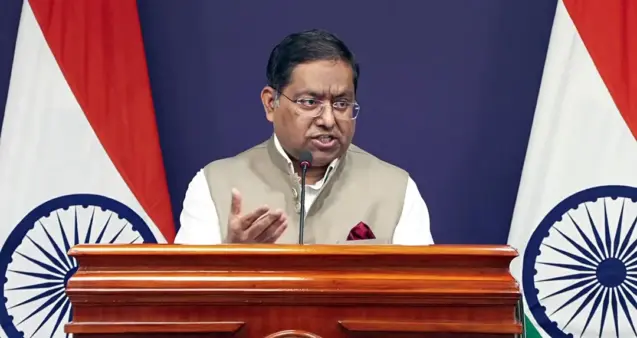
India is “closely monitoring” a proposed US law that could impose tariffs of up to 100 per cent on countries purchasing Russian oil and gas, the Ministry of External Affairs (MEA) said on Friday (Jul 31), after the legislation cleared the US Senate.
Addressing the weekly media briefing, MEA spokesperson Randhir Jaiswal said New Delhi was keeping a close watch on developments in Washington while continuing to engage with US authorities on the issue. “We are closely monitoring the developments,” Jaiswal said.
India’s security needs come first
Reiterating India’s long-standing position on energy imports, he stressed that the country’s decisions are driven by its energy security needs and national priorities.
“On energy security, our position has been clarified and very well articulated on several occasions. It is something which is predicated on our national priorities and on securing the energy needs of our 1.4 billion people through diversified sources, which includes the US,” he said.
Jaiswal added that India remains in touch with relevant stakeholders in the United States regarding the proposed legislation. “We remain engaged with relevant stakeholders in the US at various levels on this particular matter,” he said.
Why does the US want to impose a 100% tariff on India?
The US is not targeting India solely. The comments come after the US Senate passed the Sanctioning Russia and Iran Act of 2026 by an 86-12 vote. The bill will now move to the House of Representatives for consideration.
If approved and signed into law, the legislation would give US President Donald Trump the authority to impose both primary and secondary sanctions on Russia and entities supporting its economy.
It also proposes tariffs of up to 100 per cent on imports from countries that purchase significant volumes of Russian oil and gas or assist Moscow in circumventing sanctions.
Under Section 113 of the proposed legislation, the punitive tariffs could apply to the five largest importers of Russian energy, currently identified as India, China, Slovakia, Hungary and Azerbaijan. The bill also targets countries involved in facilitating Russia’s so-called “shadow fleet” used to transport sanctioned oil.
Additionally, the proposed law requires the US Trade Representative to review the world’s largest buyers of Russian hydrocarbons every 180 days, allowing Washington to adjust tariff measures based on changing import patterns.
The legislation is part of Washington’s broader effort to increase economic pressure on Moscow while discouraging countries from continuing large-scale purchases of Russian energy.