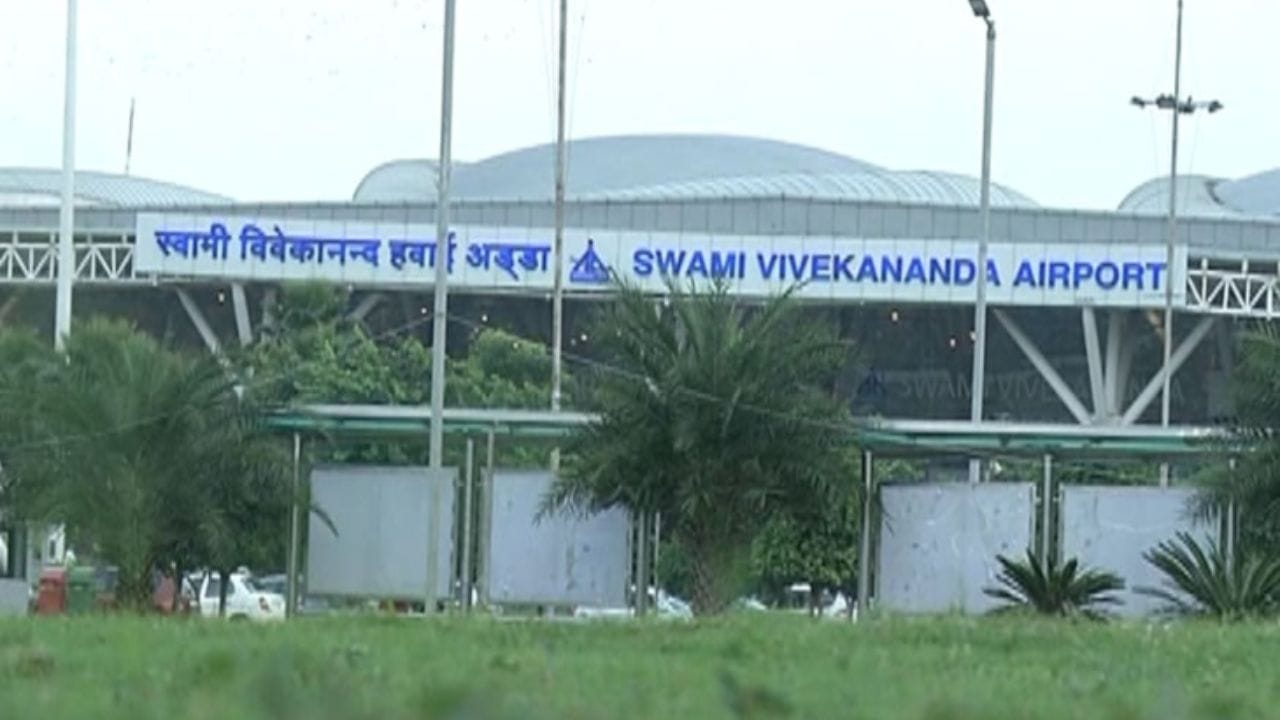
Raipur’s Swami Vivekananda Airport
A farmer from Chhattisgarh has filed a unique petition in the Supreme Court. The farmer claims that the land on which Raipur’s Swami Vivekananda Airport is built today was once the ancestral land of his family. On this basis, he has demanded compensation of Rs 3,500 crore. At present the matter is under consideration in the Supreme Court and no final decision has been taken yet.
Farmer’s claim- This land belonged to my ancestors
53-year-old Ashwini Bande says that the land on which the airport terminal and the entire complex is built, earlier belonged to her family. According to him, during the Second World War, in 1942, the British government had taken this land into its possession for military needs. Bande says that at that time the government had taken this land only temporarily and had promised to return it after the war was over. But neither the land was returned nor any compensation was given to the family.
Fighting legal battle for 35 years
Ashwini Bande says that he has been fighting a legal battle in this matter for the last 35 years. During this time, he has collected documents from government archives, libraries and many government departments across the country. They claim that these records prove that the land was never permanently acquired. According to Bande, he has spent Rs 15 to 20 crore so far in this long legal struggle.
After all, why are they asking for Rs 3,500 crore?
According to Bande, during the Second World War, about 30 acres 18 decimal land of his family was taken to build Mana Airfield. He says that at that time the government had made a provision to pay rent of Rs 1,300 every year in exchange for this land, but the family never received this amount. Also, the land was not returned even after the war ended. On these grounds, he has demanded a compensation of about Rs 3,500 crore from the Supreme Court. However, the court has not yet given any final verdict in this matter.
Citing old government records
Bande says that the Defense of India Act was abolished in 1946. After this, a new law came into force in 1952, under which the management of such lands was handed over to different government departments. He alleges that during this period the rights of his family were ignored.
He told that recently in an exhibition organized by the Culture Department in Raipur, he found old government records related to the airfield. Later he also obtained certified copies of these documents under the Public Service Guarantee Act. Bande believes that these records further strengthen his claim.
What did the Culture Department say?
Officials of the Culture Department have admitted that they have historical records related to land acquisition of that period, in which the names of many farmers are recorded. However, the department did not say who was the owner of the land or whether Ashwini Bande’s claim was true or not. At present the entire matter is pending in the Supreme Court and now only the court will decide how legally correct the farmer’s claim is.