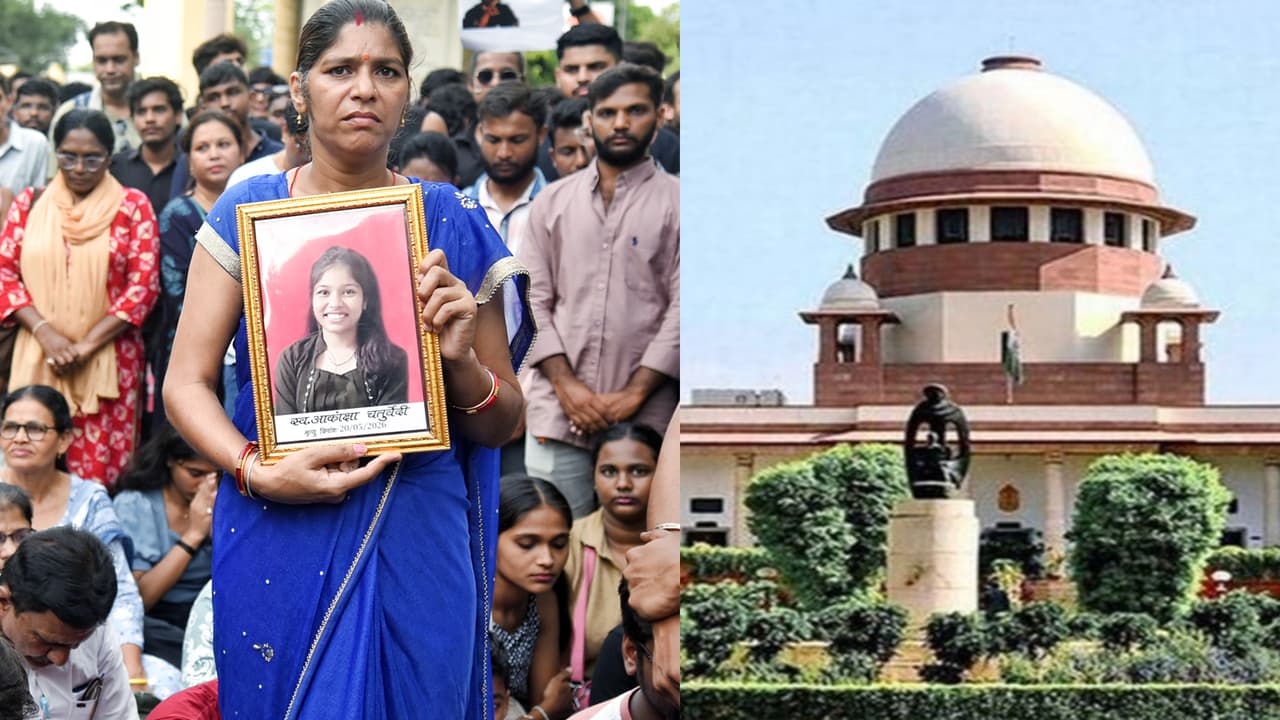
On NEET protests, Supreme Court hinted at independent investigation of police action, formation of SIT and creation of national protocol for protests.
NEET Protest Hearing: More than a week after the ‘Cockroach Janata Party’ (CJP) protest at Jantar Mantar on July 20, the echo of the case reached the Supreme Court. During the protests, traffic was affected in many areas of Delhi and its effect was seen in other parts of the country as well. Now more than the demonstration, there is discussion about the police action and the allegations against it. The Supreme Court on Tuesday heard petitions alleging excessive use of force by the police against students protesting against the NEET paper leak and alleged irregularities in the examination.
CJI Surya Kant’s bench stressed the need for independent investigation
A bench headed by Chief Justice of India (CJI) Surya Kant said that an independent, impartial and transparent investigation into the serious allegations leveled against the police should be considered. The petitions have alleged that pellet guns, tear gas, lathi charge, electric shock weapons and other force were used during the demonstration. The court did not make any final comment on these allegations, but said that prima facie these allegations form the basis for the need for an impartial investigation.
Indications for constituting SIT or high-powered committee
The Supreme Court indicated that a Special Investigation Team (SIT) or a high-powered committee may be formed to investigate the case. The bench said the objective of the investigation should not only be to fix responsibility but also to formulate a uniform national protocol across the country for future protests and crowd control.
5 biggest things from the Supreme Court hearing
1. Action should be taken against those who take law into their own hands
The court said that if the investigation proves that any party has taken law into its own hands or committed atrocities, then legal action should be taken against it. The bench said that once a clear protocol is decided, accountability should be fixed for all those violating it.
2. Why should there not be an independent investigation?
The CJI raised the question as to why an independent inquiry should not be conducted into serious allegations related to police action and injuries to women, lawyers and media persons. The court said that prima facie these allegations demand a fair and transparent investigation.
3. Protests are natural in democracy
The Supreme Court said that protests are a normal and necessary process in a democracy. The bench suggested that a clear national protocol should be prepared for police action and crowd control, which could be updated from time to time as per the changing circumstances.
4. Attacks on police should also be investigated
The court said that if policemen have been attacked then they should also be investigated impartially. The bench also said that it should be found out whether those involved in the violence were the protesting students or other people who had allegedly entered the protest. It was also mentioned during the hearing that more than 200 policemen were injured and their condition should also be made a part of the investigation.
5. It will be necessary to follow the national protocol
The Supreme Court said that if a national protocol is made for protests in future, it will have to be followed by all parties. The Court believes that the proposed investigation should not be limited only to bringing out the truth about the current incidents, but should also be helpful in formulating clear guidelines for the future.
Other important instructions of the Supreme Court
1- Consideration of independent investigation of police action
The court said that the allegations of alleged police excesses against students deserve a fair and independent investigation.
2- Notice issued to states
The Supreme Court has issued notices to many states including Maharashtra, Madhya Pradesh and sought answers.
3- Relief to protesters below 18 years of age
The court directed that the protesting students, who are below 18 years of age and have no criminal record, should be released.
4- No coercive action against deserving students
The bench ordered that no coercive action be taken against the eligible protesting students. However, this relief will not be applicable to those people against whom there is a criminal record.
5- Investigation of FIR registered in Delhi will continue
The Supreme Court said that the Delhi government can continue the investigation of the FIR already registered, but unnecessary or coercive action should not be taken against eligible protesters during the investigation.
6- Instructions to keep CCTV and other evidence safe
The court directed that all CCTV footage, drone footage, body-worn camera recordings, wireless communication records and PCR call records related to the protests be preserved so that they can be used during the investigation.
7- Security of digital data and personal information
The Supreme Court also said that digital data related to the protesters should be kept safe, but should not be made public. Also, personal information of the protesters should not be made public until the next hearing or further orders.