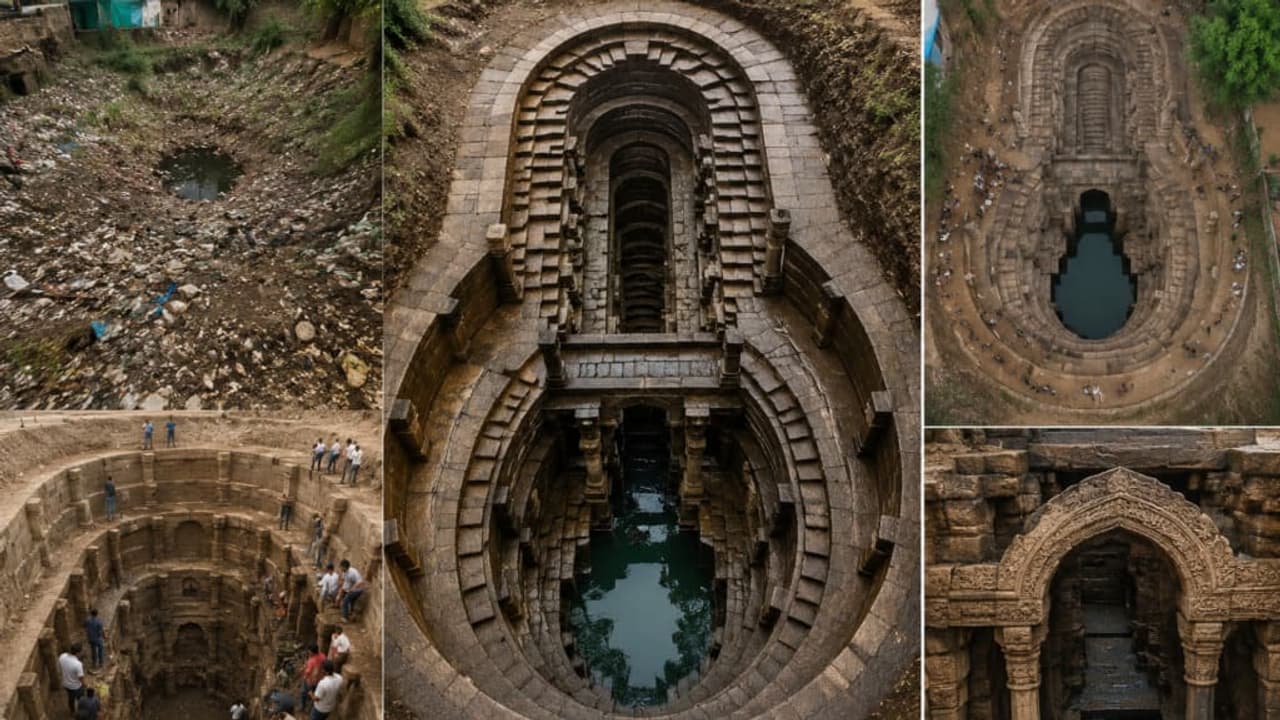
Volunteers in Belagavi’s Mutaga village have brought a 300-year-old stepwell back to life. It was buried under garbage for 30 years! The 80-foot-deep well has 53 stone steps and looks like a Shivling from above, making it a new hotspot for visitors.
A 300-year-old stepwell in Mutaga village, in Karnataka’s Belagavi district, is finally seeing the light of day. For nearly three decades, this piece of history was buried under a mountain of garbage, soil, and construction waste. Thanks to the hard work of volunteers, it has been restored to its original form and is now grabbing the attention of locals and history buffs alike.
Back to life after three decades
This stepwell, located in Kanchaveera Nagar of Mutaga village, was completely forgotten and neglected for years. A team of local volunteers, the Paas Foundation, National Service Scheme (NSS) students, and villagers all joined hands to clean it up. They spent days clearing out all the garbage and debris. After a lot of effort, the well’s original structure was finally revealed.
80 feet deep with 53 steps… what a structure!
This historic well is about 80 feet deep and has 53 stone steps leading down to the water. During the clean-up, they discovered natural springs at the bottom, and today, clean water is flowing in it again. The well’s stone pillars, arches, and carvings show off the amazing craftsmanship of that era.
Vastu Tip: Bird Nest at Home Indicates Good Luck or Potential Concern? Find Out Now!
Looks like a Shivling from the top!
Drone footage of the well has revealed something amazing—its design looks like a Shivling from above. This unique shape has become a major attraction for tourists and photographers.
A historical lesson in water conservation
According to historians, this well was likely built during the Adil Shahi or early Maratha rule. Back in the day, stepwells weren’t just a source of water. They were also community hubs where people would meet, rest, and socialise. In many parts of India, these wells played a key role in conserving water and harvesting rainwater.
Hindu Temples: Why Clocks Are Never Placed Inside? Find Out Now!
Volunteers lead the way in saving heritage
This restoration is a great example of what a community can achieve together. It wasn’t just a government project; it was the result of local people’s unity and hard work. This effort sends a strong message that by protecting such historical structures, we can pass on our cultural heritage to the next generation.
Reviving stepwells across India
There’s a new energy across India to protect and restore ancient stepwells, especially in states like Gujarat, Rajasthan, Madhya Pradesh, and Karnataka. People are once again realising their importance for water conservation, tourism, and heritage protection.