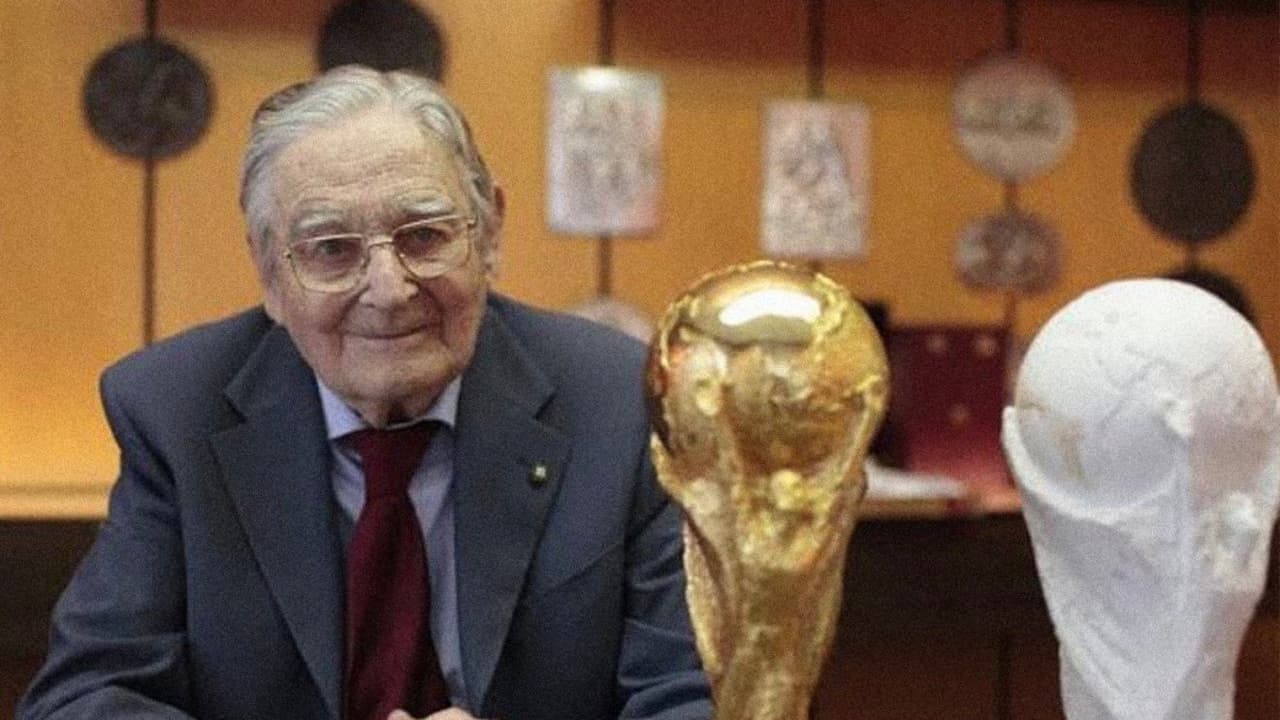
Italian sculptor Silvio Gazzaniga is the artist behind the iconic FIFA World Cup trophy, created in 1971 to replace the Jules Rimet Trophy. His design, featuring two athletes holding the globe, was first lifted by West Germany in 1974 and remains the ultimate prize in football.
The Italian sculptor Silvio Gazzaniga might not be a household name for casual football fans, but his artistic legacy is held aloft by the world’s greatest players every four years.
As the defending champions Argentina and Spain lock horns in the high-stakes FIFA World Cup 2026 Final in New Jersey, the eyes of the footballing world are fixed not just on the pitch, but on the golden prize that Gazzaniga envisioned over five decades ago. Either of the two teams at MetLife Stadium will take home the coveted trophy.
Silvio Gazzaniga passed away before France and Argentina in 2018 and 2022, respectively, could see their nations claim the ultimate prize, leaving a lasting legacy that continues to resonate with fans and players alike.
Also Read: World Cup: Saka’s hat-trick powers England to bronze in 10-goal thriller
How Silvio Gazzaniga Created an Iconic Trophy?
Silvio Gazzaniga was a master sculptor whose artistic journey to creating the FIFA World Cup trophy began in 1971. Before creating the iconic coveted trophy, Gazzaniga sculpted many other notable works that honed his technical skill as a goldsmith and artist.
When FIFA decided to retire the Jules Rimet Trophy, which was created by the French sculptor Abel Lafleur, the world governing body of football approached Silvio Gazzaniga to submit a proposal for a new trophy that would represent the pinnacle of the sport. Facing stiff competition, the late Italian sculptor worked with feverish intensity, producing a design that broke away from traditional, static shapes of past awards.
Gazzaniga’s vision of two victorious athletes lifting the global high in a triumphant spiral stood out among 53 entries from seven different countries, securing his place in history and permanently defining the visual identity of the FIFA World Cup.
Scroll to load tweet…
The trophy was covered with two bands of green malachite at the base, which perfectly contrasted with the shimmering 18-carat gold used to craft the figures of the athletes and the earth. Silvio Gazzaniga’s use of this specific metal choice was deliberate, as he wanted a raw, natural earthiness of the semi-precious stone to ground the ethereal, upward-reaching energy of the gold figures.
Jules Rimet Trophy, named after former FIFA President Jules Rimet, the driving force behind football’s prestigious tournament, was made of gold-plated sterling silver and featured a depiction of Nike, the Greek goddess of victory. Standing atop a base adorned with semi-precious stones, the original trophy served as the prize for the FIFA World Cup from the inaugural tournament in 1930 until 1970.
The History of the FIFA World Cup Trophy
Unlike the Jules Rimet Trophy, no specific name has been given to Silvio Gazzaniga’s design beyond its official title, the ‘FIFA World Cup Trophy.’ While the previous award was famously named after the tournament’s founder, the new trophy was created to epitomise the spirit of the game itself rather than any single individual.
The coveted trophy was the first unveiled in 1971, and West Germany became the first nation to lift it after their victory in the 1974 FIFA World Cup, following their historic victory over the Netherlands on home soil in Munich. West Germany captain Franz Beckenbauer was the first to hoist the new design.
Since then, four different nations have gotten hold of the coveted FIFA World Cup trophy designed by Silvio Gazzaniga. The likes of Argentina (1978, 1986, and 2022), Brazil (1994 and 2002), Italy (2006), France (1998 and 2018), and West Germany (1990 and 2014) have all etched their names into history by securing the title with this masterpiece.
At the MetLife Stadium in New Jersey, either Argentina will defend their title to clinch a fourth crown, or Spain will celebrate a historic victory, ending their 16-year drought of World Cup success.
As tensions mount on the stands as well as on the pitch, both squads are apparently aware that the winner will not only secure their place in the annals of football history but will also be the next to etch their nation’s name onto the base of the iconic trophy.
Also Read: FIFA World Cup 2026: Jude Bellingham’s Selfless Act Defines England’s Bronze Victory over France