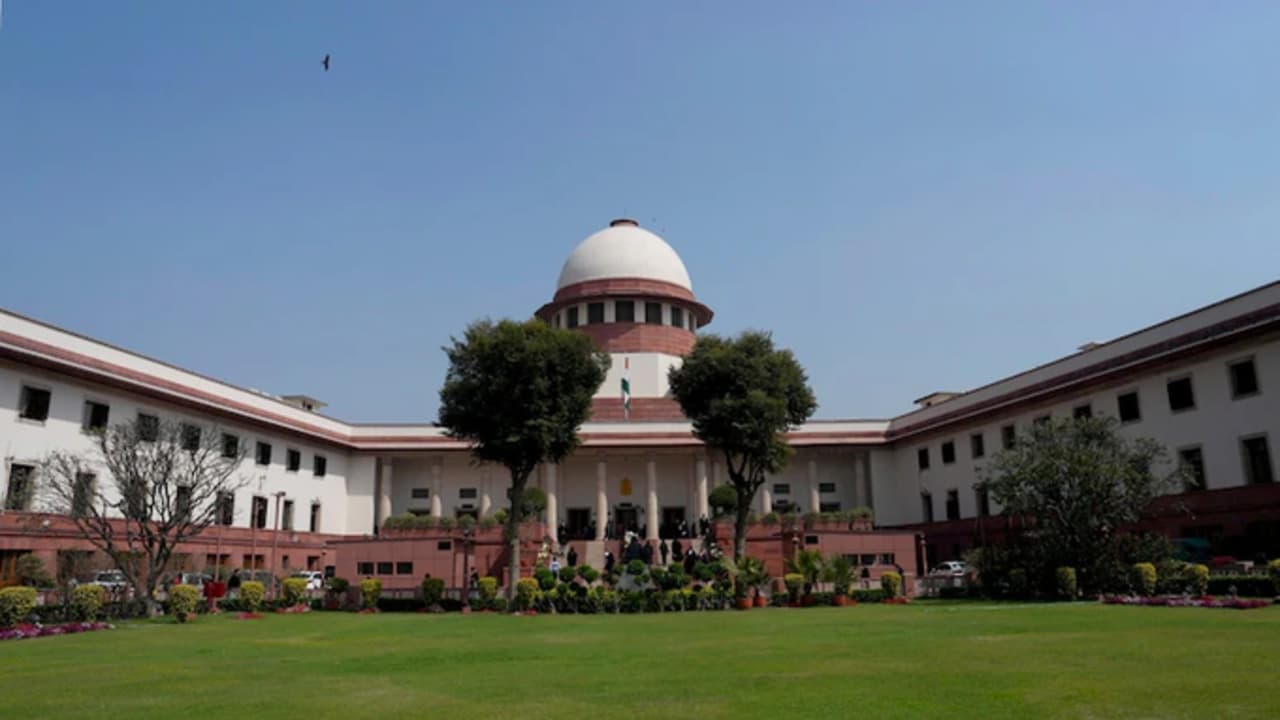
The Supreme Court said that private medical colleges cannot be forced to charge fees at the government rate. According to the court, this will lead to closure of institutions and collapse of the structure of medical education. There is a difference in the funding of both.
New Delhi: The Supreme Court has made a big comment saying that private self-financing medical colleges cannot be forced to charge fees at par with government colleges. The court clearly said that if this is done then such institutions will be closed, due to which the structure of medical education in the country will collapse. Justice B.V. The bench of Nagarathna and Joymalya Bagchi made this important comment. The court was dismissing the plea of a student from Rajasthan, who had got admission in the general category in a private medical college.
The student had said in his petition that he is financially weak and cannot pay the annual college tuition fee of Rs 19 lakh. He had demanded that the college be instructed to charge fees at the government rate.
The court explained that there is a huge difference between government and private colleges. Government colleges get huge subsidies from the government, whereas private colleges have to bear all their expenses themselves. Therefore, the same tuition fees cannot be demanded in both the institutions. The court also said that private institutions are prohibited from taking capitation fees only illegally. This doesn’t mean they can’t charge reasonably high fees.
The bench said, “The private sector also has a big contribution in medical education. If they are asked to charge fees at the government rate, it will become difficult for these institutions to run and they will leave this sector. The country needs doctors.” The court suggested that deserving students can take help of various scholarships and financial assistance to continue their studies.
In this case, the Supreme Court also upheld the old decision of the Rajasthan High Court, which had said that EWS reservation is applicable only at the admission level, it does not give the right to exemption in fees in private institutions. However, the court also made it clear that the legal aspects related to this case are open to further consideration in the future.