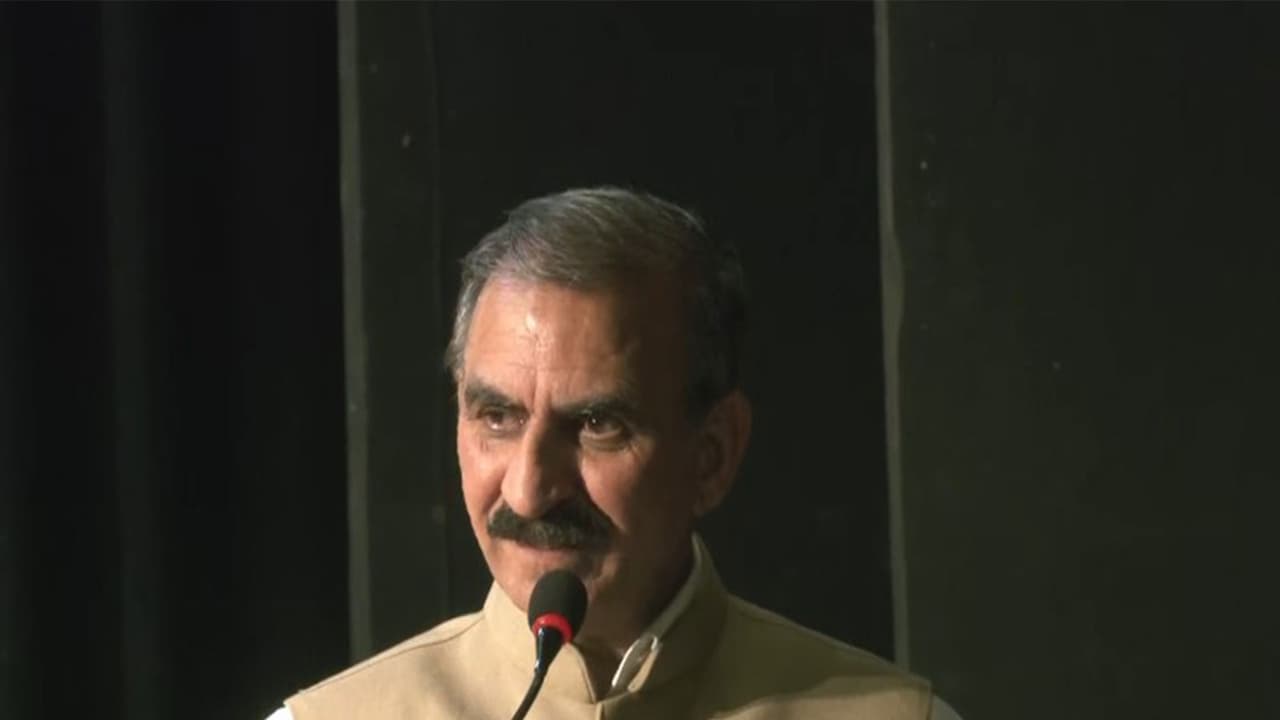
Experts in Shimla warn that the city’s infrastructure has reached its limit due to unplanned urbanisation and ecological stress. The discussion highlighted climate vulnerability, with the CM stressing the need for scientific planning for hill cities.
Unplanned urbanisation, ecological degradation, mounting pressure on infrastructure, and the carrying capacity of hill cities were the focus of a policy discussion in Shimla on Tuesday, as experts warned that infrastructure in the region has reached a limit.
The discussions coincided with the release of City Limits, The Crisis of Urbanisation, a book authored by an environmentalist, urban policy expert and former Deputy Mayor of Shimla on Tuesday evening in Shimla. The event brought together policymakers, scholars, jurists, environmentalists, and residents, who stressed that the future development of Himalayan cities must be based on scientific planning, ecological sustainability, and institutional accountability.
CM Warns of Critical Urban Transformation
Addressing the gathering, the Himachal Chief Minsiter Sukhu warned that Himachal Pradesh was entering a critical phase of urban transformation and climate vulnerability. The Chief Minister said that nearly 50 per cent of the state’s population could be living in urban areas by 2040, requiring urgent reforms in planning, infrastructure, and environmental governance.
“We need to understand Himachal Pradesh differently. By 2040, nearly 50 per cent of the population will be living in urban areas. Policies must be framed keeping in mind the load-bearing capacity of hill cities. Scientific construction, structural engineering, and protection of greenery are essential,” the Chief Minister said.
Referring to recurring natural disasters, CM Sukhu said the state government had constituted committees of environmental and disaster experts after devastating calamities in Himachal Pradesh and had discussed the issue with the Union Home Minister. “We are studying why repeated cloudbursts are occurring and what role climate change is playing. The impact that is being seen in the hills today will eventually reach the plains as well,” he said.
The Chief Minister noted that the state had around 28 lakh registered families and nearly 23 lakh vehicles, indicating enormous pressure on urban infrastructure. He said Shimla’s carrying capacity had become a serious concern due to traffic congestion, inadequate parking, water shortages, and haphazard construction.
Infrastructure Overhaul and Investments
“There is a web of overhead wires across Shimla. We are spending nearly Rs 145 crore on underground ducting to improve the city’s aesthetics and infrastructure,” he said, adding that the government was also investing around Rs 600 crore in redevelopment and beautification projects, including the Sabzi Mandi area.
Over-tourism Not the Real Issue, Says CM
CM Sukhu defended the state government’s push towards tunnelling, underground infrastructure, and planned urban townships while maintaining that over-tourism was not the real issue. “The problem is not over-tourism; the tourism infrastructure is weak and needs strengthening. We need new urban townships because infrastructure is lacking,” he said.
Call for Ecological Compensation
Talking about Himachal Pradesh’s ecological contribution to the country, CM Sukhu described the state as the “lungs and water bowl of northern India.” “Himachal has nearly 68 per cent forest land. Punjab became the food bowl of India because Himachal remained the water bowl. We deserve compensation and resources for the ecological services we provide,” he said, while also demanding greater financial rights from hydropower projects run by entities.
Judicial Intervention in Ecological Matters
The Chief Minister also acknowledged that some decisions taken by the government had faced judicial intervention. Referring to construction permissions and land-use disputes, he said there were instances where the judiciary had overruled government concerns regarding ecological impacts and obstruction of valley views. “We wanted that valley-side views should not be blocked, but there have been cases where permissions were allowed by the court despite our objections,” he said.
Justice Chauhan Highlights Inequality and Policy Failures
Speaking at the event, former Chief Justice of the Jharkhand High Court Tarlok Sibgh Chauhan raised concerns about inequality, urban exclusion, and institutional failures in hill cities. He criticised discriminatory public facilities and highlighted gender injustice in municipal services.
“In Shimla’s municipal areas, women were being charged for public washrooms while men were not. There is no justification for this. We cannot deprive women of the rights guaranteed under Article 21,” Justice Chauhan said.
He also stressed that lifts in hill towns were no longer a luxury but a necessity for senior citizens and questioned the growing number of vehicles in areas with almost no parking capacity. “People are buying two or three vehicles without parking space. During school timings, most traffic is generated by local vehicles, not tourists from outside states. We need introspection before blaming outsiders,” he observed.
‘Development Without Inclusion is Unjust’
Justice Chauhan further argued that urbanisation was not merely demographic expansion but a “reorganisation of society” that required accountable institutions. He warned that sanitation workers, street vendors, waste handlers, and the urban poor were often excluded from planning processes despite sustaining the city economy. “Development without inclusion is incomplete, and exclusion is fundamentally unjust,” he said.
Unchecked Construction and Ecological Disruption
On ecology, Justice Chauhan said unchecked hillside construction had disrupted natural systems and contributed to falling groundwater levels and worsening air quality. “These are not accidents; they are policy failures resulting from a development model that ignores ecological systems,” he remarked.
Author’s Perspective on ‘City Limits’
The author and editor of the book and environmentalist said the purpose of City Limits was not to offer ready-made solutions but to provoke deeper public questioning around urbanisation and climate vulnerability in hill regions.
Speaking to ANI after the event, Panwar said the book emerged from years of grassroots interaction and observation of changing migration patterns and ecological stress in Shimla. “This book raises questions about the extreme form of urbanisation taking place in hill cities and its impact on people’s lives. It is meant to stimulate public thinking and democratic debate,” he said.
Questioning Vertical Expansion
Panwar questioned whether vertical expansion was the only answer to urban growth in Himachal Pradesh. “The issue of carrying capacity is not only about people. It is about ecological and geographical sustainability as well. We need to ask whether vertical growth is necessary when population growth itself is slowing,” he said.
He warned that the pace of urbanisation in Himachal Pradesh could surpass official projections much before 2040 and argued that existing urban planning standards designed for the plains were unsuitable for fragile Himalayan regions. “We may reach the 50 per cent urbanisation mark before 2040. Definitions of density and urban expansion used elsewhere do not apply to Himachal Pradesh’s geography,” Panwar said.
A Call for a National Framework
The event concluded with a broad consensus among speakers that Himalayan states require a dedicated national framework for climate adaptation, urban planning, ecological protection, and sustainable infrastructure development, as increasing migration, climate stress, and infrastructural burden continue to reshape hill cities like Shimla. (ANI)
(Except for the headline, this story has not been edited by Asianet Newsable English staff and is published from a syndicated feed.)