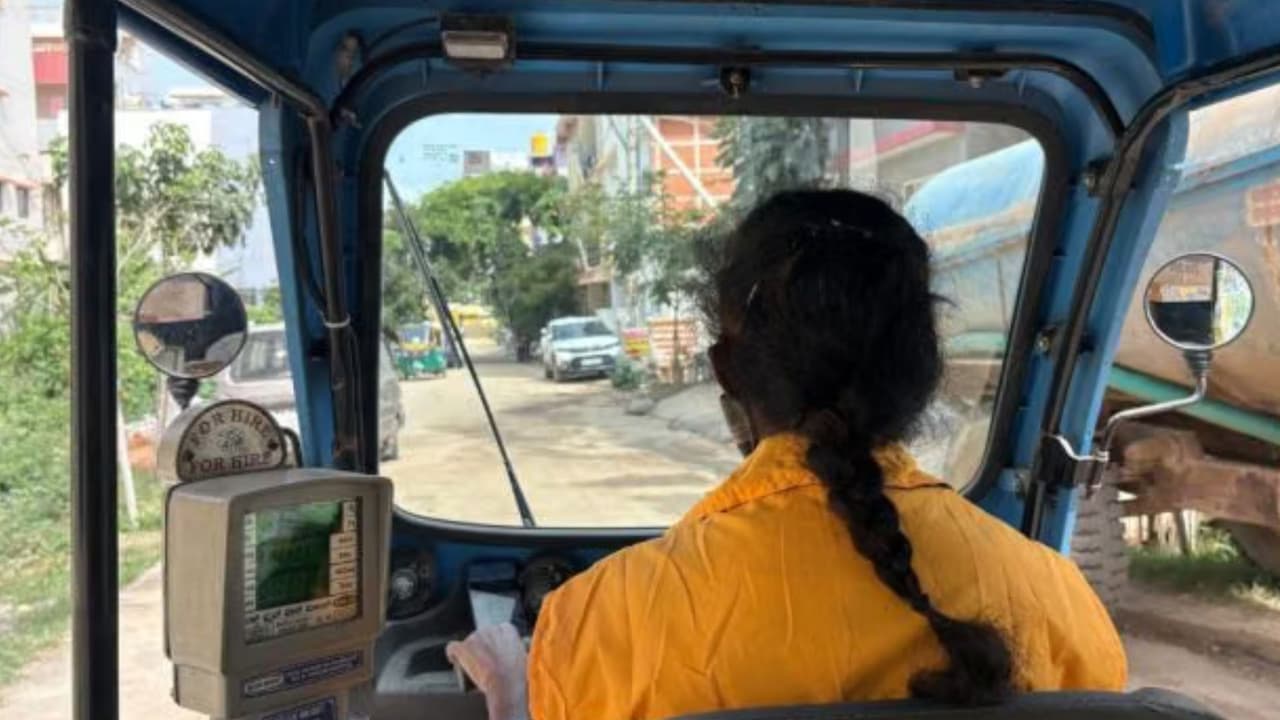
Reshma, a 56-year-old cancer survivor from Bengaluru, has spent the past five years working as an Amazon delivery associate after losing her tailoring income during COVID-19 pandemic. Burdened by debt, her son’s death, and ongoing health challenges, she continues delivering parcels every day to support her family.
At an age when many people begin thinking about retirement, 56-year-old Reshma spends her days travelling across Bengaluru, delivering Amazon parcels to support her family. A cancer survivor, she has been working as a delivery associate for the past five years, refusing to give up despite serious health challenges and mounting financial pressure.
Every day begins with a delivery route
Reshma starts her day at 7 am by loading parcels into her electric rickshaw before heading out on her delivery route. Years ago, she underwent surgery for oral cancer, which permanently changed the left side of her face. One of her eyes waters constantly, and she cannot fully lift one of her arms.
Despite these physical difficulties, she climbs flights of stairs every day to ensure customers receive their packages.
“Many people ask me, ‘Why do you do this job if you can’t climb stairs?’ But if I quit, who will run my family?” she says.
‘Adjust For Just 1 Km’: Pune Cab Driver’s Request to Women Mid-Ride Triggers Safety Debate (WATCH)
COVID-19 forced a complete career change
Before becoming a delivery associate, Reshma stitched shirts for garment factories from her home. She earned around ₹1,000 a day and managed to support her family through tailoring.
However, when the COVID-19 pandemic shut down garment factories, she lost her only source of income. Left with no steady earnings, she joined Amazon as a delivery associate to make ends meet.
One tragedy after another
The family’s struggles began in 2014 when her son was diagnosed with kidney failure. They borrowed around Rs 7 lakh for his treatment, but despite spending seven months in hospital, he could not be saved.
Just a year later, Reshma was diagnosed with oral cancer. In 2016, she underwent a major reconstructive surgery in which doctors used skin and bone from her thigh to rebuild part of her face.
Bengaluru Law Student Stabbed to Death by Man for Rejecting His Brother’s ‘Love’
Daily earnings, but debts continue
Today, Reshma earns around Rs 700 a day through deliveries. Her daughter works at a car showroom and earns about Rs 15,000 a month. Even with both incomes, the family continues to struggle financially.
To manage household expenses and her daughter’s wedding, the family borrowed another Rs 7-8 lakh through microfinance loans. They even purchased gold earrings and a chain on loan for the wedding but may now have to return the jewellery because they cannot afford the interest.
Carrying the family’s responsibility
According to Reshma, her husband has not contributed much to the family’s finances since their son’s death. She says he developed an alcohol addiction after the tragedy, leaving her and her daughter to shoulder all the household responsibilities.
“I work all day just to earn enough for one square meal,” she says.
Viral Video of Woman Hurting Three-Month-Old Nephew Sparks Outrage, Family Members Detained
Kindness keeps her going
Reshma says not every day is easy. Some customers ignore her calls or insist she climb several floors despite her visible health condition.
Still, she remembers the people who treated her with kindness. One customer handed her Rs 500 and told her to buy something to eat. The gesture, she says, is something she will never forget.
A growing reality for older workers
Reshma’s story reflects a larger trend across India. Rising living costs, debt, health problems and the absence of pension security are forcing many people in their 50s and 60s into the gig economy.
Today, older workers are increasingly seen delivering food, groceries and parcels for companies such as Amazon, Zomato, Swiggy, Blinkit and Uber. Labour unions say many of them work 12 to 14 hours a day, with little hope of retiring anytime soon.
Bengaluru’s Biggest Metro Line Gets a New Timeline: Here’s Why Commuters Must Wait Until 2033