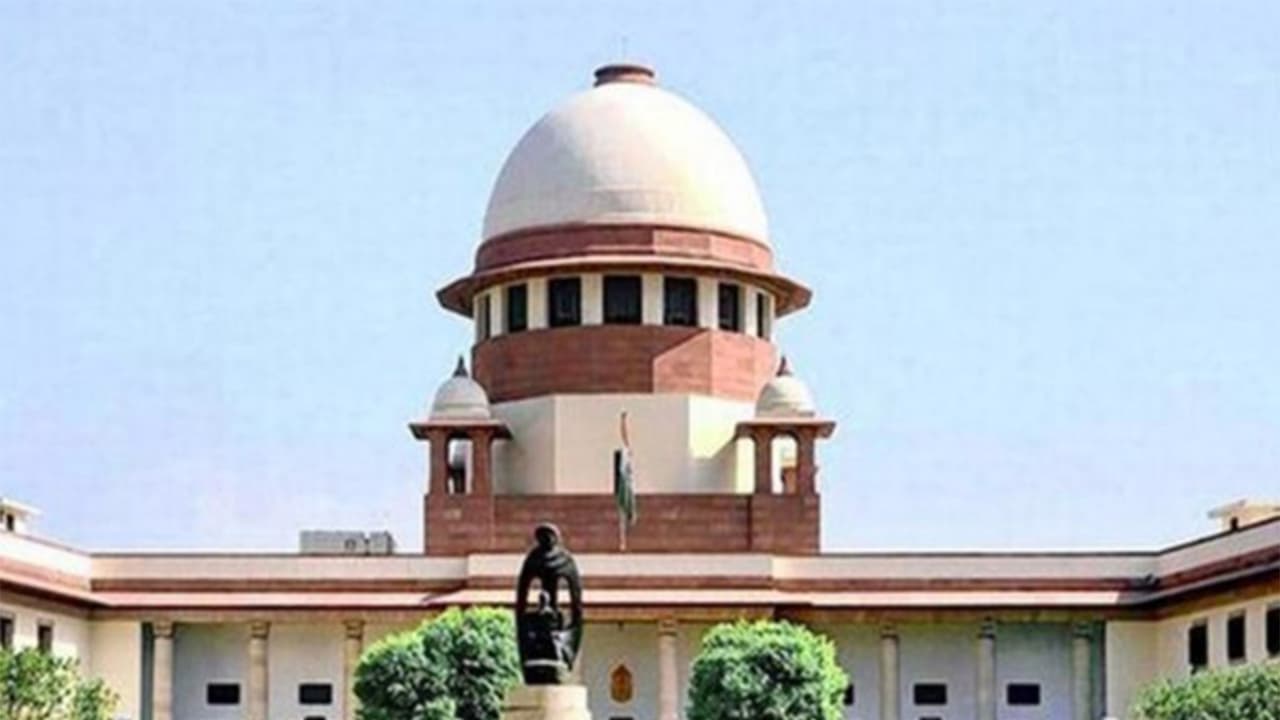
The Supreme Court has advised the Center not to implement the third language from class 9th. The court said that this is an unnecessary burden on the students, it should be stopped starting from class 5th or 6th and till class 9th. The court was hearing the case of opening Navodaya Vidyalaya in Tamil Nadu.
New Delhi [भारत]July 16 (ANI): The Supreme Court on Thursday urged the Central government not to implement the third language only from Class 9. The court said that doing so puts an unnecessary burden on the students. The Court suggested that if third language is necessary, it should be started from class 5th or 6th and it should be stopped by class 9th.
Justice B.V. Nagarathna and Justice R. Mahadevan’s bench made this comment while hearing an appeal by the Tamil Nadu government. The appeal was against the Madras High Court’s decision, which had directed the state to facilitate the establishment of Jawahar Navodaya Vidyalayas (JNVs) in every district. The state sought additional time citing the change of government and the need to examine issues like school infrastructure and the three-language policy.
It is wrong to introduce third language from 9th class.
Questioning the Centre’s policy, Justice Nagarathna asked, “In which year is the third language introduced? The state language has to be taught. English has to be taught. And any other third language. It does not have to be Hindi. It can be Sanskrit. Any other third language. Why not Sanskrit? You don’t want Hindi, you don’t even want Sanskrit?”
When the counsel representing the Tamil Nadu government pointed out that the third language is mandatory only from class 9, Justice Nagarathna remarked that class 9 is already stressful enough. The judge said, “That’s too bad. Ninth grade is stressful. Why do you start a third language in ninth grade? Start it in sixth grade.”
Citing the example of his school days, the judge said that earlier students would learn a third language during middle school, so they were well prepared before secondary school. He recalled that concepts taught in Class 10 under one board were taught in Class 8 in the other board itself, which helped students deal with academic pressure.
Justice Nagarathna said, “So please don’t put a new language in Class IX. In Class V or VI, you can start the third language. And by Class IX, it should stop, the third language. Look at how much stress they are facing. Advise your government. The student in me is still alive!”
Why the opposition to Navodaya schools?
During the hearing, the court also raised questions over Tamil Nadu’s continued opposition to Navodaya schools. The court said that its expenses are borne by the central government, whereas the states only have to provide the land. Justice Nagarathna asked, “The central government will bear all the expenses. All you have to do is provide the land. All other states have Navodaya schools. Why are you depriving Tamil Nadu of this?”
The Court took note of the plea that a new government has taken charge in Tamil Nadu and said it would give time to the State to obtain instructions. Justice Nagarathna said, “Now there is a different government. We do not know what their policy is. You can have your own education system etc., but do not stop the Central Government schools in Tamil Nadu.”
Accepting the state’s request, the Court gave three weeks’ time to the Tamil Nadu government and listed the matter for further hearing on August 11, 2026.
In an earlier hearing in the matter, the Court had urged the Tamil Nadu government to hold talks with the Center on the issue and not treat it as a language dispute. Emphasizing the federal structure of India, the Court had said that the state should raise its concerns with the Center on the two-language policy, rather than allowing disagreements to fester. The court had said, “Don’t make it an issue of language. We are a federal society. You are part of the republic. If you come a step forward, they will also come a step forward.”
The Court had also said that the establishment of Jawahar Navodaya Vidyalayas should be seen as an educational opportunity for rural students and not as an imposition. The Court had remarked that the State should not adopt a “my state, your state” approach. The court had said, “You cannot do this ‘my state, my state’. This attitude must end. You come a step forward. They will also come a step forward,” and had directed the Tamil Nadu government to discuss with the Center on setting up Navodaya schools in the state.
The respondents, Kumari Maha Sabha, Central Authorities including Navodaya Vidyalaya Samiti, are represented by Advocate G. Priyadarshini, Rahul Shyam Bhandari and Raj Bahadur Yadav. The Tamil Nadu government filed its petition with lawyer B. Was filed through Karunakaran. (ANI)
(This story has not been edited by Asianet News staff except for the headline and is published from a syndicated feed.)