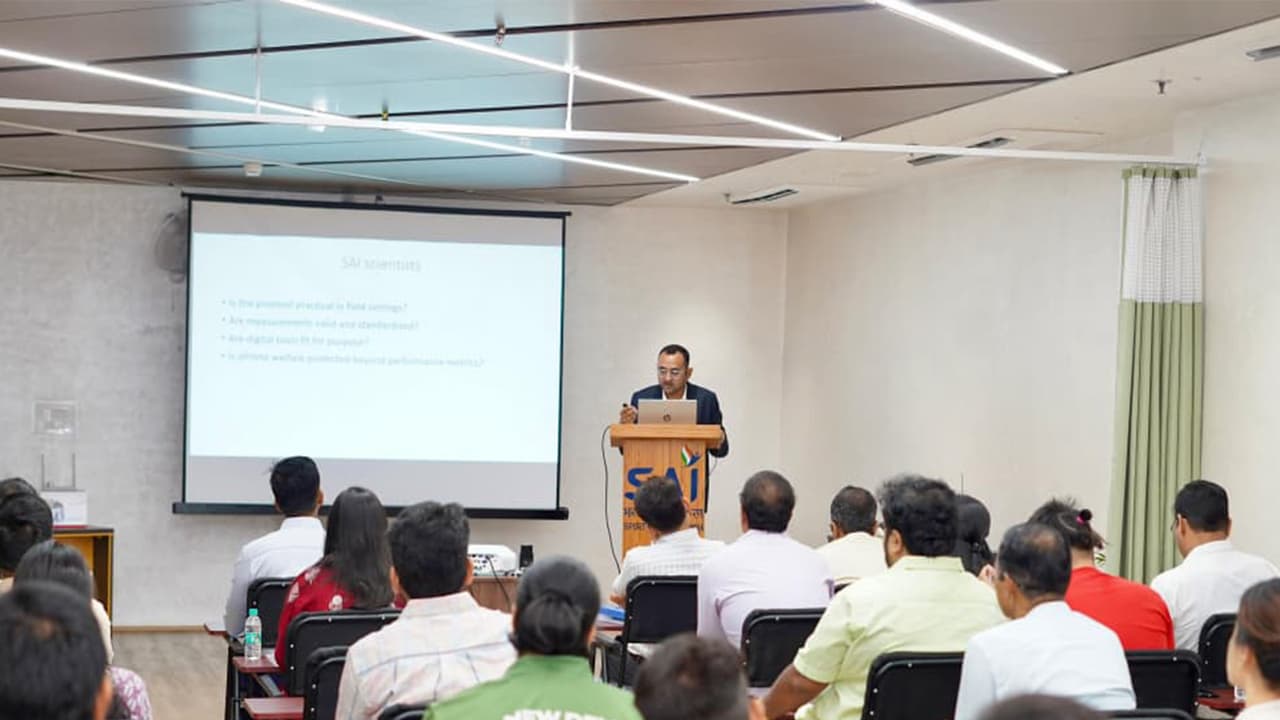
SAI and ICMR conducted a workshop on Good Clinical Practice to enhance ethical standards in sports science research. Experts emphasised protecting participants’ rights and ensuring data integrity to strengthen India’s sports research ecosystem.
A one-day Workshop on Good Clinical Practice (GCP) was successfully conducted at the Return to Play Division, Indira Gandhi Stadium, New Delhi, in a hybrid mode by the Sports Science Division (Erstwhile NCSSR), Sports Authority of India (SAI), in collaboration with the Indian Council of Medical Research (ICMR). The workshop brought together researchers, support staff, and key stakeholders involved in sports and clinical/sports science research to enhance their understanding of ethical and regulatory frameworks governing human studies, according to a press release.
Expert Sessions on GCP Principles
Scientific sessions led by experts from ICMR covered critical areas such as ICH-GCP (E6) principles, ICMR Ethical Guidelines, provisions of NDCTR 2019, roles and responsibilities of investigators and Institutional Ethics Committees (IECs), informed consent processes, and management of serious adverse events (SAEs).
Highlighting the importance of Good Clinical Practice, Dr. Stuti Bhargava, Scientist-E, ICMR, emphasised that “Good Clinical Practice (GCP) is an international ethical and scientific quality standard for designing, conducting, recording, and reporting clinical trials involving human subjects. It ensures the protection of participants’ rights, safety, and well-being, while guaranteeing the credibility and integrity of trial data. Compliance with these standards is essential for regulatory submissions and adherence to globally accepted guidelines.”
Emphasising the significance of such capacity-building initiatives, Brig. (Dr) Bibhu Kalyan Nayak, Executive Director, Sports Science Division, SAI, stated, “As sports science research increasingly involves advanced interventions and athlete-centric studies, adherence to Good Clinical Practice is not merely a regulatory requirement but a moral responsibility. Ensuring ethical compliance, participant safety, and data integrity is fundamental to building trust and generating credible, high-quality evidence that directly contributes to athlete performance and well-being.” He further highlighted that such initiatives play a vital role in sensitising researchers and practitioners to global best practices and strengthening India’s sports science research ecosystem.
Dr. Jugal Kishore, Professor, Community Medicine, Vardhman Mahavir Medical College and Safdarjung Hospital and Chairperson of the SAI NCSSR Ethics Committee, underscored the critical role of ethics oversight in research.
Strengthening India’s Sports Research Ecosystem
The workshop underscored the growing need to align sports research in India with internationally accepted ethical standards. It reaffirmed the importance of ensuring participant safety, regulatory compliance, and the credibility of scientific outcomes, while fostering a culture of responsible and ethical research within the sporting ecosystem.
The programme concluded with an interactive valedictory session, marked by active participation and a shared commitment towards continuous learning and strengthening clinical research governance. (ANI)
(Except for the headline, this story has not been edited by Asianet Newsable English staff and is published from a syndicated feed.)