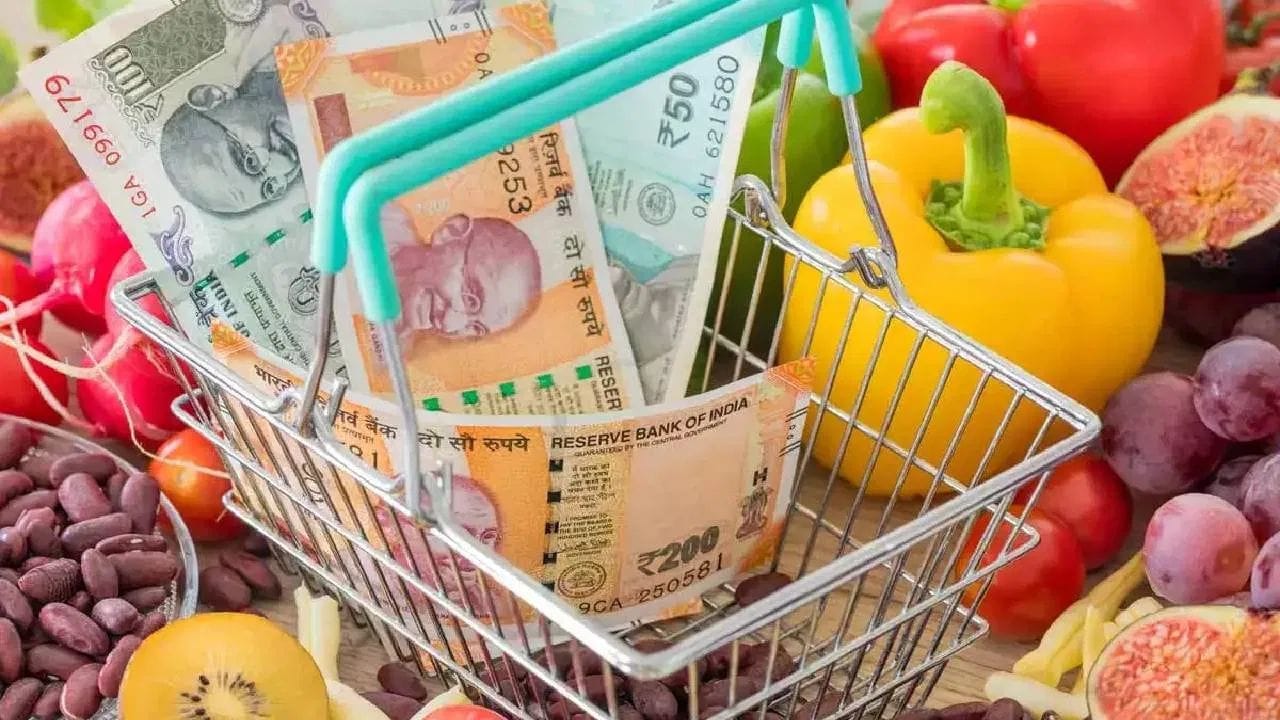
increase in inflation
Retail inflation has increased to 4.38 percent in the month of June. These figures released by the Ministry of Statistics (MoSPI) have increased the concern because this is the first time in the last 17 months that inflation has crossed the safe target of 4 percent of the Reserve Bank (RBI). Earlier in May this figure was 3.93 percent.
The main reason for this latest surge in inflation is the rising prices of food items and fuel. Apart from this, ongoing tensions in West Asia and concerns over the movement of monsoon have also pushed the prices higher. The market was also expecting similar figures. In a Reuters poll, economists had estimated it to be 4.3 percent. The special thing is that since the new base year and updated basket for CPI has been implemented, this is the highest level of inflation.
Food items spoil the budget
In this inflation figure, the biggest impact has been seen on food items. Food inflation rate reached 5.32 percent in June, which was 4.78 percent in May. If we look at it more closely, food inflation was 5.45 percent in rural areas and 5.09 percent in cities.
However, some vegetables have definitely provided some relief. Potato prices declined by 20.34 percent in June (it had fallen by 23.71 percent in May). At the same time, the price of tomato, which had become expensive by more than 48 percent in May last year, has also declined by 31.92 percent this time. But the prices of other food items made this relief ineffective.
Petrol and diesel spoiled the game
Not only food, but now traveling and transportation of goods has also become expensive. Transport inflation rate increased to 4.31 percent in June. The main reason for this was that government oil companies had increased the prices of petrol and diesel four times during May. This has had a direct impact on goods transport service, whose inflation rate has jumped to 7.70 percent. Expensive transportation means that every item reaching the market will automatically become expensive.
Tension may increase further due to crude oil
Economists believe that the path ahead is also not easy. If the monsoon remains weak this year due to ‘El Nino’, crop production may be badly affected. Farming in India is largely dependent on the south-west monsoon, because more than half of the country’s farms do not have permanent irrigation facilities.
On the other hand, due to the ongoing geopolitical tension in the world, the prices of crude oil are increasing. India is the third largest crude oil importer in the world. In such a situation, due to cost of energy in the global market, the current account deficit (CAD) of the country may increase, the rupee may weaken and the risk of imported inflation may arise.
Will your loans be expensive?
RBI has set a target of keeping inflation at 4 percent (in the range of 2 to 6 percent) for the period from April 2026 to March 2031. But considering the latest situation, in the policy meeting of June, the Reserve Bank had kept the repo rate at 5.25 percent only. Also, in view of the pressure on food and energy prices, it has increased its inflation forecast for the financial year 2026-27 from 4.6 percent to 5.1 percent.
Kotak Mahindra Bank Chief Economist Upasana Bhardwaj says that the inflation trend is upward due to the cost of food items and fuel. He believes that monsoon and global tensions will have to be kept an eye on, but considering the situation, an increase of 0.50 percent (50bps) in interest rates may be seen in the second half of FY 27.