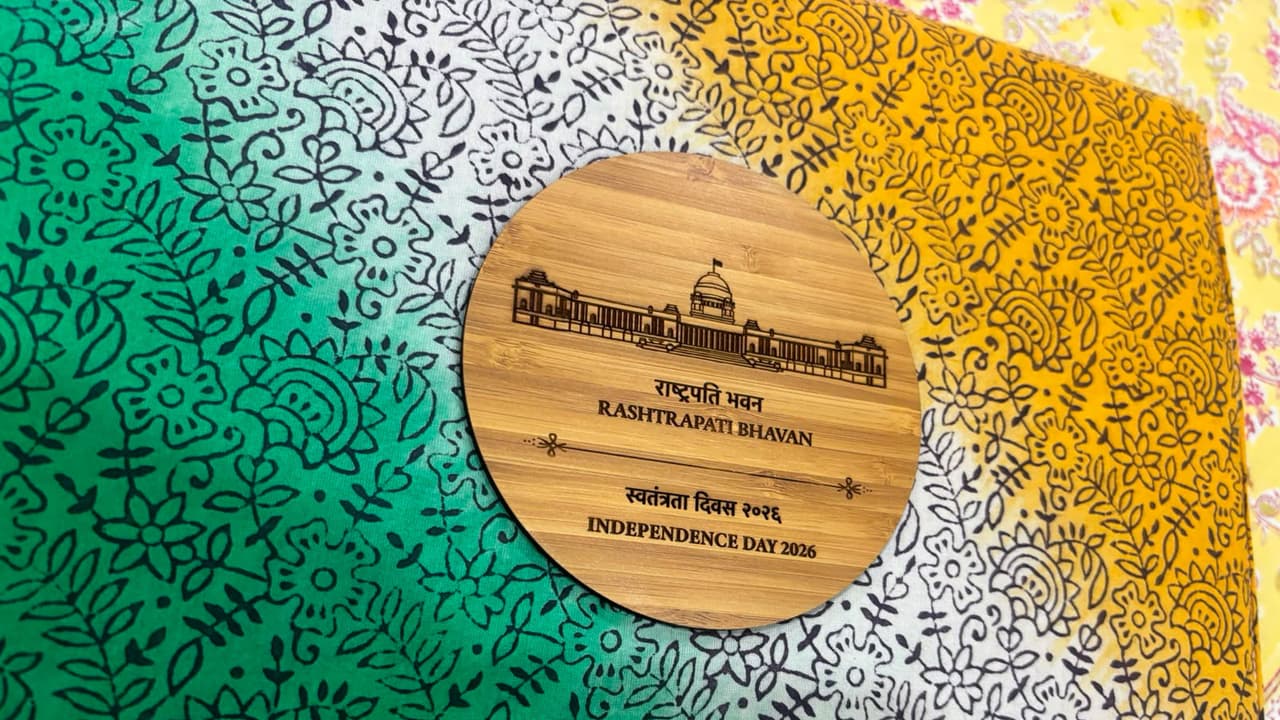
An invitation for the 80th Independence Day reception at Rashtrapati Bhavan, presented in a cotton bag, showcases the artistic diversity and ecological stewardship of India, focusing on traditions from Chhattisgarh, Goa, Madhya Pradesh and Maharashtra.
It’s an invitation for the occasion of Independence Day Reception at Rashtrapati Bhavan that highlights India’s rich heritage.
It welcomes guests for the occasion of 15 August 2026 At home reception to celebrate 80th Independence Day. The invitation showcases some inspiring examples of sustainable environmental practices and conservation initiatives from the states of Chhattisgarh, Goa, Madhya Pradesh and Maharashtra – a region blessed with a rich landscape of rugged hills, winding river systems and abundant greenery.
Using the vibrant living art traditions of these states, the invitation offers a glimpse into the deep interdependence between communities, creativity, and conservation.
The Invitation’s Design and Artistry
The Kaavi Art Outer Cover
The Outer Cover of the invitation is inspired by the Kaavi art of the coastal Konkan region. It is distinguished by its use of a single reddish-brown pigment (extracted from local laterite soil) etched into a white, lime-plastered wall. Artisans incise and scrape the top-wet layer of red-tinted plaster to reveal the white plaster base underneath.
Bastar’s Wrought Iron Bell
The outer cover of invitation card also has metal bell attached . The wrought iron bell attached to the address slip is handcrafted by skilled tribal ironsmiths in Bastar, Chhattisgarh using recycled scrap iron.
Handwoven Maheshwari Stole
The invitation bag also has Handwoven Maheshwari designed Stole that will be used for the guests to be welcomed upon their arrival at the reception by traditional. The stole has been handwoven in Maheshwar using the traditional dual silk and cotton weave of the Maheshwari weaving tradition. This stole celebrates the textile traditions of Chhattisgarh, Goa, Madhya Pradesh and Maharashtra through a combinatior of unique regional motifs.
Bagh Textile Prints
Used here is a Bagh textile, characterized by its use of hand-carved wooden blocks and natural vegetable-based dyes. This craft originates and gets its name from the town of Bagh in Dhar district of Madhya Pradesh. It features bold geometric and floral patterns seen here stamped in a rich black (derived from fermented iron rust and jaggery) on an off-white background.
Featured Tribal Art Forms
Lauh-Shilp Tribal Craft
The display frame features figurines handcrafted using ‘Lauh-Shilp’ or Pitwa art, a world-renowned tribal craft from Bastar, Chhattisgarh. Mirroring the daily life and culture oflocal tribes, this ecofriendly art form transforms recycled scrap iron into striking, minimalist sculptures and objects ofdaily use.
Warli Art Depictions
Warli art is one of the oldest and most distinct tribal art forms in India. Its origins rooted in the daily lives, spiritual beliefs, and relationship with nature of the Warli tribe, a community residing primarily in mountainous and coastal regions of northern Maharashtra. It features minimalist white figures made with rice paste, set against earthy backgrounds to depict daily life, nature. and rituals.
Goa’s Azulejo Tile and Khajan Lands
The Azulejo tile on invitation depicts Goa’s Khajan lands which are community-managed coastal wetlands, reclaimed from mangrove forests and marshes. Developed centuries ago, this ancient agro-aqua ecosystem uses an intricate network of dykes (bunds), embankments and sluice gates to control tidal river water, preventing saltwater from flooding crops while supporting paddy cultivation, fishing, and salt-panning.
Madhya Pradesh’s Bhil Painting
Bhil painting dipicts vibrant tribal art form from Madhya Pradesh known for its intericate patterns of dots used to depict nature, mythological figures and daily life typically created using neem twigs.
(Except for the headline, this story has not been edited by Asianetnews Editorial staff and is published from a syndicated feed.)