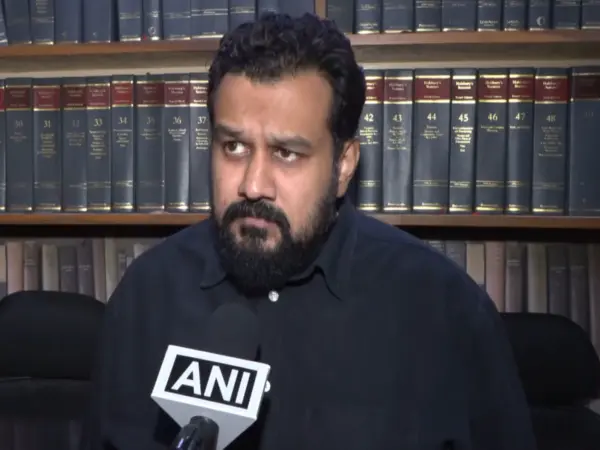
Advocate Vishnu Shankar Jain on Saturday called for stronger and transparent temple management systems while reacting to the alleged Ram Mandir donation embezzlement case, stating that such incidents must never be repeated and should serve as a “lesson for the future.”
Speaking on the matter, Jain said the Ram Mandir, constructed following the Supreme Court’s 2019 verdict, should emerge as a model for ideal temple administration in India and across the world.
“We all want such incidents never to repeat. My father, Harishankar Jain, and the whole society believe the Ram Mandir case must set an example,” Vishnu Shankar Jain said.
He further highlighted the institutional mechanism formed after the Supreme Court judgment. “After the Supreme Court’s 2019 verdict, a 15-member committee was formed, including government nominees, saints, and Shankaracharyas,” he said, adding that despite the existence of this framework, the recent allegations were “deeply unfortunate.”
Stressing the need for improved governance of religious institutions, Jain said temples should adopt a more structured and transparent administrative framework. “As a society, we must create a framework to ensure such incidents never occur again,” he stated.
He also emphasised that the Ram Mandir should set an example in temple administration and inspire similar reforms across the country.
“Ayodhya’s Ram Temple, won after a long legal battle, should become a model of ideal temple management for the nation and the world,” Jain said.
Calling for greater involvement of spiritual leadership, he added, “For this, we must seek guidance from our saints and Shankaracharyas so that future management is exemplary and incidents like this do not happen again.”
Jain also extended the discussion to broader temple governance issues in India, arguing that religious institutions should be freed from state control in several regions.
“We should pledge that incidents like this should never occur again. Today we are demanding that temples should be set free from government control in states like Tamil Nadu, Karnataka, Puducherry, Telangana,” he said.
He further noted that the Ram Mandir case remains “a very peculiar case” due to its historical and legal significance, stressing that it should guide future reforms in temple administration across the country.