
Heavy rain overnight caused havoc in Delhi. Roads turned into rivers, 3 died due to building collapse in Rohini. IMD’s red alert continues. Know which areas were most affected.
New Delhi: The torrential rains overnight in the national capital Delhi and its neighboring areas have created such a havoc that the heart of the country has come to a complete standstill. This disaster that rained from the sky completely neutralized the drainage system of Delhi, turning everything from luxurious colonies to the main highway into a sea. Amidst the most dangerous rains of this monsoon, a very painful and scary accident has come to light from Rohini area, where a building collapsed like a deck of cards. In view of the seriousness of the situation, the Meteorological Department (IMD) has issued a ‘red alert’ in the capital.
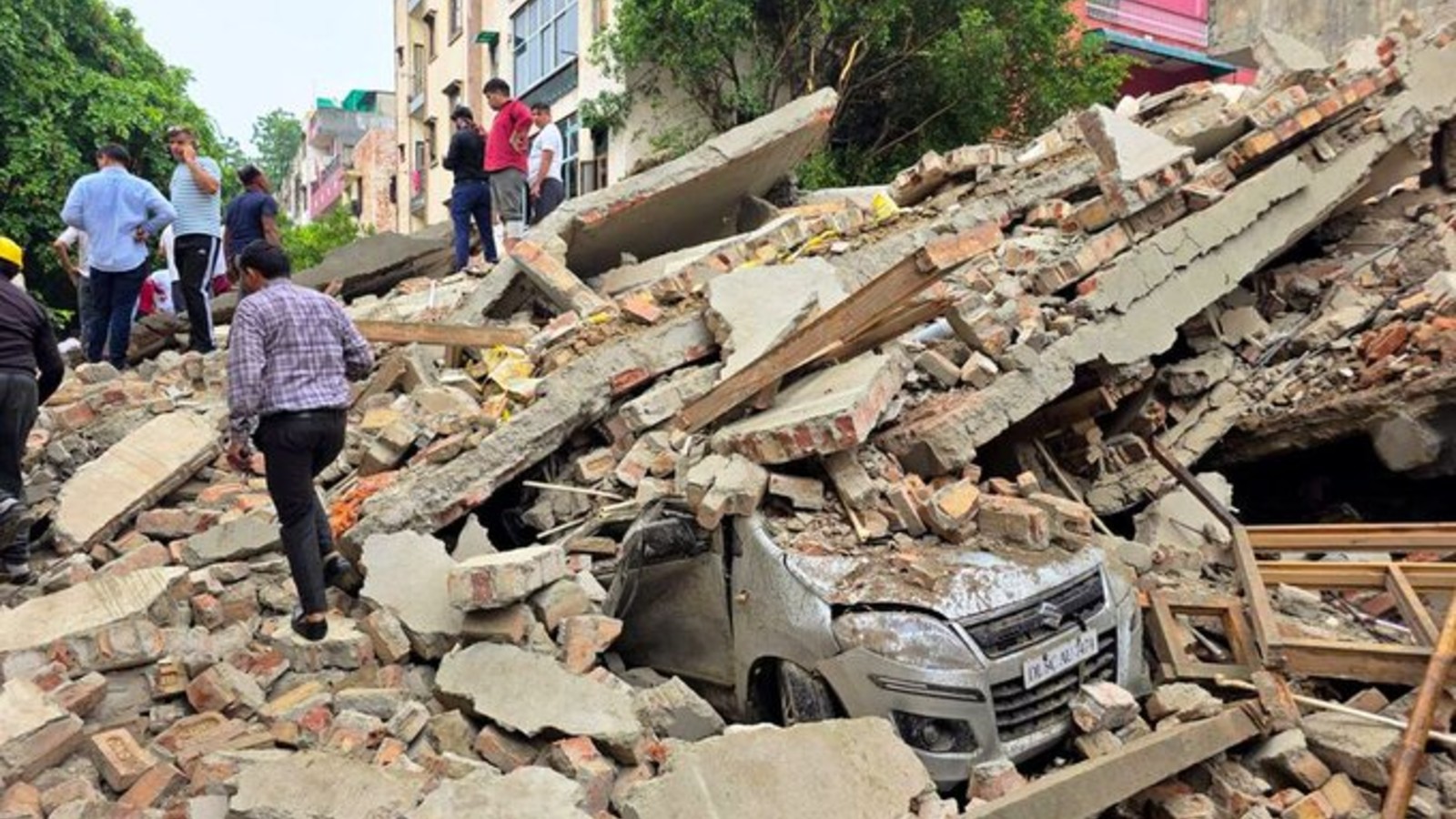
Midnight terror: Four-storey building collapsed in Rohini, lives buried under debris
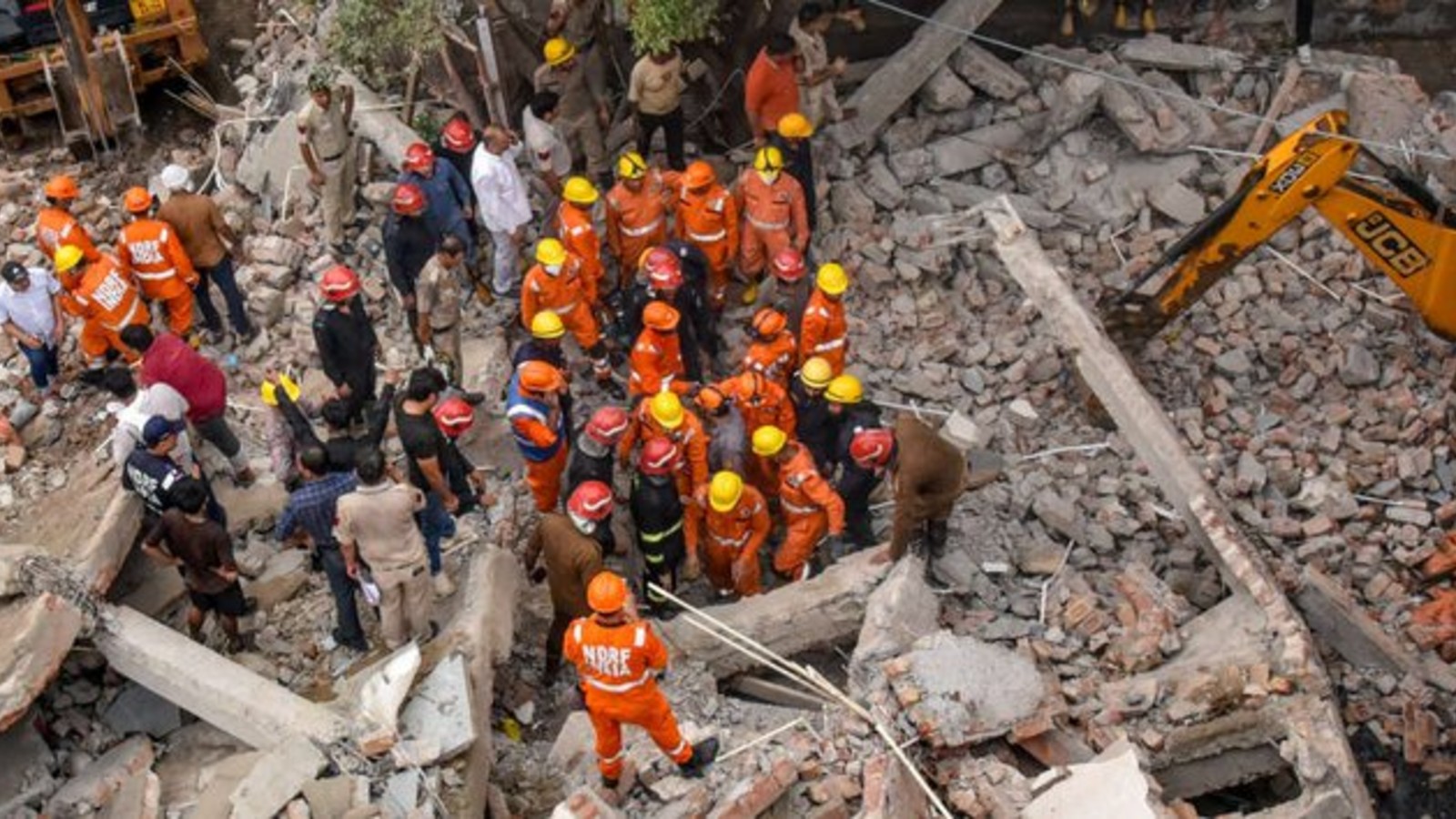
Amidst this heavy rain, the most heart-wrenching and horrifying accident happened in Rohini area of Delhi. A four-storey building under construction could not bear the darkness of the night and the continuous heavy rain. Suddenly at midnight this huge building collapsed to the ground. As soon as the debris fell, there was an outcry in the area. As soon as the information was received, relief and rescue teams reached the spot, but by then it was too late. Three people died tragically after being hit by this debris. This accident has raised serious questions on the quality of the construction works taking place in Delhi and their security arrangements amid heavy rains.
Scroll to load tweet…
Roads or rivers? Delhi came to a standstill as vehicles crawled in knee-deep water.
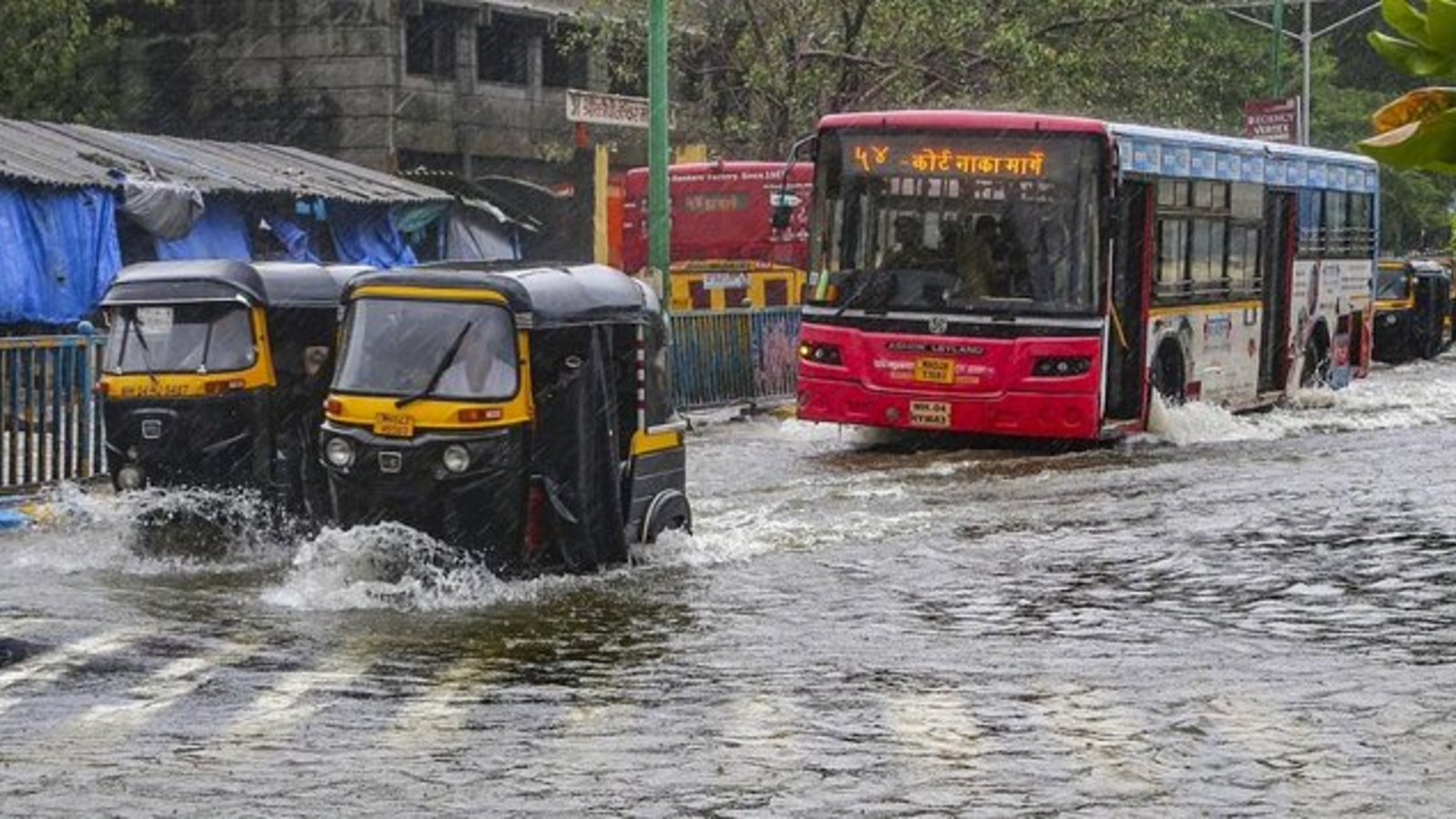
When the people of Delhi opened their eyes on Thursday morning, the scene was like a scary dream. In areas like Sadar Bazaar, Greater Kailash, Badarpur, Nasirpur, Teliwada, Munirka and Dwarka, roads had completely disappeared and rivers of muddy water were flowing in their place. Safdarjung, Delhi’s main weather station, recorded a record 72.6 mm rainfall in just 24 hours, while at Lodhi Road the figure reached 80.2 mm. Cars and buses were seen half submerged in water on busy roads like Ring Road, Outer Ring Road and Dhaula Kuan. Office-goers were forced to walk through knee-deep water, and the morning rush turned into a kilometer-long traffic jam due to low visibility.
Which areas are most affected?
The effect of heavy rain was seen in almost every part of the capital. There was widespread waterlogging in Sadar Bazaar, Greater Kailash, Badarpur, Nasirpur, Teliwada, Mahavir Bazaar, Swaroop Nagar, Kushak Road, Munirka, Dwarka, Vikas Marg, East Delhi and around New Delhi Railway Station. There was a long traffic jam on Delhi-Noida Expressway, Ring Road, Outer Ring Road and National Highway-48 near Dhaula Kuan, Mahipalpur and Rajokri. Low visibility and waterlogged roads made the situation more challenging.

Scroll to load tweet…
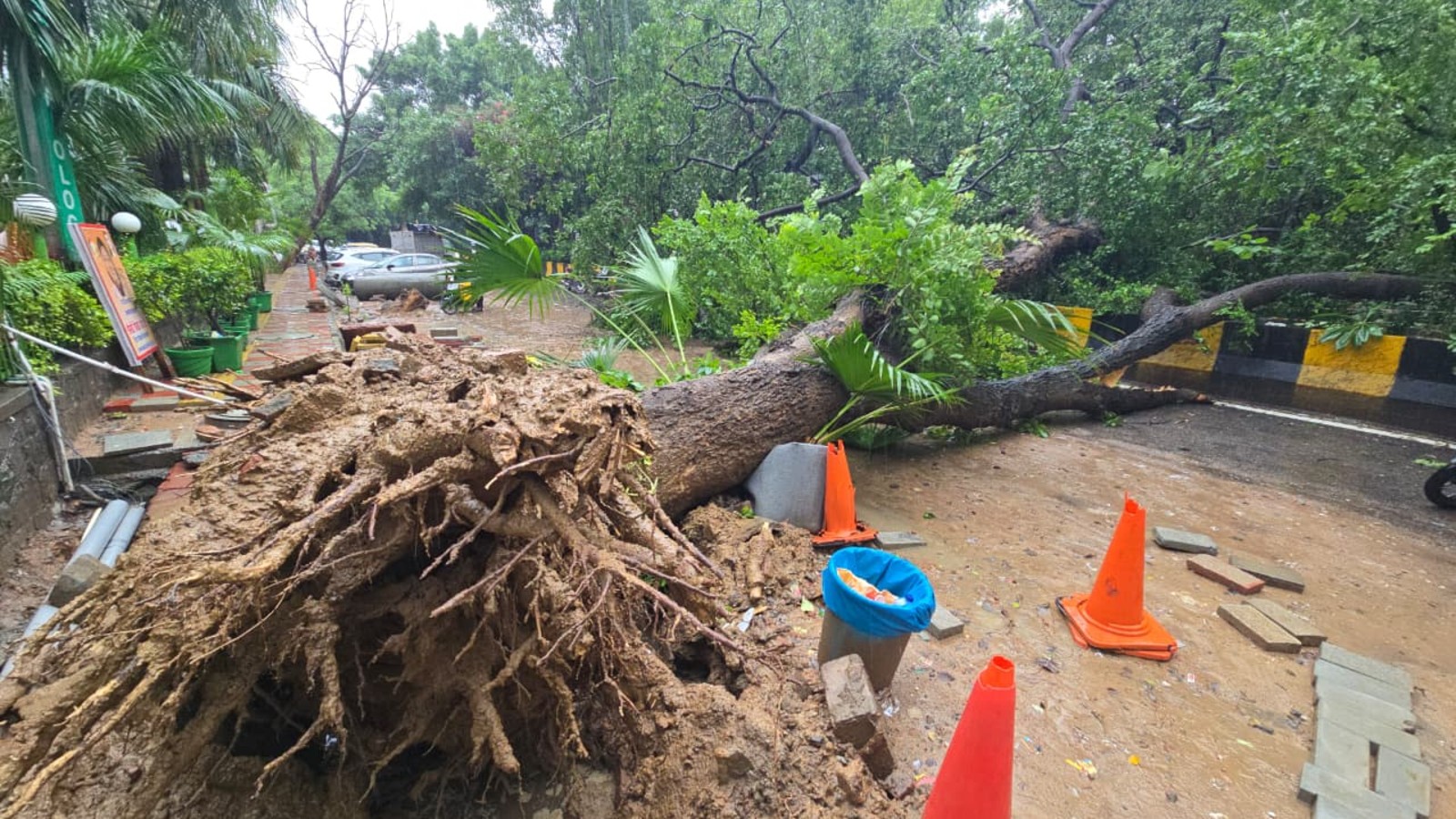
Giant trees uprooted near ISKCON temple, long jam on Gurugram highway
The impact of this celestial disaster was not limited to just filling the water. Due to continuous rain and strong winds, huge trees were uprooted and fell on the roads in many parts of the capital. In East of Kailash, the main road was completely blocked after two huge trees fell near the famous ISKCON temple and outside the National Heart Institute. The impact of this devastation was clearly visible in the neighboring city Gurugram (Cyber City) also. On the Delhi-Jaipur Highway, near Narsinghpur, Basai and Sohna Road, hundreds of vehicles stopped in the middle of the road due to waterlogging, leading to a miles-long queue of vehicles on this main highway connecting Delhi-NCR.
IMD’s red alert, it will rain more now
According to the India Meteorological Department, Delhi’s Safdarjung meteorological center recorded 72.6 mm rainfall in 24 hours. 80.2 mm rainfall was recorded at Lodhi Road, 77.8 mm at Ridge, 63 mm at Palam and 57.4 mm at Ayanagar. Meteorologists say that due to the monsoon trough shifting northwards towards the Himalayan foothills, heavy rains are continuing in the capital. Unless this system moves further, there will be a possibility of heavy rain, thunderstorm and lightning in Delhi and surrounding areas.

Scroll to load tweet…
Rain also gave relief, wind remained ‘satisfactory’
On one hand the rain affected life, on the other hand the air in the capital became clean. Delhi’s air quality index (AQI) was recorded at 61 on Thursday morning, which falls in the “satisfactory” category. At present, the administration is appealing to the people to avoid waterlogged areas, keep an eye on the warnings of the Meteorological Department and come out of the house only when absolutely necessary. The weather pattern may worsen in the coming hours, hence vigilance is very important in the capital.

That ‘weather system’ of the Himalayan foothills and the surprising figures of AQI
After all, why did such catastrophic rains suddenly start in Delhi? According to India Meteorological Department (IMD) officials, there is a major seasonal reason behind this. Actually, the Monsoon Trough has shifted north towards the foothills of the Himalayas, due to which there has been heavy accumulation of clouds over Delhi-NCR. Meteorologists say that until this system completely moves towards the north, the series of storms and lightning will continue in Delhi. Amidst this terrible devastation, there was only one news of relief for the people of Delhi. Due to continuous heavy rains, the pollution present in the air was completely washed away, due to which the Air Quality Index (AQI) of Delhi improved to 61 (satisfactory category). At present, the Municipal Corporation and emergency teams are engaged on a war footing in removing trees from the roads and draining water.