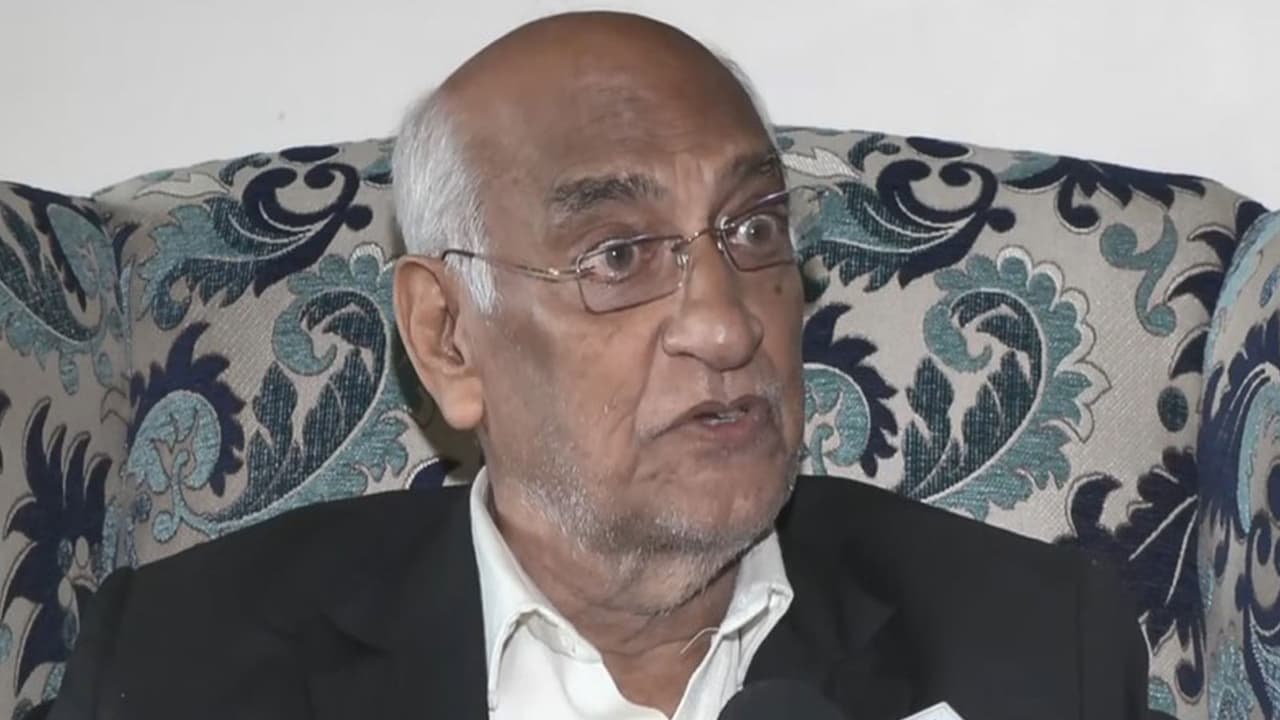
Former diplomat Vidya Bhushan Soni says India must protect its Red Sea energy supply lines via the Bab-el-Mandeb Strait by not antagonising Houthi rebels who control the area, calling the Saudi-Houthi conflict a ‘side issue’ to the Iran crisis.
India’s Diplomatic Tightrope on Red Sea Energy Security
Former diplomat Vidya Bhushan Soni on Thursday cautioned that India must carefully protect its Red Sea energy supply lines through the Bab-el-Mandeb Strait while maintaining a balanced stance to avoid antagonising Yemen’s Houthi rebels, characterising the ongoing Saudi-Houthi friction as a “side issue” compared to the wider Iran crisis.
Speaking with ANI, Soni emphasised that New Delhi relies heavily on oil and gas imports passing through key sea routes like the Strait of Hormuz and the Bab-el-Mandeb Strait. Because the Houthis control the Bab-el-Mandeb area, India must carefully balance its foreign stance so it does not upset the Houthis and jeopardise its energy supply.
“Now, from our point of view, you must understand what India’s interest is. Now India’s interest is in the supply of oil and other energy sectors. There are two ways: one, of course, is through the Gulf of Hormuz; the other one is Bab-el-Mandeb. Now Bab-el-Mandeb is in the Red Sea, and it is entirely controlled by the Houthis. So if this sector is also closed, India’s economic interest will be adversely affected,” the former diplomat explained. “So our interest is not to antagonise. We are supporting the American stance, but we do not want, at the same time, to antagonise the Houthis, because if they were to take a stance on Bab-el-Mandeb, then we’ll be in a very difficult position,” he highlighted.
Saudi Arabia’s Struggle with Houthi Guerrilla Warfare
Regarding the ongoing conflict, Soni noted that while Saudi Arabia possesses advanced weapons, it struggles against the Houthi rebels’ guerrilla fighting style. He explained that because the Houthis do not engage in traditional face-to-face battles, high-tech military gear gives Saudi Arabia little advantage on the ground.
“Houthis and Saudis have had a history of very strained relationships. And the Mecca attack has to be seen—I think in the last interview I did tell you that one of the factors behind the Mecca deal is not the Iran crisis, but the Houthi crisis which Saudi Arabia faces,” he said. “Now Saudi Arabia can, and has access to, the most sophisticated technology, so they can buy anything from anywhere. But when you’re fighting on the ground, they do not have forces, and the kind of warfare which the Houthis inflict is something which is something like guerrilla warfare. That means it’s not a pitched battle face-to-face between the two; they will come, fire something, and then disappear, and then will come again and do it, which Saudi troops are not equipped to handle. So that’s the reason why they have gone for the Mecca thing,” he added.
US Position and Houthi Strategy
On reports of Saudi Arabia seeking help from the United States without success, Soni explained that the Houthis have intentionally avoided attacking US or Israeli targets. By doing so, he said that the Houthis ensure the US stays focused on Iran and sees no reason to get involved in the Saudi-Houthi conflict.
“Now, so far as the US stand is concerned, that is the question which you put. But the US has been made very clear by the Houthi side—they had a meeting in which they said, ‘We give an undertaking that there’ll be no target of US origin, and more importantly, not even Israelis.'” he said. “Now these are the two things the Houthis have made very clear: that come what may, US and Israeli interests will not be threatened. That’s what the US wants, because for them, Iran is the crisis which they are busy with. Why should the side issue be distracting them? So that’s the reason why I said it’s not a main issue; it’s a side issue,” he added. “So that, therefore, explains the situation that Houthis are in—they are very smart, because they know they cannot directly face the US. They can face Saudi Arabia, because they are not fighting—it’s not a direct battle between the two countries’ forces. It’s somebody else who is fighting their war on the ground.”
Controversy Over Mecca Attack Allegations
Earlier on Wednesday, Yemen’s Houthi movement rejected Saudi Arabia’s claim that the group launched a drone towards the holy city of Mecca, calling the allegation “fabrications and lies” and asserting that its operations target Saudi military and oil facilities away from Islamic holy sites.
In a statement posted on Telegram, Houthi military spokesperson Brigadier General Yahya Saree called out the Al Saud regime of Saudi Arabia, calling the attempt a deception, while denying that the rebel group posed a threat to the holy sites. “The fabrications and lies promoted by the criminal Al Saud regime regarding the targeting of the Honourable Mecca cannot deceive anyone, for it is they who desecrate it with debauchery and licentiousness and by importing prostitutes, and there is no threat from Yemen to the sanctities,” the statement read.
Saree said Houthi operations were directed at “its oil facilities and military bases, which are far removed from the sacred sites.”The statement came after the Saudi-led coalition said its air defences intercepted and destroyed a drone south of Mecca on Tuesday evening before it entered the prohibited airspace around the holy city. Coalition spokesperson Major General Turki Al-Malki described the incident as a “hostile and terrorist act” and said the security of the Two Holy Mosques and pilgrims was a “red line”.
Al-Malki said the incident was the second attempt to target Mecca, referring to a ballistic missile launch in July 2017. The Houthis have also carried out attacks against Saudi military and energy infrastructure and have targeted commercial shipping in the Red Sea and around the strategically important Bab-el-Mandeb Strait, further raising concerns over security along the key maritime route. (ANI)
(Except for the headline, this story has not been edited by Asianetnews Editorial staff and is published from a syndicated feed.)