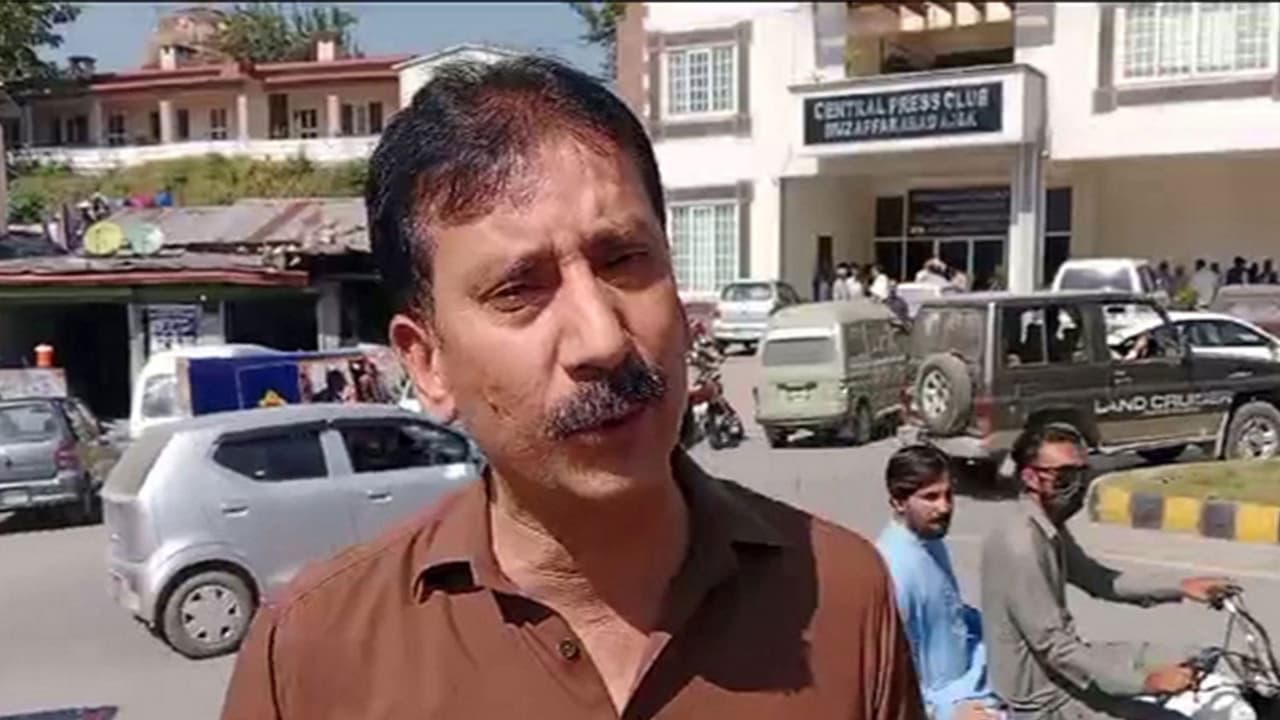
The Joint Awami Action Committee of PoJK has raised concerns over the 55-day detention of its member Shaukat Nawaz Mir without a court appearance. The committee demands authorities produce him in court and allow access to his family and lawyers.
The Joint Awami Action Committee (JAAC) of Pakistan-occupied Jammu and Kashmir has raised concerns over the continued detention of its Core Committee member Shaukat Nawaz Mir, saying he has spent 55 days in custody without being produced before a court.
Taking to social media platform X, the Joint Awami Action Committee said Mir was arrested on June 30, 2026, and “Fifty-five days later, he has still not been produced before a court.” “If the authorities have a lawful case against him, produce him before a court, disclose the allegations and allow him access to his family and lawyers,” it said.
The committee further stated that keeping a person in custody for nearly two months without bringing him before a court “raises grave concerns about due process, arbitrary detention and his safety and wellbeing.” It urged authorities to “immediately clarify his current condition and place of detention,” while allowing family and legal access and producing Mir before a competent court “without further delay.” Concluding its post, the committee said, “55 days. No court appearance. No justification. Where is the rule of law?”
Who is Shaukat Nawaz Mir?
Shaukat Nawaz Mir is a prominent trader, civic activist and Core Committee member of the Jammu Kashmir Joint Awami Action Committee (JKJAAC) in Pakistan-occupied Jammu and Kashmir. He has emerged as a key voice in protests seeking reforms on issues including electricity tariffs, wheat prices and governance. Mir has also represented the traders’ community in Muzaffarabad. He was arrested on June 30, 2026, and has remained in custody, with the JKJAAC raising concerns over his continued detention.
Concerns over Civil Liberties in PoJK
Pakistan-occupied Jammu and Kashmir has witnessed concerns over detention practices, with rights and civic groups raising questions about due process, arbitrary arrests and access to legal remedies. Critics have called for greater transparency from authorities regarding the whereabouts and legal status of detainees.
Concerns have also been raised over access to families and lawyers, as well as timely production before courts. Such cases have intensified debate over civil liberties, rule of law and the protection of fundamental rights in Pakistan-occupied Jammu and Kashmir. (ANI)
(Except for the headline, this story has not been edited by Asianetnews Editorial staff and is published from a syndicated feed.)