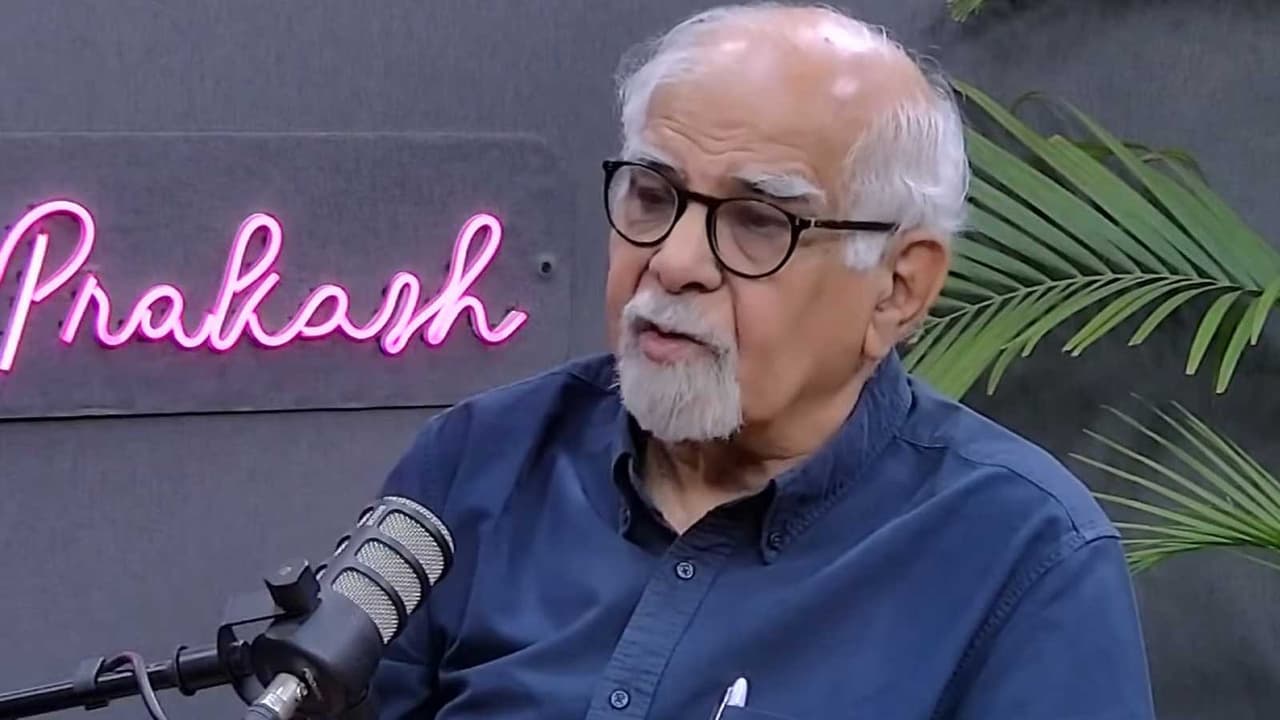
Economist Surjit Bhalla asserts PM Modi has the unique political capital to initiate significant reforms targeting India’s reservation system and the culture of political “freebies,” advocating for evidence-based overhauls and targeted benefits.
“PM Modi is stronger than any Prime Minister in India today. He can take any measure he wants to take. And there will be support of both, I mean, in Lok Sabha, in Rajya Sabha, allies, NDA. I mean, they will,” Bhalla said.
Reforming Reservation Policy
Talking about government reservation policy, Bhalla noted that while the original intent of reservations was to uplift marginalised communities, the policy requires a modern, evidence-based overhaul. He emphasised that the focus should shift toward fostering competitiveness rather than relying solely on legacy systems.
“The world has changed. We haven’t changed. We have the same concepts. So yes, the poor have to be helped. Yes, the backwards have to be provided with more education. And yes, the caste system should be eliminated in its effectiveness. It can be done simultaneously, not wait for one and then the other,” he said.
The ultimate aim, he proposed, should be to help the poor and provide better education to the backward classes while simultaneously working to eliminate the effectiveness of the caste system in public life.
“There are several prominent Dalits who are arguing for reform of the reservation system to allow competitiveness, not reservations. The rest of the world chose affirmative action. It’s not that the poor were not being helped or that the backwards were not being helped. History will judge whether it was a good policy or a bad policy. But what we do know is that in 2026, that policy needs to be reformed. Circumstances change, facts change, but we don’t change,” he said.
Ensuring Benefits Reach the Needy
Bhalla suggested that affirmative action should be refined to ensure that benefits reach those who are truly in need, noting that many students from well-educated Scheduled Caste and Scheduled Tribe families continue to utilize reservations in premier institutions like the IITs.
“A reasonable proportion of Scheduled Caste and Scheduled Tribe students in institutions like the IITs come from well-educated families, yet they continue to receive reservations,” he said.
Reflecting on the gap between recognised policy failures and actual legislative action, Bhalla offered a sombre assessment: “Everybody knows what needs to be done. Everybody can identify what is wrong. But what is wrong continues. That’s the tragedy of India.”
Tackling the ‘Freebie’ Culture
Turning to the contentious issue of welfare schemes, Bhalla acknowledged that political parties across the spectrum have become trapped in a race to win elections through blanket giveaways. He pointed to data suggesting that even BJP-ruled states have seen significant increases in freebies, underscoring the political nature of the trend.
“This freebies issue has seized all of us. It was Prime Minister Modi who first came up and said we have to do away with freebies. I analysed Asian Development Bank data from 2017 onwards and found that BJP-ruled states have shown the largest increase in freebies. It supports the argument that if you want to win elections, you give freebies,” he said.
A Shift to Income-Determined Benefits
Bhalla advocated for a transition from blanket handouts to structured, income-determined benefits.
“That’s the problem. We should move towards income-determined benefits. If I were to do it on the basis of income, only the poorest would receive them. But instead, every woman should get it. That’s cash transfers. There are targeted cash transfers, and nobody in the world will oppose that. That’s affirmative action. But blanket freebies, as we practice them, are different,” he said. (ANI)
(Except for the headline, this story has not been edited by Asianet Newsable English staff and is published from a syndicated feed.)