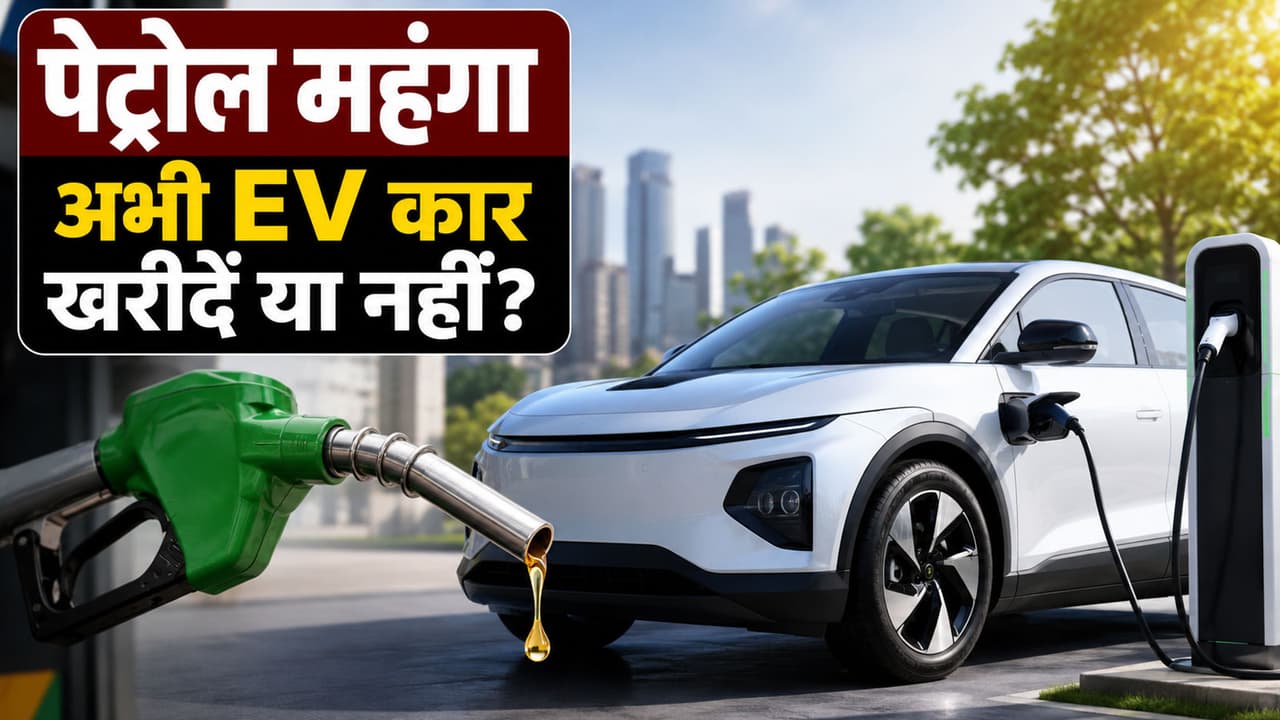
Petrol vs EV Which is Best for Daily Use: After petrol crossing ₹ 115, EV now seems to be a cheaper option for those who drive 30 kilometers daily. While a petrol car may cost more every month, an electric car may cost less, but know from experts whether buying it is a profitable deal or not.
Petrol vs Electric Car Monthly Cost: The back-to-back increase in the prices of petrol and diesel four times in the last 10 days has ruined the entire arithmetic of the common man’s pocket. While petrol is being sold beyond ₹102 per liter in Delhi, it has reached above ₹115 in cities like Hyderabad. In such a situation, only one question is roaming in the mind of every working person and daily traveler, ‘Should we now park the petrol car and buy an Electric Vehicle (EV)?’ If your daily commuting distance is around 30 kilometres, then you do not need to pay attention to anyone. We have brought a very easy and straightforward calculation for you, so that you can decide for yourself which car will be best for you.
What is the monthly expense of a petrol car?
Let us assume that you have a normal petrol car, which gives a mileage of about 14 kilometers per liter in city traffic and with AC on. If your daily journey is 30 kilometers, then the daily petrol consumption will be around 2.14 litres. Talking about daily expenditure, if the average rate of petrol is assumed to be ₹ 102, then the daily expenditure would be around ₹ 218. According to 30 days, your petrol bill alone comes to around ₹ 6,540. This figure reaches ₹78,480 annually.
How much will the monthly cost of an electric car be?
Now let’s talk about EV. Suppose you have a normal electric car. Charging it at home costs an average of ₹7 to ₹8 per unit of electricity. It depends on the slab of different states. A typical EV comfortably runs 6 to 7 kilometers inside the city on 1 unit electricity. That means its cost per kilometer comes between ₹ 1.10 to ₹ 1.30. Your daily journey is 30 kilometers. At ₹1.20 per kilometre, the daily cost was only ₹36. Monthly (30 days) electricity cost will be around ₹1,080. The annual electricity bill will be only around ₹ 12,960.
Petrol vs EV Car: How much will be saved every month?
If you switch from petrol to EV, you will save ₹5,460 (₹6,540-₹1,080) every month. This savings will reach ₹65,520 every year. In such a situation, everyone will feel that EV is more beneficial, but here you will have to take a wise decision. According to experts, to buy an electric car of the same level as compared to a normal petrol car, you have to pay ₹ 3 to ₹ 4 lakh extra as upfront cost. If your running is only 30 kilometers a day, then you are saving around ₹ 65,520 in a year. Accordingly, it will take you at least 5 to 6 years to recover the extra Rs 3-4 lakh you have invested in buying an EV (Break-Even).
To buy EV car or not?
Experts say that if your vehicle drives only 30 kilometers or less every day and you are happy with your existing petrol car, then immediately switching to a new EV can be a loss-making deal. But if you are thinking of buying a new car and your mileage is going to increase in the coming time, then going for EV will be beneficial for you in the long term.
Know these 4 things before buying an EV
- Whether there is a charging station in your home or office or not. If it is not there, there may be a problem.
- Buying an EV car is still more expensive than a petrol car. Its initial cost is high.
- For those with long drives, charging facilities are not available everywhere. There are not yet charging stations in every city and highway.
- If your daily running is high, then only the benefits of EV will be visible quickly.
Disclaimer: This article is for general information only. The calculation of petrol-diesel and electricity prices given here is based on a simple average (average mileage, domestic electricity rates and current market prices). This figure and your actual savings may be more or less depending on your city, vehicle model, driving habits and state regulations. Please seek complete information and expert advice from official dealers before purchasing any new vehicle or taking any financial decision.