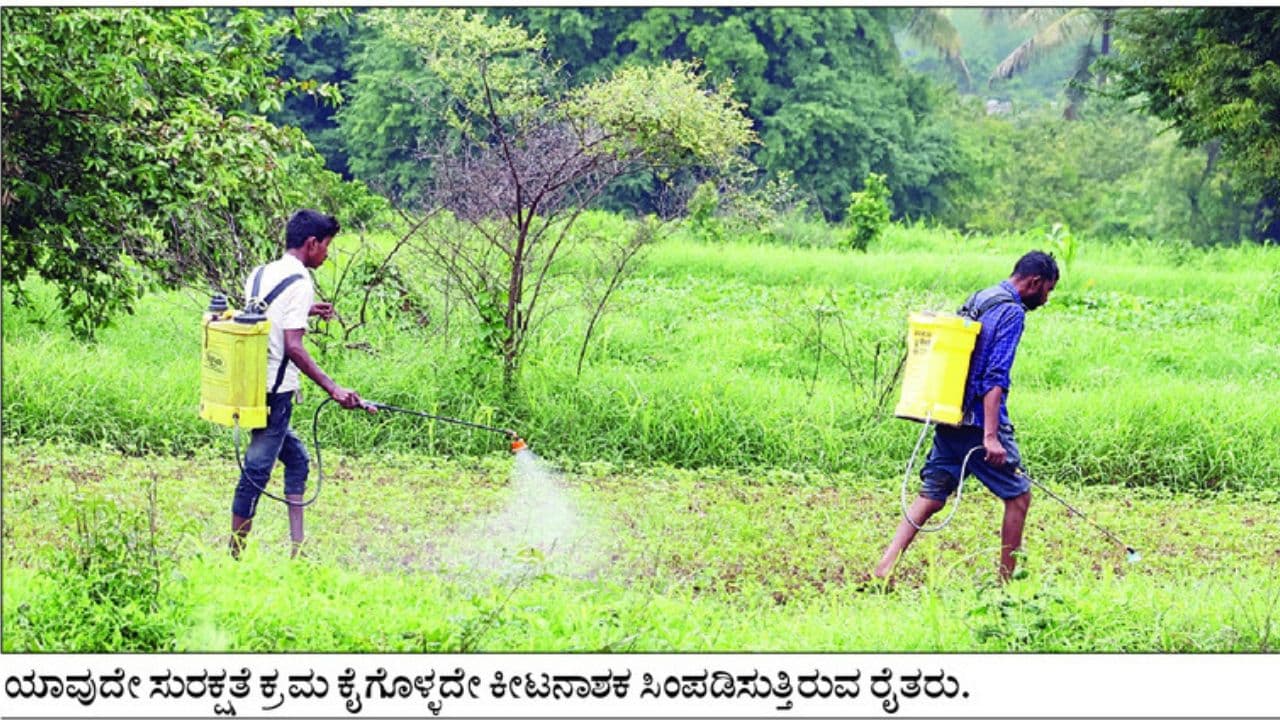
A KMCRI study has found pesticide traces in farmers’ blood for up to 15 days after spraying, raising concerns over possible kidney, heart and metabolic health risks. Researchers plan a larger study to examine the long-term impact.
The Karnataka Medical College and Research Institute (KMCRI) in Hubballi, which recently conducted research into the causes of heart attacks among children, has now released another concerning study on the health risks faced by farmers. The institute’s latest research has found traces of pesticides in the blood of farmers for up to 15 days after spraying, raising concerns about prolonged exposure to agricultural chemicals and their possible impact on kidney, heart and metabolic health. The findings have also highlighted the need for further research into the long-term health effects of pesticide exposure among farmers.
The debate over the use of chemical fertilisers and pesticides in agriculture is not new. However, KMCRI’s Multidisciplinary Research Unit sought to examine the potential health impact of prolonged exposure to these chemicals among farmers who regularly spray them. To understand the extent of chemical exposure, the team conducted a month-long study involving farmers from rural parts of Dharwad district.
What Was The Research About?
The KMCRI team selected 13 farmers from rural parts of Dharwad district for the study. Blood samples were collected from the farmers after they had sprayed pesticides and fertilisers and were tested for traces of chemical exposure.
The findings were concerning, with traces of pesticides detected in the farmers’ blood even 15 days after they had sprayed the chemicals. However, experts said further research is required to determine how these chemicals enter the body, how long they remain in the bloodstream and what their long-term health effects could be.
Potential Health Effects Of Chemical Exposure
The study has raised concerns about the possible impact of pesticide and fertiliser exposure on kidney, heart and metabolic health. Prolonged exposure to agricultural chemicals could potentially contribute to health problems such as kidney failure, diabetes and heart disease.
However, doctors involved in the study clarified that the findings should not be interpreted as proof that pesticides or fertilisers directly cause these diseases. The study involved only 13 farmers and was conducted over a limited period. A larger, long-term study will be required to establish a clearer association between chemical exposure and specific health conditions.
How Can The Chemicals Enter The Body?
Pesticides can enter the body through inhalation and skin contact, particularly when farmers spray chemicals without adequate protective equipment. The KMCRI team has stressed the importance of following safety measures while handling and spraying agricultural chemicals.
Farmers have been advised to wear appropriate masks and gloves, along with clothing that provides maximum coverage while spraying. They should also avoid eating, drinking or talking unnecessarily during the spraying process.
After completing the work, farmers should thoroughly wash their hands, face and body. Clothes worn while spraying should also be washed separately to prevent further exposure.
KMCRI Plans A Larger Study
The current study involved only 13 farmers in Dharwad district, but KMCRI is now preparing to conduct a larger-scale study. The institute plans to submit the findings to the state government and expand the research to obtain more comprehensive data.
The researchers acknowledged that completely eliminating the use of chemical fertilisers and pesticides in agriculture may not be practical. However, they stressed that excessive use should be avoided and that farmers must follow appropriate safety protocols while handling these chemicals.
The broader objective of the research is to better understand the health risks associated with agricultural chemical exposure and identify safer practices for farmers.
“We took blood samples from 13 farmers over a one-month period and tested them. We found chemical traces in their blood from the first day of spraying up to 15 days later. We are now preparing for a much larger study, which will give us more accurate results.” – Dr Rama Kaulagudda, Nodal Officer, Multidisciplinary Research Unit, KMCRI