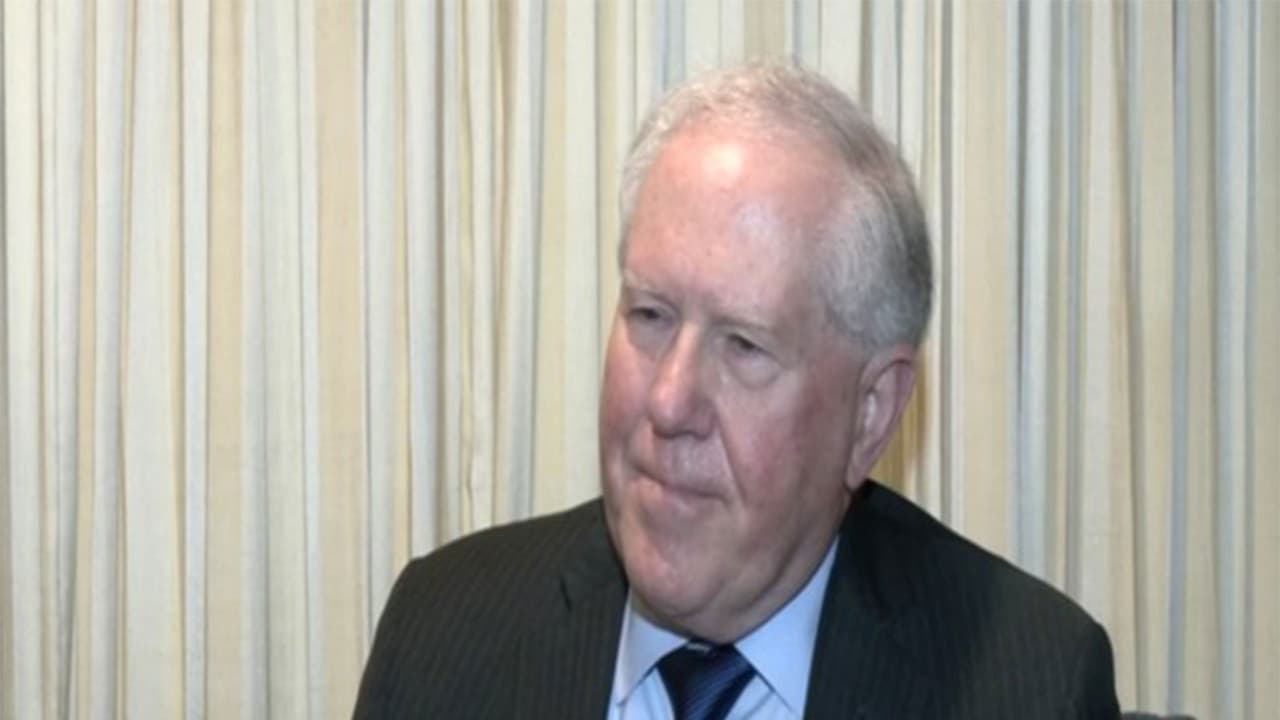
The Pentagon has revoked former US Air Force Secretary Frank Kendall’s security clearance over the alleged unauthorized disclosure of classified information related to Air Force One’s capabilities, Chief Pentagon Spokesman Sean Parnell announced.
The Pentagon has revoked the former US Air Force Secretary Frank Kendall’s eligibility to access classified information and barred him from holding any sensitive position over the alleged unauthorised disclosure of classified information related to Air Force One, Chief Pentagon Spokesman Sean Parnell announced on Friday (local time).
In a post on X, Parnell said the decision took effect immediately and was prompted by what the Department of War described as Kendall’s disclosure of classified information concerning Air Force One’s capabilities to a media outlet. “Effective immediately, the Department of War has REVOKED former Secretary of the Air Force Frank Kendall’s eligibility for access to classified information and his ability to hold any sensitive position. This action follows his unauthorized disclosure of classified information regarding Air Force One’s capabilities to a media outlet,” Parnell said. Effective immediately, the Department of War has REVOKED former Secretary of the Air Force Frank Kendall’s eligibility for access to classified information and his ability to hold any sensitive position. This action follows his unauthorized disclosure of classified information… — Sean Parnell (@SeanParnellASW) August 7, 2026 Emphasising the department’s stance on protecting sensitive information, he added, “Safeguarding classified information is a non-negotiable duty. Those who violate that trust forfeit the privilege of access and any role requiring it.”
Trump administration’s scrutiny of leaks
The announcement comes amid the Trump administration’s broader scrutiny of alleged leaks involving national security information.
Subpoenas issued to journalists
Earlier in June, the administration of US President Donald Trump issued subpoenas to several journalists from The New York Times, seeking to compel them to testify before a federal grand jury in Manhattan over the newspaper’s reporting on security concerns surrounding a Qatari-donated Air Force One aircraft, The New York Times reported. According to the publication, the subpoenas were issued by Jay Clayton, the US Attorney for the Southern District of New York, and required journalists to testify regarding an alleged violation of federal criminal law. In several instances, federal agents reportedly delivered the subpoenas to the journalists’ homes. The newspaper identified the journalists who received subpoenas as Julian E. Barnes, Eric Lipton, Tyler Pager and Eric Schmitt.
The reports at the centre of the investigation stated that President Trump travelled from Turkey aboard the older Air Force One after receiving security advice from the US Secret Service. Another report said the Boeing 747-8 aircraft donated by Qatar for presidential use lacked certain advanced security features, including anti-missile capabilities, citing anonymous sources familiar with sensitive security matters.
The New York Times criticises move
Reacting to the subpoenas, The New York Times criticised the move, arguing that compelling journalists to testify could undermine press freedom and discourage investigative reporting on matters of public interest. The publication also noted that while successive US administrations have investigated leaks of classified information, subpoenas directed at journalists remain relatively uncommon. (ANI)
(Except for the headline, this story has not been edited by Asianet Newsable English staff and is published from a syndicated feed.)