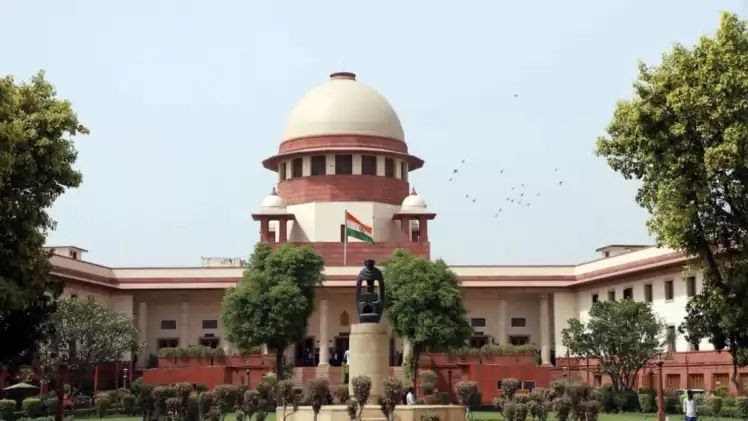
The Supreme Court has given a very important and sensitive decision saying that no government or department can deprive temporary employees of their rights and pension by taking them to work as permanent employees.
The court made it clear that it is unfair to take away rights in exchange for equal work. The State is an ‘ideal employer’ and cannot leave its employees, who have served for decades, in the lurch due to administrative laxity.
Justice Sanjay Karol and Justice A.G. Masih’s bench rejected the Patna High Court order which had denied pension benefits to temporary employees of the Postal Department who had served as night guards for decades.
Pension is not a dole, but a constitutional right. Citing a historic decision of 2013, the Supreme Court said that pension is not a dole or reward, but it is the hard earned money of the employee over the years.
It is a ‘constitutional right’ akin to property under Article 300A of the Constitution. This fundamental and legal right of any employee cannot be taken away or made ineffective due to the laziness or administrative failure of the department. Strict instructions to make payment in three months: Supreme Court Referring to the 1991 scheme of the Postal Department, it said that its objective was to gradually bring temporary workers at par with regular Group ‘D’ employees.
These employees were being given dearness allowance and house rent allowance, which proves that their work was of permanent nature. The court said, “The Directive Principles of State Policy (Articles 38, 39 and 43) of the Constitution entrust the State with the responsibility of providing socio-economic justice and a dignified life to the workers.”
The Supreme Court has given strict instructions to the Central Government to calculate the pension and other retirement benefits of these former employees or their legal heirs and pay the same within three months. The court has also warned that if payment is not made within the stipulated time, the department will have to pay interest at the rate of six percent per annum on the outstanding amount. (With inputs from news agency PTI)