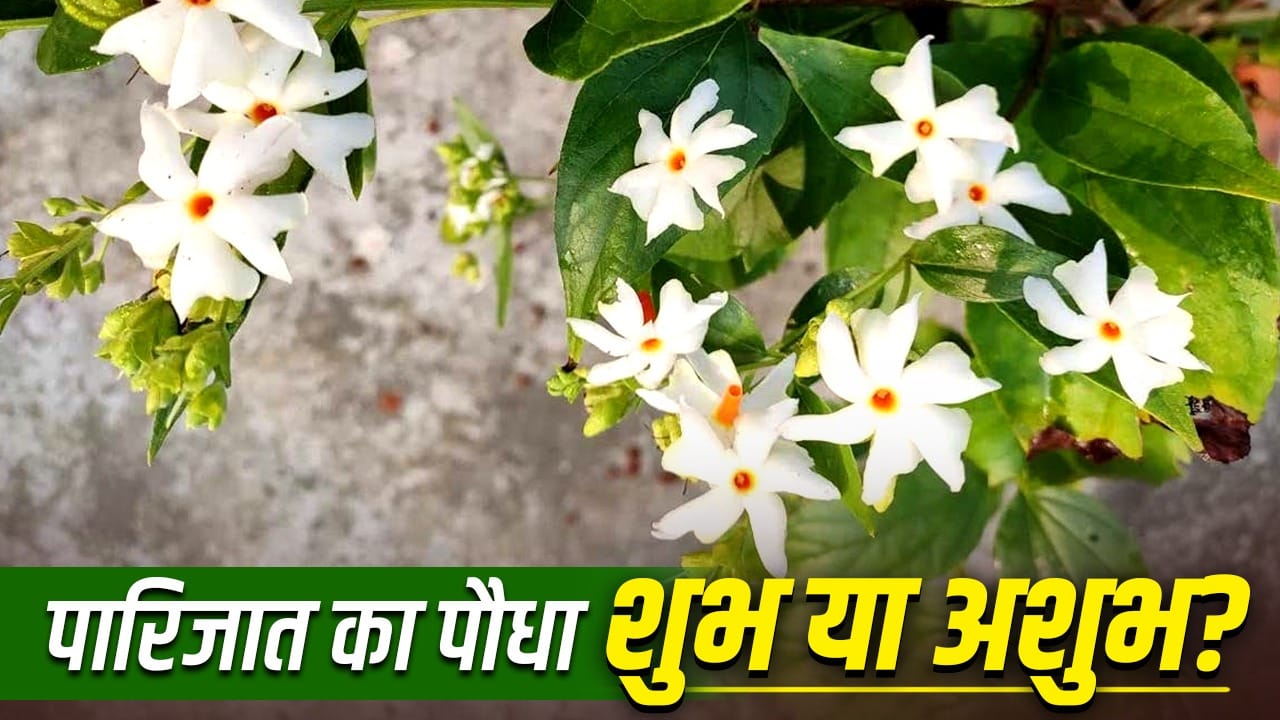
Parijat plant
Parijat Plant Benefits: Parijat flowers are very beautiful. Its saffron stem and white petals make it particularly attractive. Parijat plant, known as ‘Night Blooming Jasmine’ in English or ‘Raat Ki Rani’ in common language, is a very beneficial and ornamental plant from medicinal and architectural point of view. These attractive plants are commonly used in homeopathy and Ayurveda and are grown for the beauty of their leaves and flowers.
According to Vastu, small white flowers grow on the Parijat plant planted in the house. These flowers start blooming in late September and continue blooming till December. The flowers of this plant generally bloom late in the evening or at night and spread a strong fragrance around. There is also a mythological story related to the Parijat plant.
Mythological belief about Parija plant
According to the legend, Lord Krishna brought the Parijat plant from heaven to earth, but Satyabhama and Rukmini had a difference of opinion on where to plant the Parijat plant. Then Krishna adopted a trick and planted the plant in Satyabhama’s courtyard in such a way that its flowers fall in Rukmini’s courtyard. Planting a Parijat plant in the house is considered very auspicious. It is said that Goddess Lakshmi is very fond of Parijat flowers. There is also a religious belief that Goddess Lakshmi resides where Parijat flowers bloom. The fragrance of Parijat flowers is very charming.
In which direction to plant the Parija tree?
Having a Parijat plant in the house or near the main entrance, its aroma reduces stress and provides peace to the mind. It is believed that having a Parijat plant around the house reduces Vaastu defects and maintains an atmosphere of happiness, peace and joy in the family. According to Vastu Shastra, North or East direction is considered best for planting Parijat plant in the house. Placing Parijaat in this direction removes negative energy and increases the flow of positive energy in the house.
Also read: Mala Ka Jaap: Importance of chanting the rosary of these four beads Rudraksh, Crystal, Tulsi, Kamalmani
Disclaimer: The information given in this news is based on Vastu Shastra and general information. TV9 Bharatvarsha does not confirm this.