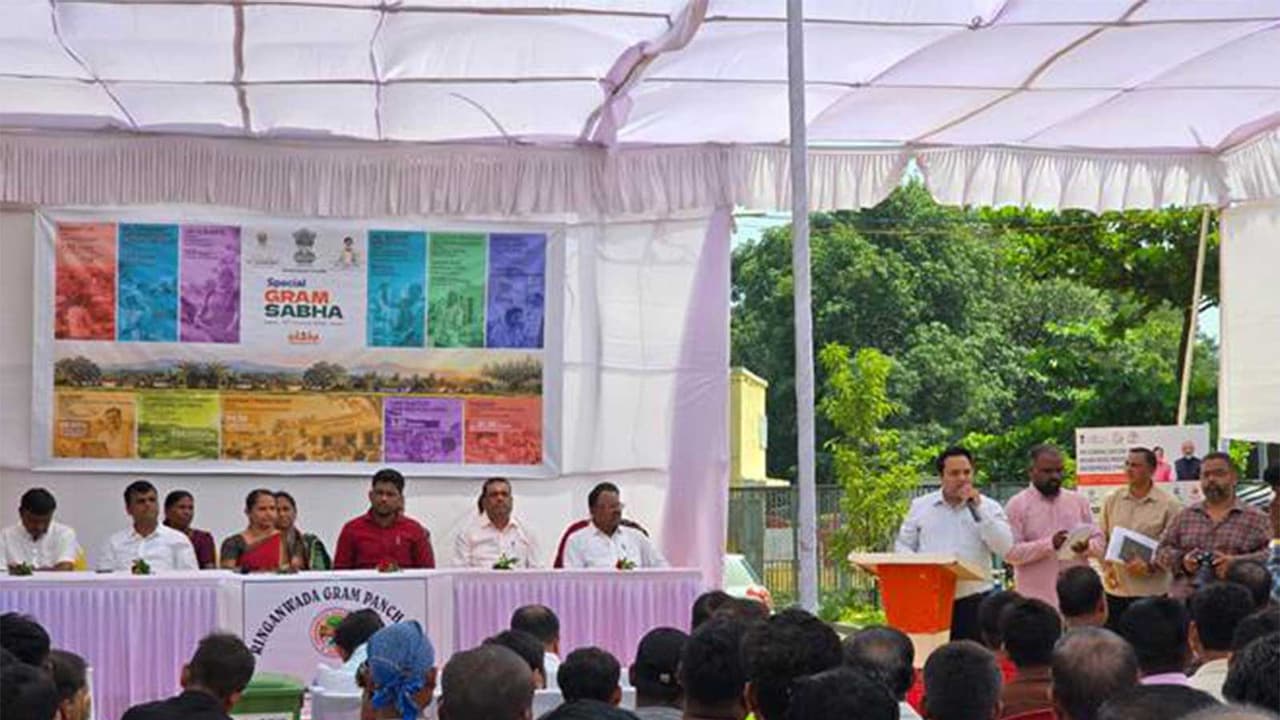
Over 2.42 lakh Special Gram Sabhas were held across India on Gandhi Jayanti, launching the People’s Plan Campaign 2026-27. The events saw enthusiastic public participation in planning for Panchayat development and discussing government schemes.
On the occasion of Gandhi Jayanti, Special Gram Sabhas were held across the country, with more than 2.42 lakh Special Gram Sabhas scheduled on the GPDP Portal and Panchayat NIRNAY Portal. These Gram Sabhas witnessed enthusiastic and active participation of local residents, elected representatives, Panchayat functionaries, and officials.
The Special Gram Sabhas also marked the commencement of the People’s Plan Campaign 2026-27, “Sabki Yojana, Sabka Vikas”, under which Panchayats will prepare their Panchayat Development Plans for the Financial Year 2027-28.
According to the Ministry of Panchayati Raj, in these 2.42 lakh special Gram Sabhas, schemes and pioneering initiatives of the Central Government, under the ministry; the Department of Rural Development; the Department of Drinking Water and Sanitation; the Department of Consumer Affairs; the Department of Food and Public Distribution; the Department of Water Resources, River Development and Ganga Rejuvenation; and the Department of Land Resources, were placed at the centre of the discussions.
The Special Gram Sabhas provided rural citizens with a direct platform to participate in discussions on key government initiatives and issues of local relevance. The wide-ranging deliberations covered enhanced devolution of Central Finance Commission grants to Panchayats, financial self-reliance through Own Source Revenue, secure property and land rights, assured employment and livelihoods, safe drinking water and sanitation, water security, food security, consumer protection and women’s economic empowerment, among other areas, the ministry said.
Agenda and awareness material highlighting key government initiatives, including transformative governance reforms and citizen-centric measures undertaken over the last twelve years, were read out and deliberated upon. Local residents, elected representatives, Panchayat functionaries and officials actively participated, sharing their experiences, perspectives and suggestions, which will contribute to enriching the Gram Panchayat Development Plans.
Whole-of-Government Approach
The nationwide conduct of these Special Gram Sabhas was supported by the coordinated efforts of partner Ministries and Departments, along with their field and grassroots-level functionaries and MY Bharat volunteers. Their engagement across State, District, Block and Gram Panchayat levels helped facilitate meaningful dialogue on citizen-centric schemes and initiatives, while strengthening Jan Bhagidari and Samvaad at the grassroots.
Adopting a Whole-of-Government approach, Vineet Joshi, Secretary, Ministry of Panchayati Raj, along with senior officers of the Ministry and participating Ministries and Departments of the Government of India, remained in continuous touch with officials of States and Union Territories throughout the day, reviewing the progress of Special Gram Sabhas across the country and facilitating close coordination in the spirit of cooperative federalism.
The coordinated efforts of States and Union Territories, supported by their Panchayati Raj Departments, district administrations and field functionaries, ensured the seamless conduct of this nationwide exercise on an unprecedented scale.
The People’s Plan Campaign, led by the Ministry of Panchayati Raj in collaboration with 21 Ministries and Departments of the Centre, reflects the Whole-of-Government approach under the leadership of Prime Minister Narendra Modi. The Ministry has been rolling out the People’s Plan Campaign in all States and Union Territories since 2018 to enable Panchayats to prepare evidence-based, holistic and participatory plans.
Key Initiatives and Achievements Highlighted
Under the Rashtriya Gram Swaraj Abhiyan, the Ministry supports training and capacity building across nine themes of local development. More than 2.55 lakh Gram Panchayats prepare participatory Gram Panchayat Development Plans and upload them on the eGramSwaraj portal, while the Panchayat Advancement Index helps each Gram Panchayat identify its achievements and gaps. On this basis, the Gram Sabha can take a Sankalp on priority areas, advancing the Localisation of Sustainable Development Goals and the vision of Viksit Bharat.
Financial Empowerment and Governance
The Sixteenth Finance Commission has recommended Rs 4,35,236 crore for Rural Local Bodies for 2026-31, an increase of nearly 84 per cent over the Fifteenth Finance Commission, with the annual per capita grant rising from about Rs 400 to nearly Rs 950. The SAMARTH Panchayat Portal has registered over 57 lakh taxpayers and 15 lakh properties, and the Atma Nirbhar Panchayat Special Award carries incentives of up to Rs 1 crore. Panchayat accounts now follow the six-tier structure used by the Union and State Governments, and more than 2.5 lakh Panchayati Raj Institutions have joined the AuditOnline system.
Land Rights and Rural Employment
Under the Survey of Villages Abadi and Mapping with Improvised Technology in Village Areas (SVAMITVA) Scheme, 3.33 crore property cards have been generated for 2.06 lakh villages, with loans of about Rs 1,713 crore sanctioned and recognition of women as property owners encouraged. The Viksit Bharat Guarantee for Rozgar and Ajeevika Mission (Gramin), in force since July 1, guarantees 125 days of wage employment every financial year to eligible rural households, with attendance through Face Authentication and digital payments. More than 31.69 crore person-days have been generated, over 2.81 crore workers from about 2.23 crore households have received employment, and works are under way in nearly 2.31 lakh Gram Panchayats. An interim allocation of Rs 93,841 crore has been made to States and Union Territories for 2026-27, and the Viksit Gram Panchayat Plan enables the Gram Sabha to decide works according to local needs.
Water Security and Sanitation
Under the Jal Jeevan Mission, rural tap water connections have grown from about 3.23 crore households (17 per cent) to more than 16 crore (over 80 per cent), and Jal Arpan, the handing over of completed water supply schemes to Gram Panchayats and communities, was also highlighted. Under the Swachh Bharat Mission (Grameen), 12.22 crore household toilets have been built and over 5.25 lakh villages (89.6 per cent) have declared themselves Open Defecation Free Plus (Model). The Solid Waste Management Rules, 2026 were discussed during the gram sabhas, as Swachhata Hi Seva 2026 culminates.
Water Conservation and Management
More than 1.55 crore artificial recharge and storage structures have been constructed with community participation, and an impact study of the first phase estimated groundwater recharge of 2.43 billion cubic metres. Revised watershed development norms have raised funding to Rs 22,000 per hectare in plain areas and Rs 28,000 in hilly and difficult areas, and reduced the project period from seven to five years. The Gram Sabha activities under Catch the Rain focused on raising awareness about rainwater harvesting, groundwater recharge and community-led water conservation. Local communities, Panchayati Raj representatives and district officials participated actively in the programme, which featured technical guidance, screening of awareness videos, tree plantation and Shramdaan activities, along with the administration of the Jal Shapath. The Catch the Rain (CTR) Anthem was also played and displayed to reinforce the message of conserving every drop of rainwater and mobilising collective action towards sustainable water management.
Food Security and Consumer Protection
Under One Nation One Ration Card, about 3.27 crore portability transactions take place every month, and the Pradhan Mantri Garib Kalyan Anna Yojana provides free foodgrains to up to 81.35 crore beneficiaries, extended up to 2028. The National Consumer Helpline, available in 17 languages, received 3,42,371 calls in August 2026 against 78,477 in August 2019, and has facilitated refunds of over Rs 105 crore since April 2025. The e-Jagriti platform has disposed of more than 2.55 lakh of the 2.81 lakh cases instituted and received the Silver Award at the National Awards for e-Governance 2026.
Digitalisation of Land Records
Under the Digital India Land Records Modernisation Programme, 99.90 per cent of Records of Rights and 97.4 per cent of cadastral maps have been digitised. Citizens in 31 States and Union Territories can access land records online, and in 24 states/UTs can download digitally signed records, safeguarding owners against fraudulent mutations and facilitating access to credit.
Inter-Ministerial Collaboration for Social Awareness
Several Ministries/Departments extended valuable support in ensuring awareness at the village level. The Ministry of Home Affairs facilitated awareness on the new criminal laws, namely the Bharatiya Nyaya Sanhita, the Bharatiya Nagarik Suraksha Sanhita and the Bharatiya Sakshya Adhiniyam; the Ministry of Cooperation on the Digital Transformation and Strengthening of Cooperatives; the Ministry of Women and Child Development on Bal Vivah Mukt Bharat; and the Ministry of Social Justice and Empowerment on Nasha Mukt Bharat Abhiyan, in pursuit of safe, healthy, child marriage-free and drug-free villages.
These Special Gram Sabhas reaffirmed the Gram Sabha as the foundation of participatory democracy and local governance. “The Ministry of Panchayati Raj looks forward to the preparation of people-centred Panchayat Development Plans for 2027-28 under the People’s Plan Campaign, towards building Sashakt, Atmanirbhar and Viksit Panchayats in the larger endeavour of Viksit Bharat,” the ministry stated. (ANI)
(Except for the headline, this story has not been edited by Asianetnews Editorial staff and is published from a syndicated feed.)