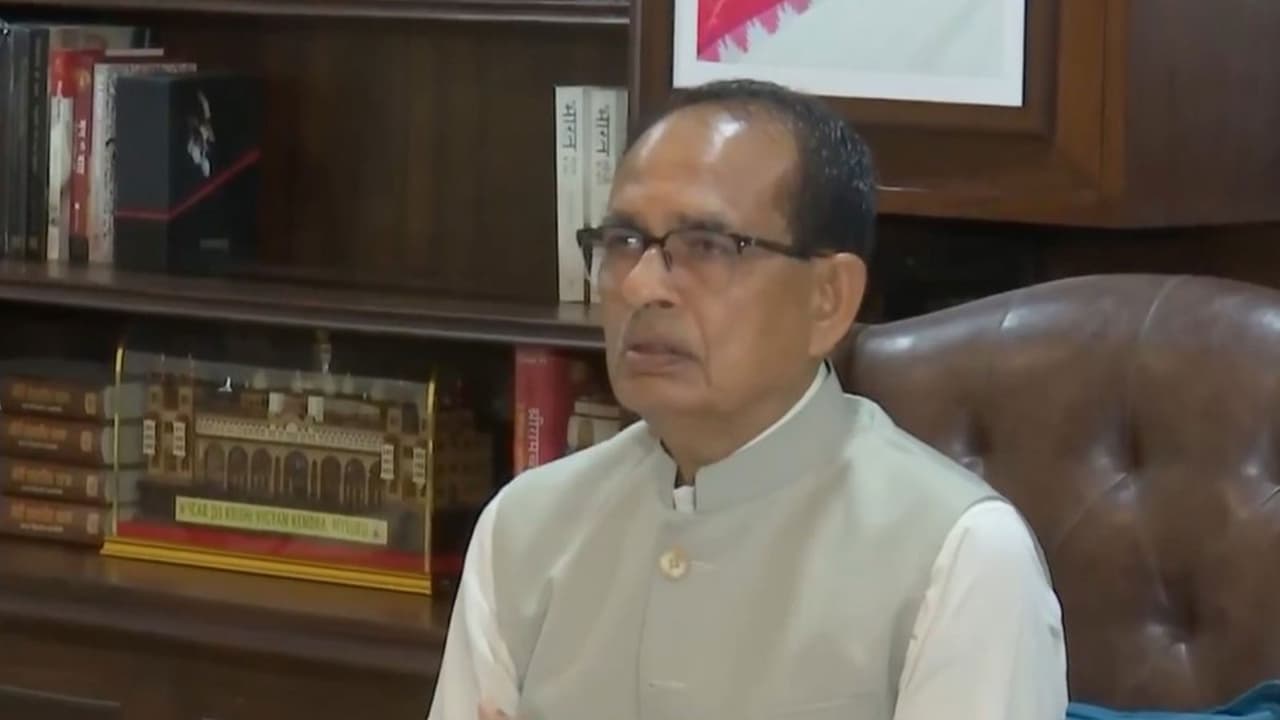
Union Minister Shivraj Singh Chouhan released the first installment of ₹25,863 crore for ‘Vikas Bharat G-RAM-G Scheme’ which replaced MNREGA. In the new scheme, employment will now be guaranteed for 125 days instead of 100. The opposition has objected to the removal of Gandhi’s name from the scheme.
Bhopal (Madhya Pradesh) [भारत]July 5 (ANI): Union Rural Development and Agriculture Minister Shivraj Singh Chouhan on Sunday released the first installment of ‘Mother Sanction’ for all the states across the country under the ‘Vikas Bharat G-RAM-G Scheme’. This amount is Rs 25,863 crore. The minister released this fund through video conferencing at 10 am from Bhopal.
Speaking on the occasion, Chouhan expressed satisfaction over the implementation of the scheme and said that it has successfully evolved from its previous form. The Union Minister said, “Today I am very happy and pleased to congratulate all of you, our Rural Development Ministers and officials of the Central and State Governments for the fact that no complaints of any kind have been received so far. This is an indication that this policy has smoothly transformed from MNREGA to Vikas Bharat G-RAM-G.”
What is Vikas Bharat G-RAM-G Scheme?
The Vikas Bharat-Guarantee for Employment and Livelihood Mission (Rural) Act, or VB-G RAMG Act, came into effect from July 1, 2026. This centrally sponsored welfare scheme was passed in the winter session of Parliament 2025. This law has given a guarantee of 125 days instead of 100 days employment guarantee. However, the opposition has criticized this law, saying that Mahatma Gandhi’s name has been removed from the scheme and the funds have been distributed in the ratio of 60:40 between the Center and the states.
Main features of the scheme
Under the new framework, every rural household whose adult members volunteer to do unskilled manual work will get a legally guaranteed 125 days of wage employment every financial year. This enhanced guarantee aims to strengthen livelihood security, improve rural incomes and promote sustainable development at the village level.
Laborers will be given employment within the stipulated time frame in exchange for the demand for work. Failing which, the workers will be entitled to receive unemployment allowance as per the provisions of the Act.
This Act emphasizes on payment of wages in a timely and transparent manner. Wages will continue to be sent directly to the bank or post office accounts of workers through Direct Benefit Transfer (DBT). Wages are to be paid on weekly basis or within fifteen days of closure of the muster roll, failing which the workers will be entitled to compensation for delay as per the provisions of the Act.
(Except for the headline, this story has not been edited by Asianetnews Editorial staff and is published from a syndicated feed.)