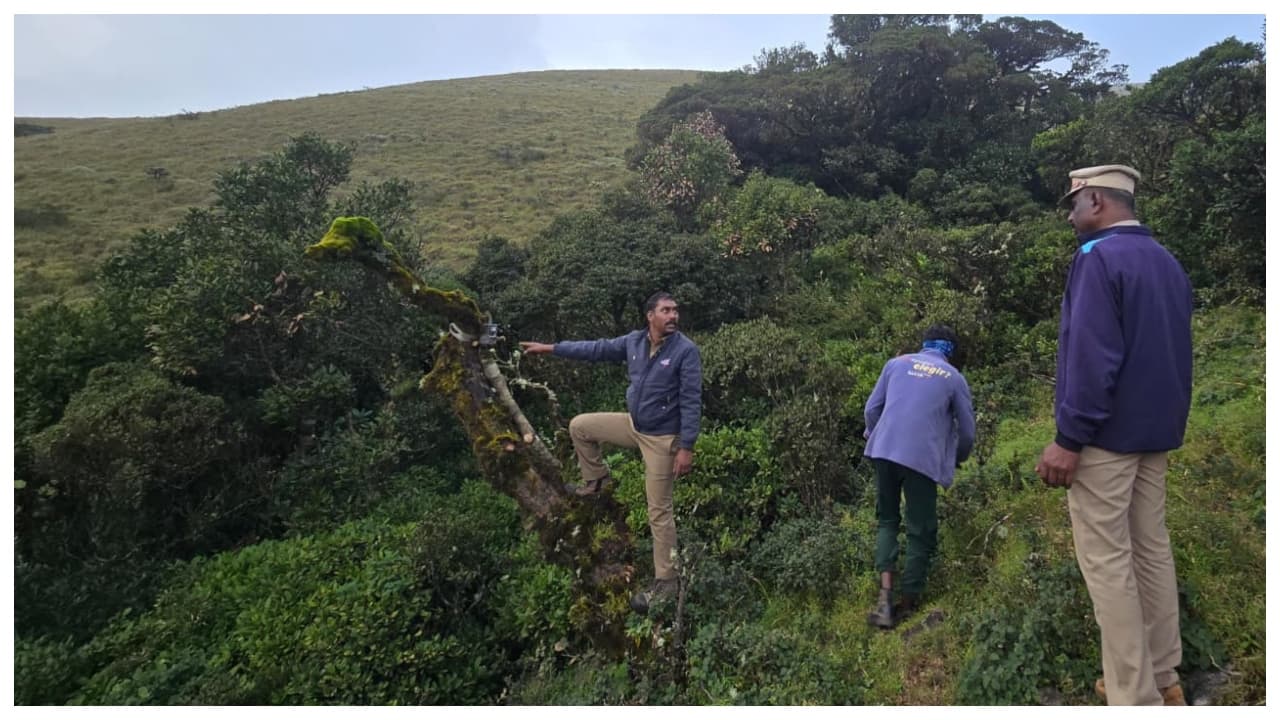
A study reveals climate change is altering forest seasons in the Nilgiri Biosphere Reserve. Researchers warn of unpredictable seasons and ecosystem disruptions.
Erratic weather and warming temperatures in the Nilgiris are not just affecting water security but are also disrupting forest ecosystems in the Nilgiri Biosphere Reserve, researchers have warned. A 2024 study titled “Mapping forest phenological shift in Nilgiri Biosphere Reserve, Western Ghats: Response to Climate Change” published in the journal Remote Sensing examined two decades of satellite data between 2000 and 2020.
The study found an annual temperature increase of 0.01 degrees Celsius between 1950 and 2018, along with a decrease in average rainfall by 3.97 millimeters per year. These shifts are affecting four forest types: moist deciduous, dry deciduous, semi-evergreen, and wet evergreen forests.
Shola forests losing moisture, endemic species flowering early, say ecologists
Researchers mapped the “Start of Season” (SOS) and “End of Season” (EOS) to understand the impact on local ecology. In Phase I (2001–2010), SOS was delayed across all forest types, shortening seasons for dry deciduous, semi-evergreen, and wet evergreen forests. However, moist deciduous forests saw the season lengthen by 4.37 days per year.
In Phase II (2011–2020), the pattern reversed, with SOS advancing across all forest types and seasons lengthening. Study author Bodi Surya Pratap Chandra Kishore said the seasonal rhythm of forests had changed. “Climate change is altering the timing of biological activity,” he said, adding that monitoring these changes can help identify vulnerable ecosystems.
Godwin Vasanth Bosco, a restoration ecologist and founder of Upstream Ecology, said the clearest signs of climate change were visible in the Shola forests. “The amount of epiphytes, mosses, ferns, and orchids is visibly drier. There is a clear yellowing setting into these pocket Sholas. A Shola is supposed to hold its own weather, cool and moist, but that is no longer holding true,” he said.
Bosco also noted unpredictability in seasons. “Some years bring severe frost, others very little. These forest systems evolved around a dependable climatic window, and that reliability is changing,” he said.
He added that dry scrub forests are also impacted. “Down in the driest tracts, the ground has stayed bare right through the growing period. The annual grass cover has not shown up,” he said. He also observed Magnolia nilagirica flowering as early as June, instead of after the monsoon. Flowering of endemic grassland plants like Impatiens clavicornu has also reduced.
Bosco warned that when flowering and fruiting occur out of sync with pollinators and seed dispersers, the entire ecological system is affected. “Plant-pollinator relationships are specific. If a flowering flush is out of step, the plant loses out on effective pollination. The same plays out downstream with fruiting. Regeneration slows because fewer seeds are produced and dispersed at the right moment,” he said.
The study highlights the need for conservation strategies to address these shifts. The broader message, researchers said, is that climate change is not simply making forests greener or less green, it is altering the timing of life cycles across the ecosystem.