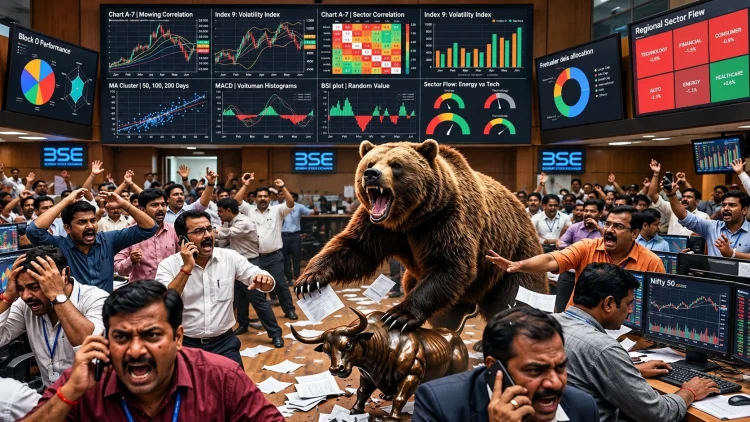
Nifty – The benchmark index ended the September derivatives series on a weak note, recording a decline of around 6.7%, according to the figures cited in the report. It was described as the steepest September-series fall in 25 years, exceeding the 6.5% decline recorded in September 2001. The index lost more than 1,400 points during the latest decline as several domestic and global factors weighed on sentiment.
22,600 Level Comes Under Pressure
The selling pressure intensified as foreign investors continued to reduce exposure to Indian equities, while elevated crude oil prices, a weaker rupee and higher bond yields added to market concerns. The Nifty also went through an extended run of weekly declines, marking its longest such losing streak since 2020.
Toward the final trading sessions of September, the index slipped below the 22,600 area, which coincides with its 200-week moving average. During Tuesday’s session, the Nifty touched an intraday low of 22,569, keeping attention firmly on the next technical levels.
Traders Watch for a Move Back Above 22,600
The ability of the index to reclaim and sustain levels around 22,600 is now being closely monitored by technical analysts. A sustained move above that zone could signal an attempt at recovery, while continued trading below it would keep the immediate technical setup under pressure.
For the October series, the 22,800-22,900 range is being watched as an initial resistance area. Above that, the 23,000-23,100 zone is another level that market participants are likely to track.
Crude Oil Adds to Market Concerns
One of the major external factors affecting sentiment has been the rise in crude oil prices. Brent crude climbed to around $108 per barrel before remaining near the $105 mark, according to the figures cited in the report.
Higher oil prices are particularly important for India because of the country’s dependence on imported crude. A sustained increase can raise the import bill and add pressure to inflation, the current account and the Indian rupee, creating an additional challenge for equity markets.
Rupee Weakness and Bond Yields Add Pressure
The Indian rupee weakened to around 96.2 against the US dollar during September, while India’s 10-year government bond yield moved up to approximately 7.17%. The US 10-year Treasury yield was also reported above 5%, making global fixed-income assets a factor for investors assessing emerging markets.
Higher US yields can influence global capital flows, while domestic bond yields can affect the relative attractiveness and valuation of equities.
Foreign Selling Remains a Key Factor
Foreign investor outflows have added another layer of pressure to Indian stocks. Reuters, as cited in the report, put foreign selling in Indian equities during September at more than $2.17 billion.
The combination of expensive crude oil and rising US Treasury yields has contributed to a cautious approach among overseas investors. Persistent foreign selling can weigh on benchmark indices even when domestic participation remains comparatively resilient.
Domestic Data Offers Some Support
Not all indicators have been negative. India’s domestic economic activity has provided some support, with the country’s Index of Industrial Production rising 8% year-on-year in August, according to the figures cited in the report.
Strong domestic activity could help offset some of the pressure coming from global markets, although the near-term direction of equities will continue to depend on earnings, capital flows, currency movements, commodity prices and broader global sentiment.
Key Levels to Track in October
For the coming series, the 22,400-22,500 zone is being watched as a stronger support area, while 22,500-22,550 represents an initial support band. The 22,600 mark remains important because of its connection with the 200-week moving average.
On the upside, 22,800-22,900 is the first major resistance zone, followed by 23,000-23,100. These levels are technical reference points rather than assured market outcomes, and actual movements will depend on changing market conditions.