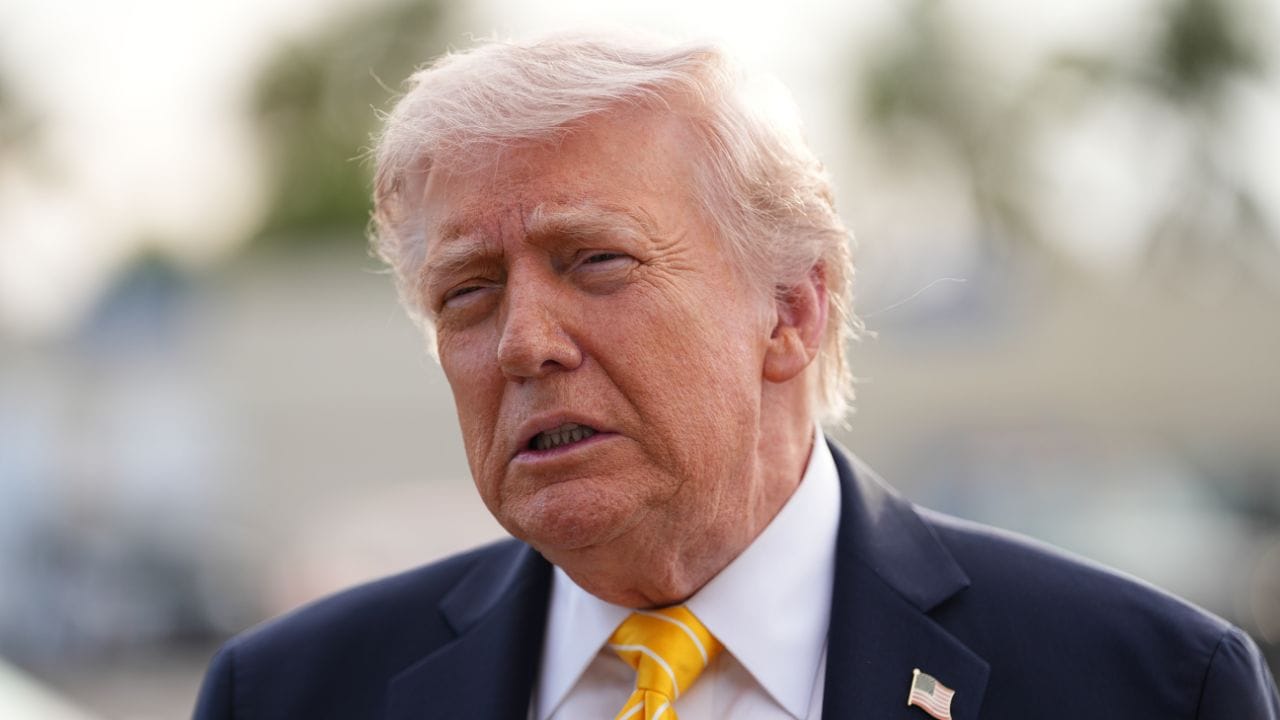
Donald Trump. Photo credit- PTI
The world is becoming more cautious about lending money to President Donald Trump’s government — sending interest rates rising to a level that makes it harder for people to buy things, hampering economic growth and posing a new threat to Republicans in the November midterm elections. The rise in energy prices due to the Iran War has also affected the prices of bonds from which the US government gets funds.
Interest rates on 10-year US Treasury notes have reached above 4.44 percent. Before the war started in late February, these rates were 3.95 percent. Average mortgage rates have reached their highest level in nine months, while vehicle sales are declining. This challenge is of global level, because interest rates have increased in many countries. This has happened because the world is trying to adapt itself to rising inflation, questions arising about the sustainability of government debt and the tremendous increase in investment in Artificial Intelligence.
Trump assured
Trump has tried to reassure Americans that he has a plan to reduce the annual budget deficit of about $1.8 trillion. In the past, he has cited revenue from tariffs, payments from foreigners for their “gold card” visas, spending cuts by government departments and rapid economic growth. Last week, he said the anti-fraud task force led by Vice President JD Vance would be key to achieving massive savings. Trump said that if he does a really good job, we will get a balanced budget without doing anything.
Difficulties facing Trump
Economists say Trump’s strategies to truly reduce the deficit may not yield the results he has promised. Jessica Riedl, a budget and tax fellow at the Brookings Institution, said the cost of servicing the national debt has tripled since 2021, to more than US$1 trillion annually. He said President Trump signed a tax cut bill that would likely increase the 10-year deficit by $5 trillion — and tariffs are only covering a small portion of these costs. Under current policies, the budget deficit is projected to exceed $4 trillion annually within a decade. The deficit is expected to grow over the next decade as Social Security and Medicare costs exceed tax revenues.
Increase in treasury yields
US 10-year Treasury yields peaked at 4.67% in mid-May, and have since eased slightly as Iran ceasefire negotiations continue — just as Trump’s “Liberation Day” tariffs in 2025 initially sent rates rising, and then began to fall after Trump withdrew most of the hikes. When Kent Smetters, faculty director of the Penn Wharton Budget Model, explained the math behind the rise in 30-year Treasury yields, he estimated that 60 percent of the rise was due to expectations that the US would continue to borrow heavily, and the remaining 40 percent was due to increased inflation due to the Iran war and Trump’s tariffs.
Situation worse than 2008 and 2020
George W. Glenn Hubbard, former chairman of the White House Council of Economic Advisers during the Bush administration, worries that the United States may no longer have the borrowing capacity to effectively respond to an economic crisis — such as the 2008 financial crisis or the coronavirus pandemic. Hubbard, now a professor at Columbia University’s Business School, said that I don’t think we have as much space to handle this as we had in 2008 or 2020. Washington doesn’t seem to have any ideas to solve this, good or bad. High interest rates are giving Democratic candidates another opportunity to attack, at a time when voters are worried about high food and gasoline prices.
Democrat candidates are attacking
In Colorado’s 5th Congressional District, Democrat Jessica Killin is stressing that persistent deficits and high interest rates are making it difficult to buy or renovate a home, buy a new car or pay off credit card debt. Killin, a former Army veteran and a special aide to former ‘Second Gentleman’ Doug Emhoff, said things are already expensive. We can talk about petrol, but the cost of borrowing makes it even worse. Joe Reagan, another Army veteran running for the Democratic nomination, said in an email that he is talking too much about financial management in his campaign. He said every dollar spent in interest payments is a dollar not invested in infrastructure, education, veterans services or economic growth.
When there was talk of balancing the budget
He is challenging Republican Rep. Jeff Krank in a district his party sees as a likely win. Killeen said the deficit is an example of how “Trump says one thing and does another.” In his March 2025 address to Congress, Trump announced that “In the near future, I want to do something that hasn’t been done in 24 years, and that’s balance the federal budget. We will balance it.” Current Republican Representative Kraken did not respond to requests for comment. The administration says it will gradually reduce the budget deficit. As a share of the total economy, the deficit last year was smaller than it was in 2024, although this decline To some extent it depended on tariff revenues, which are subject to refund after the Supreme Court declares them illegal.
What are the measures being taken
Treasury Secretary Scott Besant cited a report last week showing that up to $500 billion a year in government spending fraud could be eliminated, which would significantly reduce the deficit. Besant appears to have drawn this conclusion from a 2024 report by the Government Accountability Office, which estimated that fraudulent spending was between $233 billion and $521 billion each year. But these figures were, to some extent, taken from the pandemic period, when the government had taken huge loans to stabilize the economy.
Inherited loss
On the issue of the deficit, Besant told reporters at the White House that the administration has actually inherited a difficult situation from former President Joe Biden (a Democrat). Besant said that we inherited the worst budget deficit in history—the worst in history—at a time when we were neither in recession nor at war. Besant had previously announced that the administration’s goal would be to reduce the annual deficit to 3 percent of total US gross domestic product (GDP). Now this percentage is almost double, and Besant did not directly answer the question asked about the time frame for achieving her target.
stock market boom
So far, investors continue to buy shares of American companies, increasing the value of the stock market. This is a sign of his confidence in America’s economic capability. But rising interest rates also show that investors view the national debt as a weakness for America. Financial markets can cause so much damage through high interest rates that politicians are forced to correct imbalances in the system. Many economists said they expect markets to put pressure on the deficit before voters raise it.