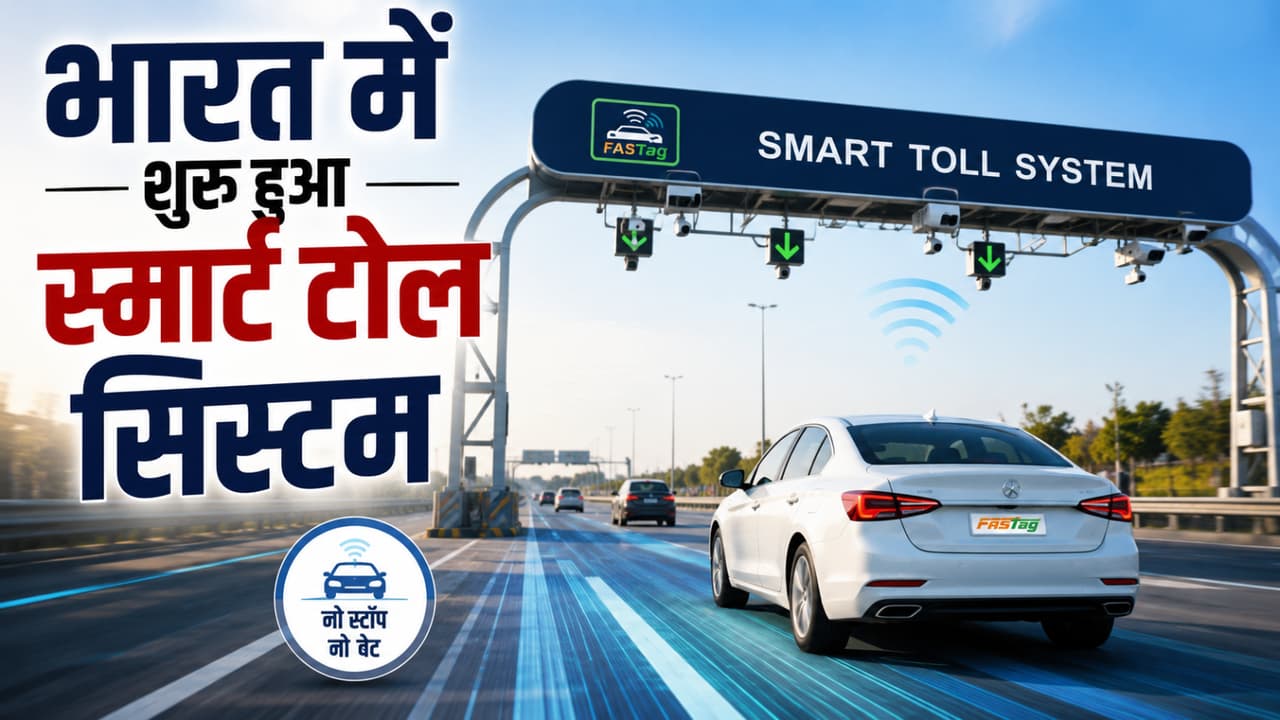
The trial of the country’s first barrier-free toll system has started in Haryana. Now toll will be deducted without stopping through MLFF technology. Know how this system will work, what will be the role of FASTag and what rules will the drivers have to follow.
A major step has been taken towards modernizing the road and highway infrastructure in India. The trial of the country’s first barrier-free toll system has started in Haryana. If this experiment is successful, the picture of toll plazas across the country may change in the coming years. The purpose of this new system is to eliminate the jam at toll plazas and to provide passengers the facility to travel without stopping.
Till now FASTag had made the process of toll payment quite easy, but vehicles had to slow down till the barrier opened. This need will also disappear in new technology. Vehicles will pass at their normal speed and toll fee will be deducted automatically.
What is barrier-free toll system?
The new system is called Multi-Lane Free Flow (MLFF) tolling system. This technology works on high-resolution cameras, Automatic Number Plate Recognition (ANPR) and FASTag based RFID sensors. As soon as a vehicle passes through the toll point, cameras scan its number plate and RFID sensors identify the FASTag. After this, toll fee is automatically deducted from the concerned account. The entire process is completed in a few seconds and the vehicle does not have to stop anywhere.
What will be the benefit to the passengers?
The barrier-free toll system will make highway travel faster and more convenient than ever. The problem of long queues at toll plazas will be reduced, which will save time for passengers. Additionally, vehicles will not need to stop and start frequently, which will reduce fuel consumption. Pollution is also expected to reduce due to less fuel consumption. The National Highways Authority of India (NHAI) is looking at this project as a future smart tolling system.
What things should vehicle owners keep in mind?
To avail the benefits of the new system, it will be necessary for vehicle owners to have FASTag activated. There should also be sufficient balance in FASTag, so that there is no hindrance in toll payment. Also, the number plate of the vehicle should be clean and as per the rules. If the camera fails to read the number plate or the FASTag does not work, the vehicle owner may also be fined.
The system can be implemented in the entire country
If this pilot project started in Haryana is successful, then barrier-free tolling can be implemented on national highways across the country in the coming time. This will make India’s highway network smarter, faster and digital, which is being considered an important step towards a modern transportation system.