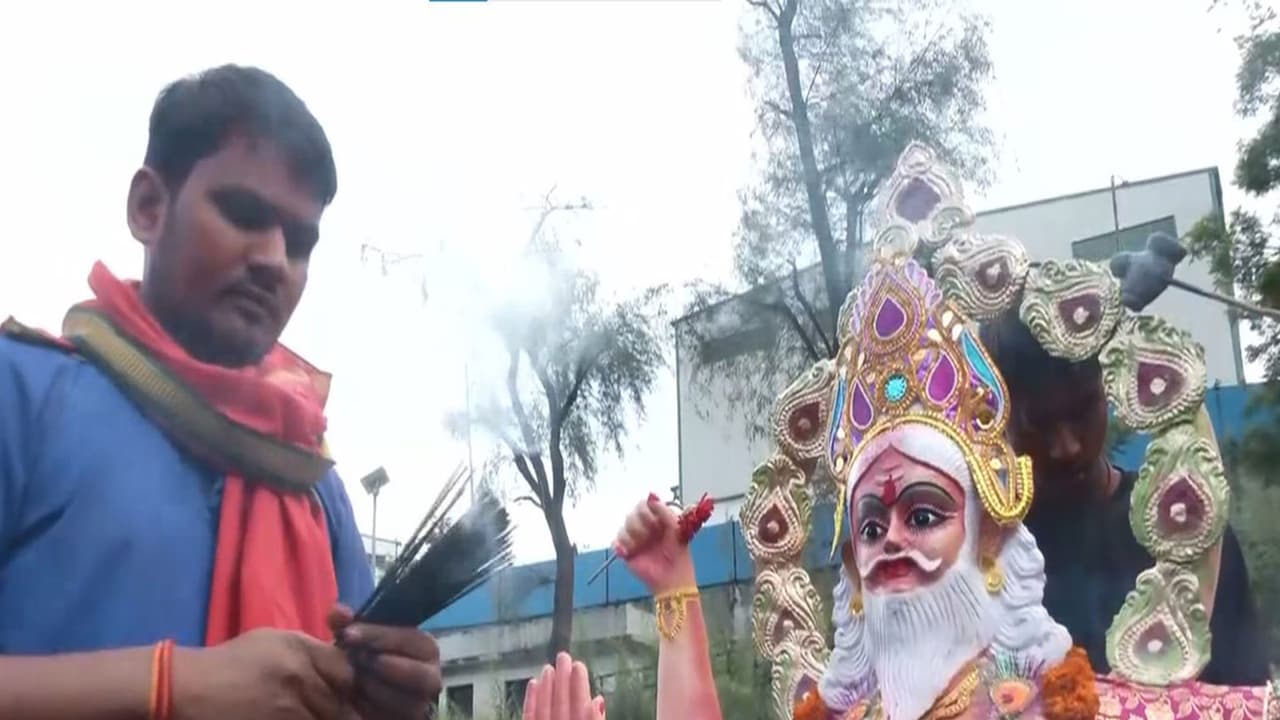
Following Vishwakarma Puja, Nepali metalsmiths and artisans immersed idols of Lord Vishwakarma, the god of architecture, in the Bagmati River. The ‘bisarjan’ ceremony at Chovar Gorge involved rituals asking for forgiveness and blessings.
Carrying the idol down to the riverbed, performing rituals asking for forgiveness and then immersing it in the river, Nepali metalsmiths bid adieu to Lord Vishwakarma, god of architecture, artisans and scientists. Dozens of idols of the gods’ craftsman and architect of gods were brought to the shore of the Bagmati River at Chovar Gorge and then immersed in the water, bidding farewell.
“For the bisarjan, my family, staff, and the whole fraternity are here, and after performing the bisarjan (immersion) we are feeling blessed, hoping for prosperity as well as blessings from lord Vishwakarma,” Kamlesh Patel, one of the devotees, told ANI.
Who is Lord Vishwakarma?
Lord Vishwakarma is also the official builder of all gods’ palaces. As per Hindu mythology, he is the one who designed all the flying chariots of the gods and goddesses and also designed and made weapons for them. In the Mahabharata, the world’s biggest epic, he is described as “The lord of the arts, executor of a thousand handicrafts, the carpenter of gods, most eminent of artisans, the fashioner of all ornaments and a great and immortal god.”
The Celebration and Rituals
“It is our continued tradition. On the first of Ashoj- 17 September this year, we performed the Vishwakarma Puja, and today we are here for the bisarjan the following day, on 18 September. We pay heartfelt obeisance to him.”
There is a tradition of celebrating Biswakarma Puja on the ninth day of the Dashain festival, Navami, in Nepal. As well, some celebrate Biswakarma pooja on Dipawali too.
It is a worship and tribute to all those who invented technology. It is a salutation to all who worked in the field of physics for the betterment of people.
Lord Biswakarma has four hands, wears a crown, wears lots of gold jewellery, and holds a water pot, a book, a noose and craftsman’s tools in his hands.
Biswakarma Puja is regarded as a resolution time for workers and craftsmen to increase productivity and gain divine inspiration for creating novel products.
The celebration is generally done within the factory premises or shop floor, office or workshops. All the machineries are worshiped along with the worship of Biswakarma. People worship their vehicle along with machinery.
Red and white cloth and holy threads are offered to machinery and vehicles. A picture of Biswakarma is taken out in procession in many parts of Nepal after the pooja is over. People install pictures of Lord Vishwakarma at the corners of crossroads and put statues and idols of him in corners of streets. Puja is also associated with the custom of flying kites. This occasion in a way, also marks the start of the festive season that lasts till Diwali.
Mythological Architectural Marvels
Hindu mythology is full of Vishwakarma’s many architectural wonders. Hindu mythology divides the whole era of this earth into four yugas (spans of time): Satya yug, Treta yug, Dwapar yug and Kali yuga.
He had built several towns and palaces for the gods. In Satya yuga, he built Swarga Lok (heaven), the abode of the gods and demigods, where Lord Indra rules. Vishwakarma built the Lanka of Ravan in Treta yuga, the city of Dwarka in Dwapar yuga, and Hastinapur and Indraprastha in the Kali yuga. (ANI)
(Except for the headline, this story has not been edited by Asianetnews Editorial staff and is published from a syndicated feed.)