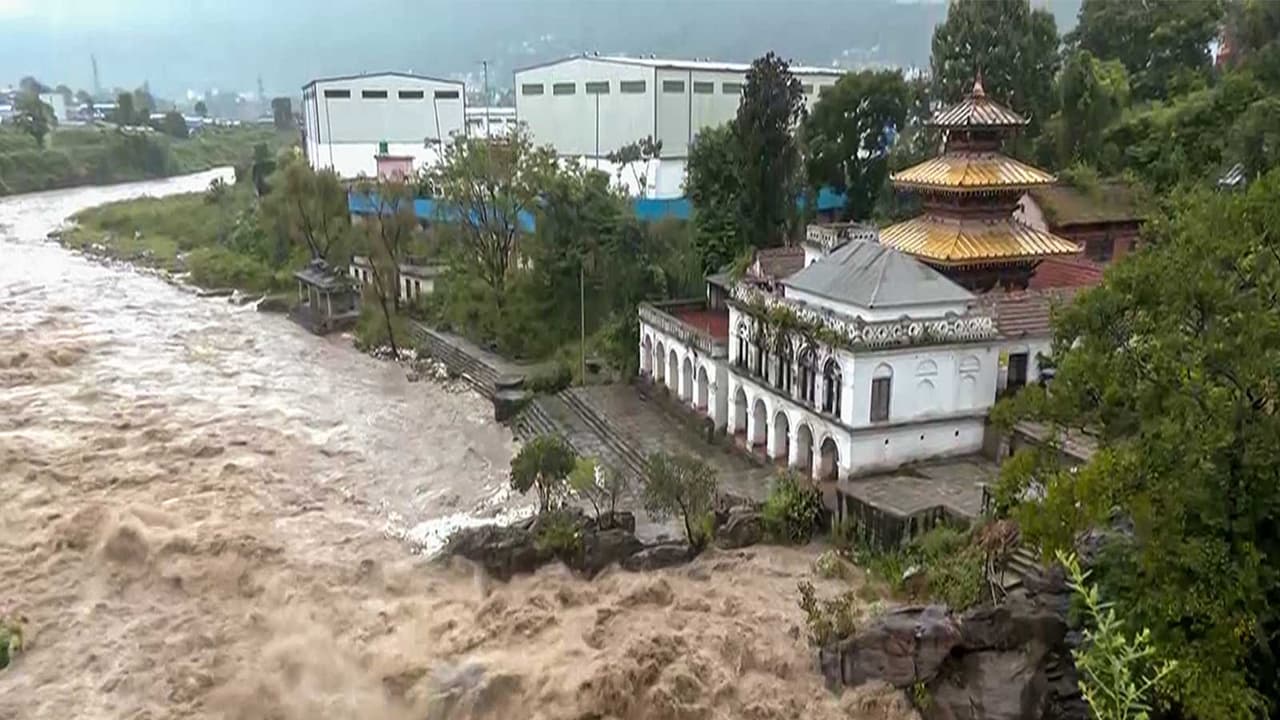
At least 21 people have been killed, five are missing, and five others were injured in Nepal following four days of torrential rain, floods, and landslides. The disaster has affected 247 families and destroyed 260 homes across the country.
At least 21 people have been killed, five remain missing, and five others were injured following four days of torrential rainfall, flooding, and landslides across Nepal. According to an official update released by the National Disaster Risk Reduction and Management Authority (NDRRMA), landslides accounted for the majority of casualties, claiming 14 lives and leaving five people missing. Floods caused four deaths, while three fatalities were attributed to continuous heavy rainfall.
The severe weather directly affected 247 families nationwide, causing complete destruction to 260 homes and partial damage to 80 others. This comes after a low-pressure system originating in the Bay of Bengal triggered heavy and excessive precipitation across multiple regions from September 24–27, NDRRMA noted.
Rescue and Relief Operations
In response to rising water levels and landslips, emergency teams relocated approximately 3,000 residents from high-risk zones to safer areas, NDRRMA confirmed. Rescue operations involving Armed Police Force units and local authorities provided food and essential relief to displaced families. In the hard-hit mountain districts of Jajarkot, Myagdi, and Sankhuwasabha, trapped individuals were evacuated using emergency helicopters.
The disaster authority noted that around 9,000 foreign tourists and trekkers were estimated to be active in Nepal during the downpours. In coordination with the Nepal Tourism Board and local trekking agencies, NDRRMA issued safety advisories in English, advising tourists in vulnerable terrain to seek shelter and halt travel until conditions improved.
Rainfall Data and Precautionary Measures
NDRRMA monitoring stations recorded total rainfall exceeding 100 mm at 106 locations across the country over the four-day period. The highest accumulation was recorded in Dumkuali, Nawalparasi (Bardaghat Susta East), which received 455.2 mm of rain, followed by Pokhara in Kaski at 407.2 mm and Anbu Khaireni in Tanahun at 373.2 mm.
To manage safety risks during the peak of the storms, NDRRMA’s Central Monsoon Response Command Centre instructed local authorities to halt vehicle traffic on vulnerable road sections and declared school holidays in affected districts. The agency also dispatched over 5,000 direct SMS alerts to field responders, while the Flood Forecasting Division sent more than 814,000 early-warning text messages to residents living in downstream flood zones.
River Blockage and High Alerts
NDRRMA Spokesperson Shanti Basnet stated that district administration offices across all 77 districts and all three national security agencies remain on high alert as data collection and recovery efforts continue.
In a separate update shared earlier in the day, NDRRMA issued a high-alert advisory for populations living along major river basins due to landslide-induced blockages. The authority reported that a landslide in Chame, the district headquarters of Manang, created an obstruction in the water flow of the Marsyangdi River. Similarly, another landslide in Nisi, located in Ward 3 of Thasang Rural Municipality in Mustang, partially blocked the flow of the Kali Gandaki River. NDRRMA urged residents in the lower riparian areas of both rivers to exercise extreme vigilance as authorities monitor potential outburst risks.
Widespread Disruptions and Additional Casualties
On Sunday morning, authorities issued a warning for all the residents living along the Narayani River in Central Nepal after it crossed the warning level of 9 meters and entered the settlements. Highways leading to Chitwan, which serves as the juncture to travel across the nation, also remain blocked, with landslides reported in multiple locations. As per the official, landslides at multiple locations have hindered the search and rescue operation, while the condition has been deteriorating with the continuous downpour.
Landslide in Baglung District
Similarly, a landslide in adjoining Baglung District has also killed four additional people, a local official confirmed to ANI. “In Nishikhola Village Council of Baglung District, four people have died after being buried in a landslide. The incident occurred this morning in Ward Number 3, Hardra,” Prem Bahadur Gharti Magar, the Deputy Chairperson of the Village Council, told ANI over the phone.
The Kaligandaki River flowing through the district has also swept away houses and bridges, disconnecting road connectivity. Security forces have been carrying out evacuations in multiple districts following the inundation and risk of floods, moving thousands of people to safer grounds.
Avalanche Strikes Himlung Himal Base Camp
Additionally, Nepal reels from another disaster as two bodies have been recovered following an avalanche at the base camp of Himlung Himal in Nepal’s high-altitude Manang district. The NDRRMA, via Nepal Police headquarters, confirmed in a post on X that search and rescue personnel dispatched to the site recovered two deceased individuals at the high-elevation camp.
The mountain region had witnessed heavy snowfall for several days, forcing climbers to retreat from the autumn ascent of the mountain. Those missing in Sunday’s avalanche are from different expedition companies. Himlung Himal, standing at 7,126 metres in Manang district, requires an additional permit for helicopter flights, adding to the difficulties involved in reaching the mountain.
Context: Previous Bhotekoshi Floods
The latest disaster in the Himalayan Nation comes a month after the tragedy of the Bhotekoshi Floods, which so far have claimed over 1400 lives and left over 6000 missing. The flood struck riverside settlements in Rasuwa district on the morning of Aug. 26 (Bhadra 10, 2083), rapidly affecting neighbouring areas including Nuwakot and Dhading.
Infrastructure losses underscore the scale of the event. Eight operating hydropower projects (281 MW) and four under construction (388 MW) were damaged, disrupting 431.1 MW of generation capacity. Major sections of the Galchhi–Betrawati–Rasuwagadhi road and the Prithvi Highway were destroyed or heavily damaged, along with 48 suspension bridges and 31 motorable bridges. (ANI)
(Except for the headline, this story has not been edited by Asianetnews Editorial staff and is published from a syndicated feed.)