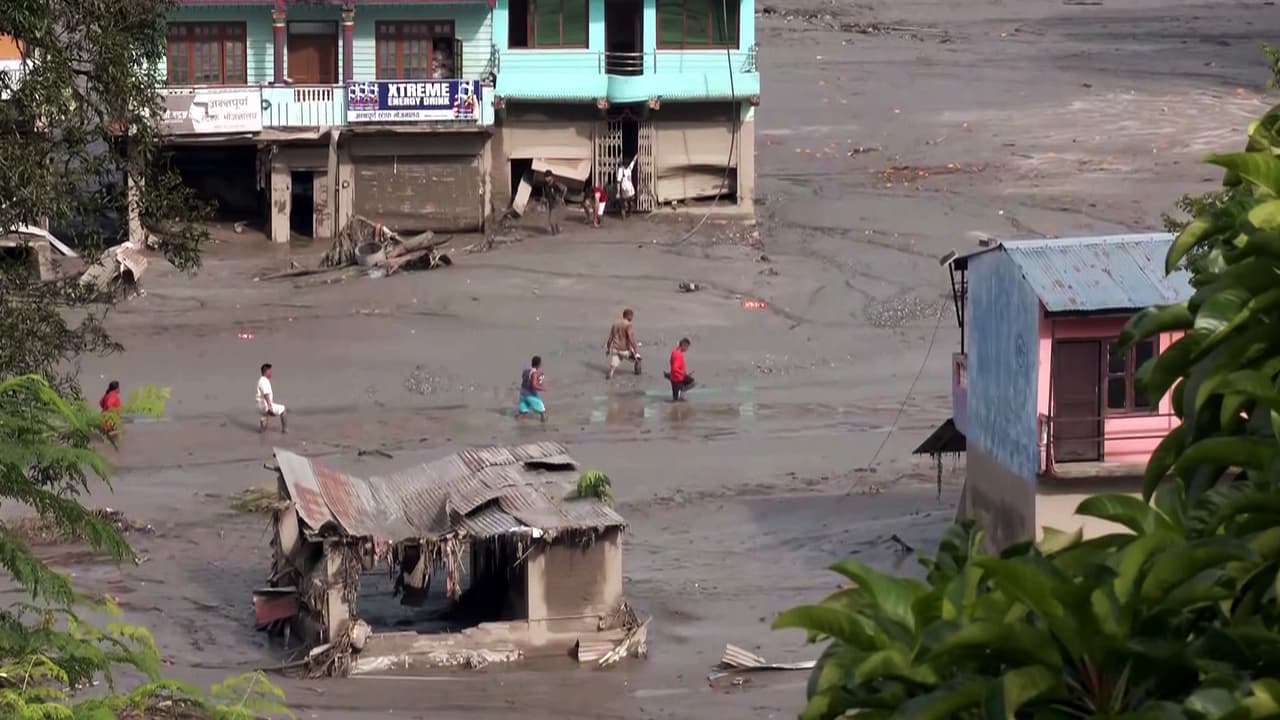
The danger from Nepal-Tibet floods may not be over, with China warning that rising water behind a debris blockage could trigger fresh flooding within the next 72 hours. A major glacier and rock collapse, rather than the 4.4 earthquake, caused the disaster. Unstable lakes, blocked rivers and fragile Himalayan infrastructure remain serious concerns.
The deadly floods along the Nepal-Tibet border may be far from over. Experts and authorities have warned of the risk of further flooding after debris from the Himalayan disaster blocked rivers and created unstable lakes upstream. China has issued a fresh warning over a dammed lake in the affected region, with officials concerned that rising water levels could create another dangerous flood situation.
Authorities said more than three million cubic metres of water could flow into the lake over the next three days, while heavy rain may further increase the risk. Nepal has also warned people and rescue teams to stay away from riverbanks and low-lying areas.
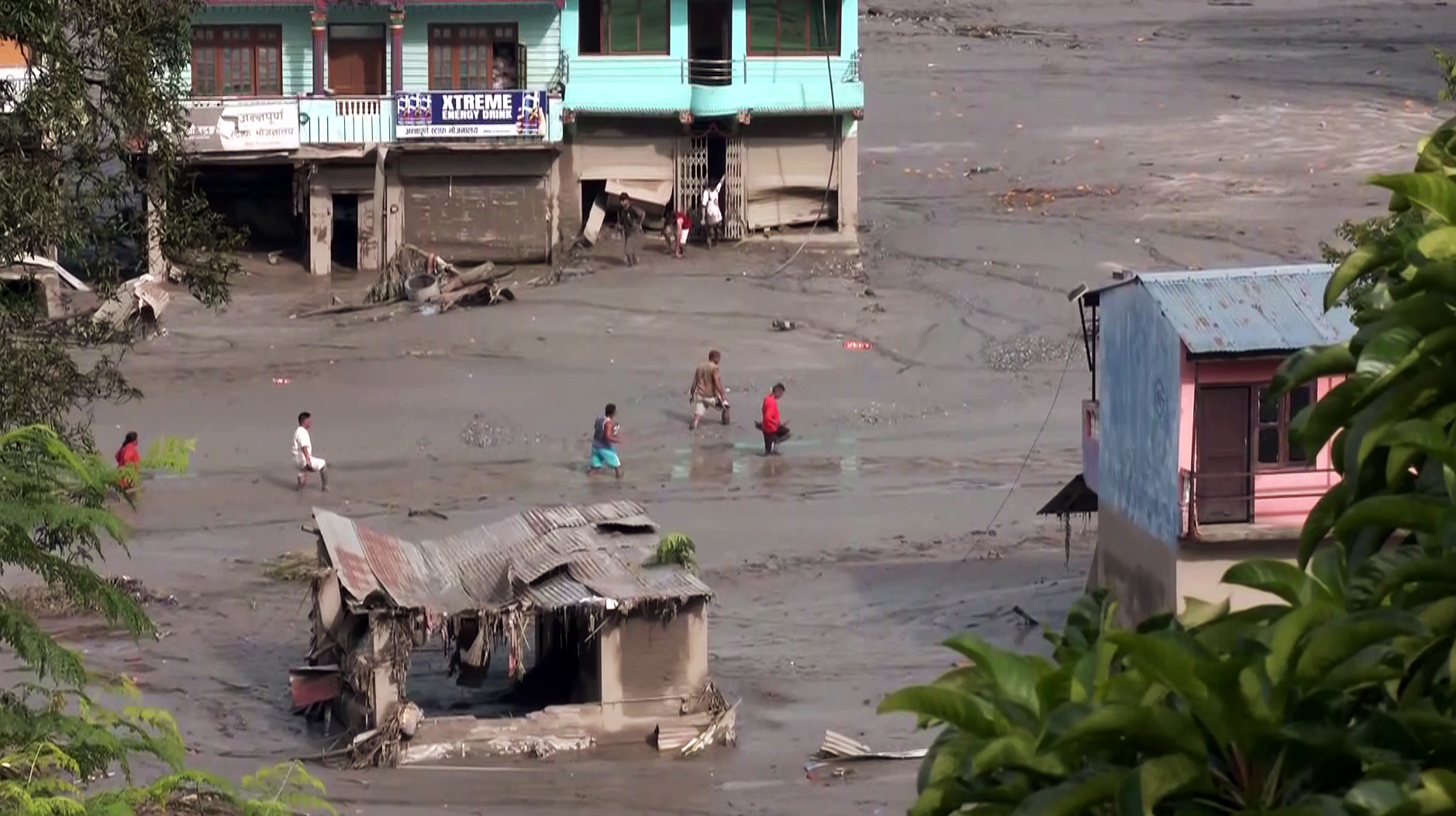
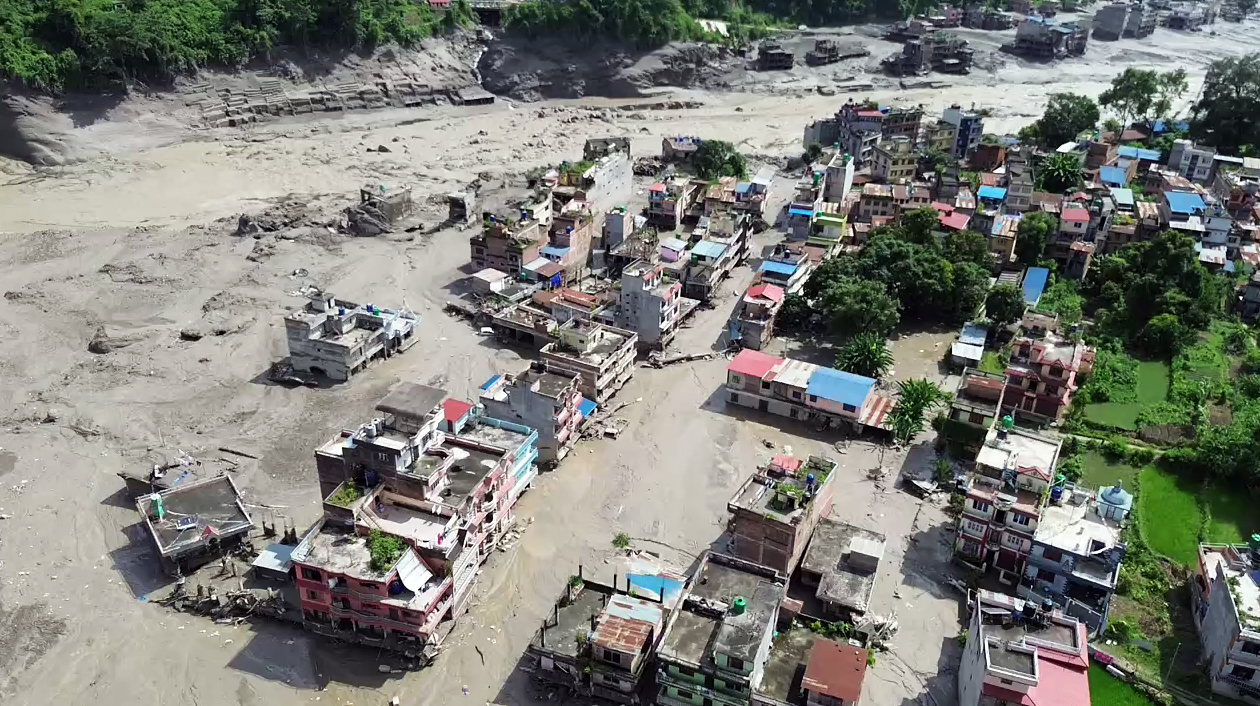
What is dammed lake risk?
The major concern after the Nepal-Tibet floods is the dammed lake, formed when landslides, ice, rocks and debris block a river and trap water behind the natural barrier. As more water flows into the lake, pressure on the unstable blockage increases. Experts say if it suddenly breaks or water flows over it, a powerful flash flood could surge downstream, putting villages, roads, bridges and rescue teams at risk.
What triggered Nepal floods?
Scientists are still examining the full chain of events behind Wednesday’s disaster. However, the evidence available so far points strongly towards a major collapse of ice, rock and debris high in the Himalayas.
Satellite imagery and preliminary assessments indicate that a large section of glacier and surrounding material collapsed into the river valley, triggering an ice-and-rock avalanche. The debris temporarily blocked the river, forming a natural dam. When the blockage failed, a huge volume of water, mud, rocks and sediment surged downstream through the Bhote Koshi and Trishuli river systems.
The exact scientific explanation is still being investigated, and experts say it could take more detailed field studies and satellite analysis to establish the complete sequence of events.

Was a 4.4 magnitude earthquake responsible?
Early reports suggested that a magnitude 4.4 earthquake recorded shortly before the flood may have triggered the collapse. However, this explanation has since been challenged by the United States Geological Survey.
The USGS said the seismic signal initially identified as an earthquake was generated by the massive glacial collapse and debris flow itself, rather than by a separate tectonic earthquake. Later assessments linked the event to a much larger collapse signal. Therefore, it would be inaccurate to state that a confirmed 4.4 magnitude earthquake caused the floods.
Why the next 72 hours are a major concern
The immediate danger now is linked to water building up behind debris blockages in the mountains.
Reuters reported that Chinese authorities are concerned about a dammed lake in the border region and expect millions of cubic metres of additional water to enter it within three days. If the natural barrier fails or water overtops the blockage, communities downstream could face another sudden flood.
The warning does not mean another flood is certain. However, authorities have made it clear that the risk remains serious enough to require continuous monitoring and precautionary measures.
Early warning has limits in such disasters
Dr Neera Shrestha Pradhan, a Water and Disaster Risk Reduction expert at the International Centre for Integrated Mountain Development (ICIMOD), has stressed the need for better cross-border information sharing and stronger understanding of cascading mountain hazards.
Such events can be especially difficult to predict because a glacier or mountainside collapse may trigger a chain reaction involving ice, rock, debris, river blockages and a sudden release of water. Unlike a flood caused directly by prolonged rainfall, the warning time can be extremely short.
The disaster has also exposed the vulnerability of roads, bridges, hydropower projects and settlements in the Hindu Kush Himalayas. With rivers still carrying heavy sediment and unstable slopes remaining a concern, experts say the focus must now be on immediate rescue work as well as stronger disaster preparedness.
For Nepal and Tibet, the crisis is therefore not over. Rescue teams are continuing their work, but attention has now also turned upstream, to the unstable lakes and river blockages that could determine what happens next.
(With inputs from agencies)