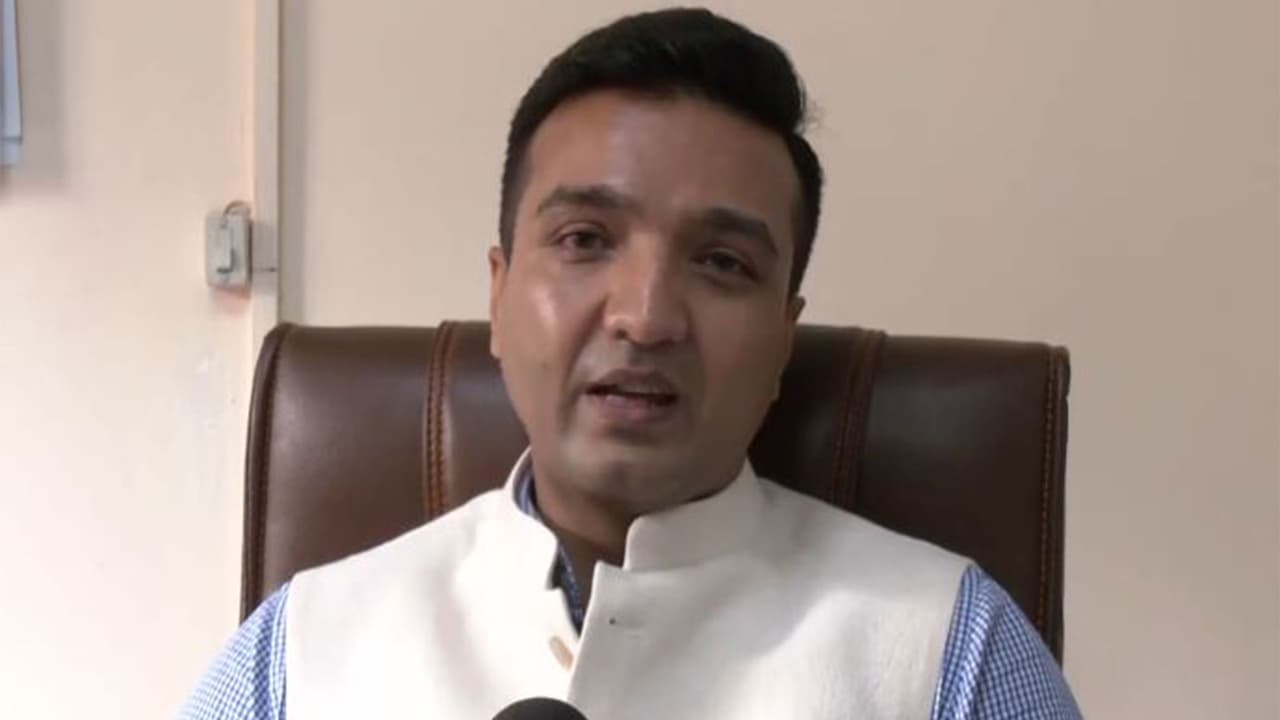
RSP leader Rahabar Ansari said Nepal’s immediate priority after the Bhotekoshi floods is saving lives and relief, not an inquiry. He noted the challenge of assessing massive infrastructural damage before planning for reconstruction, which could take years.
Immediate Priorities: Rescue Over Inquiry
Speaking to ANI, Ansari said the immediate priorities were rescuing people, providing relief and managing the bodies of those who died in the disaster. “I think this is not the right time to talk about any inquiry or what happened because at the moment two things we really need to think about are: one, saving the lives of people. The other thing is providing enough relief to people who are saved,” the Nepal Parliamentarian said.”Of course, managing the bodies and managing people who passed away in this catastrophe is also a challenge,” Ansari added.He said the government would examine the causes of the disaster and work on measures to improve preparedness. “So definitely the government would be quite active in identifying the reasons, identifying the ways, and then implementing ideas that could help us stay more prepared in future,” Ansari said.
Assessing Damage and Reconstruction Timeline
Ansari further said the scale of destruction meant that determining the financial requirement for reconstruction would take time. “At the moment we talk about rescue, at the moment we talk about relief work, at the moment we talk about managing the logistics. But definitely after a very short time, we need to think about reconstruction,” he said.”The challenge right now is assessing the reconstruction budget. We really need to know what kind of reconstructions are required. I mean, we have lost our roads; more than 40-50 kilometres of roads are lost. We have lost numbers of bridges; we’ve lost hydropower stations,” Ansari added.He said the government was yet to determine the full extent of the physical and monetary losses caused by the floods. “But right now it is too early to tell exactly what is the plethora, what the amount is, what the valuation of loss, physical loss is that we’ve faced. So it is a big challenge for the government to assess the real loss in terms of monetary terms so that we get to know that what kind of reconstruction we need,” he said.Ansari said rebuilding the affected areas could take several years and that the government would first need to assess the extent of the damage. “How do we integrate people into their normal lives again? So it would definitely take some time, and we need to be clear about how many billion dollars of loss we’ve faced and what the timeline is for construction because we cannot randomly say that we gonna get everything normal within a year or two years. It might even take five years or ten years to reconstruct everything,” he said.”So primarily we need to know, we need to assess the real-time loss,” he added.
Funding for Relief and Reconstruction
On funding for relief and reconstruction, Ansari said Nepal’s Prime Disaster Relief Fund had received around 525 crore Nepali rupees, while the Finance Ministry had allocated nearly 20 billion Nepali rupees for relief. “We have a Prime Disaster Relief Fund wherein people have contributed more than 525 crore Nepali rupees already. We have a diaspora who’s been continuously contributing to this fund. For now, we are, and the Finance Ministry has apportioned almost 20 billion, 20 billion Nepali rupees for relief,” he said.”For now, if we talk about relief and rescue, we are good with this at the moment. But the reconstruction budget is huge,” Ansari added.He said the government could consider both domestic and external funding for reconstruction. “The government might plan with its own internal funding and also, of course, external funding and whatever seems feasible for us in future, whatever we can sustain,” Ansari said.”Definitely it is too early to say right now what kind of funding we are expecting, but if required the government would consult with its with all the foreign donors and agencies and all kinds of financing equipment or financing elements I would say,” he added.
Human Toll and International Response
The devastating flood that struck Nepal last week has left 939 people dead, while search operations continue for those still missing. A total of 3,925 people are missing, as per the National Disaster Risk Reduction and Management Authority (NDRRMA), which includes 592 foreign nationals.Rescue operations are underway in several districts in Nepal, including Rasuwa and Nuwakot.Meanwhile, the Indian Embassy in Nepal has issued steps for the identification of the mortal remains of Indian citizens who died in the flood, asking the relatives of the victims to facilitate identification through photographs or by providing DNA profiles. (ANI)(Except for the headline, this story has not been edited by Asianet Newsable English staff and is published from a syndicated feed.)