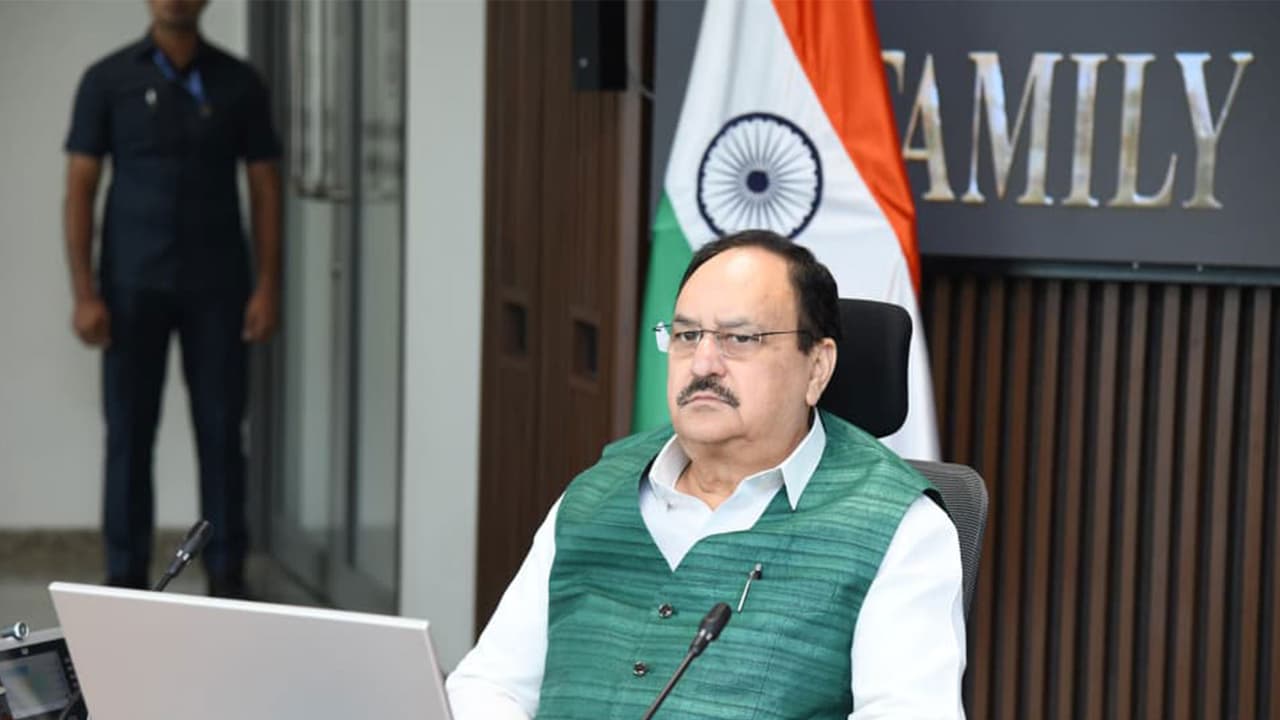
Union Minister JP Nadda reviewed NEET UG Counselling 2026, emphasizing a transparent, student-friendly process. New reforms include one-time physical reporting, online freeze/float options, and an online resignation facility to simplify admissions.
Union Minister for Health & Family Welfare JP Nadda on Wednesday reviewed the preparedness for the forthcoming NEET UG Counselling 2026, reaffirming the Government’s commitment to ensuring a transparent, merit-based, technology-enabled and student-friendly admission process for undergraduate medical courses across the country. The review assessed the preparedness for counselling of All India Quota (AIQ) and other seats under the purview of the Medical Counselling Committee (MCC), Directorate General of Health Services (DGHS).
Nadda Emphasizes Transparent, Student-Friendly Process
During the review, the Minister assessed the preparedness of the Medical Counselling Committee (MCC), Directorate General of Health Services (DGHS) and other stakeholders involved in the counselling process. He reviewed the counselling schedule, IT infrastructure, cybersecurity preparedness, grievance redressal mechanisms, candidate facilitation measures and coordination with participating institutions.
Nadda emphasized that the counselling process must be conducted in a transparent, fair and merit-based manner while ensuring a seamless experience for students. He directed officials to maintain robust technical support, ensure prompt grievance redressal and facilitate the smooth functioning of the counselling portal throughout the admission process. He directed the officials to ensure that every proactive measure is taken to address candidates’ concerns.
Major Reforms Introduced for 2026 Counselling
The Minister was informed that NEET UG Counselling 2026 introduces several major technology-enabled and student-centric reforms aimed at enhancing transparency, improving accessibility and simplifying the admission process.
One-Time Reporting and Online Freeze/Float Options
One of the key reforms is the introduction of a one-time physical reporting framework, significantly reducing the need for repeated visits by candidates. Following seat allotment, candidates will be able to exercise their willingness online by selecting either the Freeze or Float option. Candidates opting for the Freeze option will physically report to their allotted institute within the prescribed schedule to complete admission formalities, including verification of original documents and payment of the admission fee. Candidates opting for the Float option for participating in subsequent rounds for upgradation will be able to complete admission formalities, including document verification, through the online mode within the stipulated timeline. During this period, they will not be required to physically report to the allotted institute, submit original documents or pay the admission fee. Their provisional admission will remain valid while participating in subsequent counselling rounds. The upgradation facility will remain available up to the third round of counselling. After completion of the third round, candidates holding allotted seats will report physically to their respective institutions for verification of original documents, payment of admission fees and completion of institutional formalities.
The revised framework ensures one-time physical reporting, one-time verification of original documents and one-time payment of admission fees, thereby reducing unnecessary travel, simplifying admission procedures and providing greater convenience to students.
Online Resignation Facility
Another important reform introduced this year is the online resignation facility. Candidates wishing to resign from their allotted seat, wherever permitted under the applicable counselling rules and timelines, will now be able to submit their resignation through the MCC Counselling Portal without the need to physically visit the allotted institute, unless otherwise specified in the Information Bulletin or notified separately by MCC.
Measures for Transparency, Accessibility, and Support
The review also highlighted several measures to strengthen transparency and operational efficiency, including pre-populated candidate data received from the National Testing Agency (NTA), online document verification, validation of the seat matrix by the National Medical Commission (NMC) and verification by participating institutes.
Enhanced Accessibility for PwBD Candidates
Special emphasis has been placed on improving accessibility for Persons with Benchmark Disabilities (PwBD). To facilitate greater accessibility, transparency and uniformity in assessment, the number of designated assessment centres has been expanded from 16 to 61 across the country.
Robust Cybersecurity and Support Systems
Nadda was also informed that cybersecurity preparedness has been comprehensively reviewed in coordination with the National Informatics Centre (NIC). Training programmes have been conducted for Disability Assessment Boards, college nodal officers and Document Verification Officers to ensure uniform implementation of the counselling process across the country.
To strengthen candidate support, a 24×7 toll-free call centre (1800-102-7637) has been established. Bilingual information material, frequently asked questions and guidance videos are also being made available through various platforms to assist candidates throughout the counselling process. A dedicated email-based grievance redressal mechanism (mcc2026[at]gov[dot]in) has also been established for prompt resolution of candidate queries.
The National Testing Agency declared the NEET (UG) 2026 results on 16 July 2026. The counselling process for All India Quota seats in MBBS, BDS and B.Sc. (Hons.) Nursing is expected to commence shortly. (ANI)
(Except for the headline, this story has not been edited by Asianetnews Editorial staff and is published from a syndicated feed.)