Eid-ul-Azha 2026Image Credit source: PTI
Rules of Namaz: As the festival of Eid-ul-Azha i.e. Bakrid approaches, the markets become lively. Not only the clothing market, but also the cattle market is crowded as people buy cattle for sacrifice. From most parts of the country on Sunday evening Bakrid After the moon was not sighted, Muslim religious leaders have announced to celebrate the festival of Eid-ul-Azha on 28 May. This festival is not just a ritual, but the name of the spirit of sacrificing everything in the name of God.
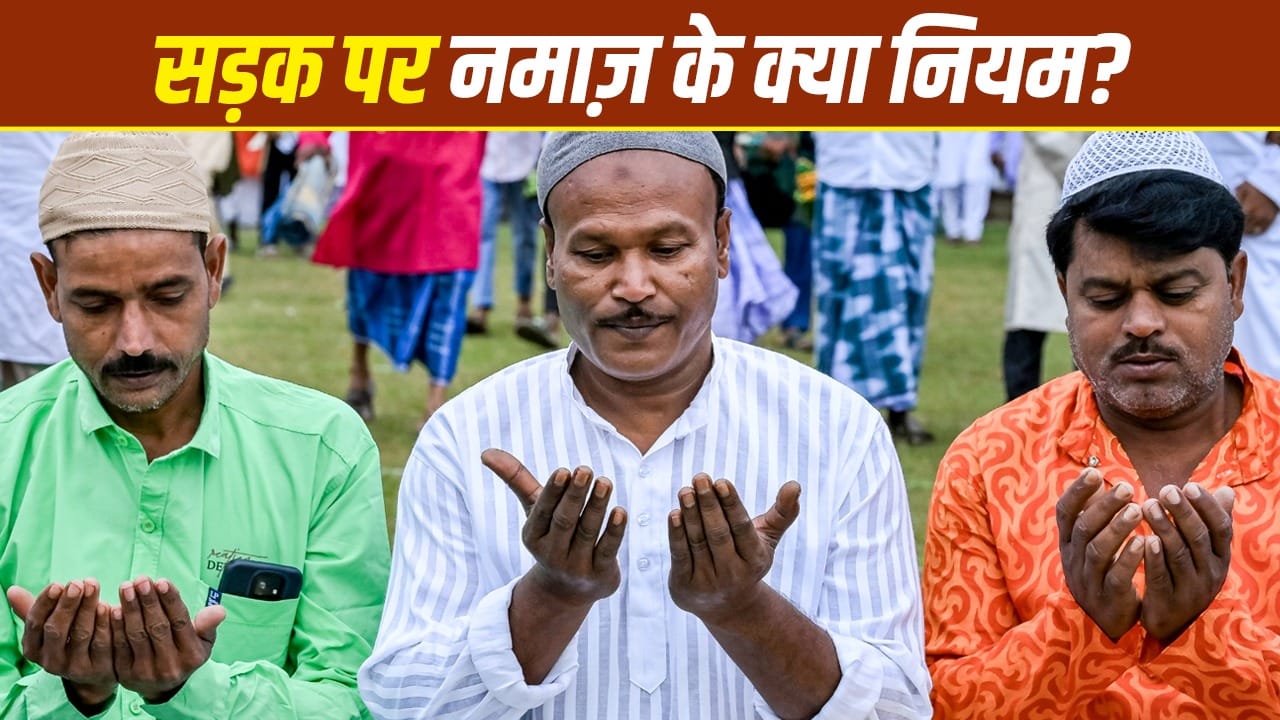
Namaz also plays an important role in the festival of Eid. But often on big festivals or Fridays, the number of people increases and at some places such scenes are seen when worshipers are seen far beyond the limits of the mosques. In such a situation, it becomes very important to know what Islam says about this. Is it right in the eyes of religion to offer namaz on the road? And what are the rules for offering Namaz in countries like India and Saudi Arabia?
What does Islam say on street prayers?
There is no clear prohibition in Islam about offering namaz on the road or in public places, but there are some important rules associated with it. Like, first of all, offering Namaz should not cause any inconvenience or trouble to anyone. Namaz can be offered on the road only when there is no problem in the movement of people there. Because Islam gives strict instructions to respect the rights of others. Therefore, if offering Namaz on the road causes traffic jam or causes trouble to people, then it is not considered right.
Muslim religious leaders say that the right place to offer Namaz is mosque, Eidgah or home, where they can offer Namaz comfortably and no one faces any problem. However, the prayers of Bakrid and Eid-ul-Fitr are usually offered in mosques as well as in Eidgahs built in large open grounds. Its objective is that more and more people can worship together and an atmosphere of brotherhood can be created. Many times it is seen that people reach beyond the limits of Eidgah because this is such an occasion when everyone offers Namaz at the same time.
What are the rules of namaz in Saudi Arabia?
In an Islamic country like Saudi Arabia, clear and strict rules have been made for prayers. There, prayers are usually offered in mosques or designated places only. It is not allowed to offer Namaz by blocking public roads or paths. The government and religious institutions take care that along with worship, order is also maintained. This is the reason why traffic and public life are not allowed to be disrupted there during prayers.
Why is it most important to keep the place of offering Namaz clean?
Namaz is considered a very important worship in Islam. According to the Quran and Hadith, the most important conditions for offering Namaz are cleanliness of the place and true intentions of the heart. That is, if a person is in a place where mosque is not available, he can offer namaz at any clean place. This may also include home, office, field or any open space. But the most important rule of Namaz is that the place where Namaz is offered should be clean.
Important rules for offering Namaz in Islam
While offering Namaz, it is important to keep mainly 5 things in mind. First of all, it is mandatory to completely clean the body, clothes and place, for which Wudu (i.e. washing hands and face) is done before Namaz. The second thing is that Namaz should always be offered at the fixed time. The third condition is to stand facing towards the Kaaba; fourthly, before starting the Namaz, there should be a clear intention in the mind to offer that Namaz. The last and most important rule is that the clothes should be decent so that the body is well covered, and the Namaz should be offered in a quiet and clean place where because of you there is no problem for anyone else in coming and going.
Also read: Bakrid 2026: When will Bakrid be celebrated in India? Know the exact date and history of sacrifice
Disclaimer: The information given in this news is based on Islamic beliefs and general information. TV9 Bharatvarsha does not confirm this.