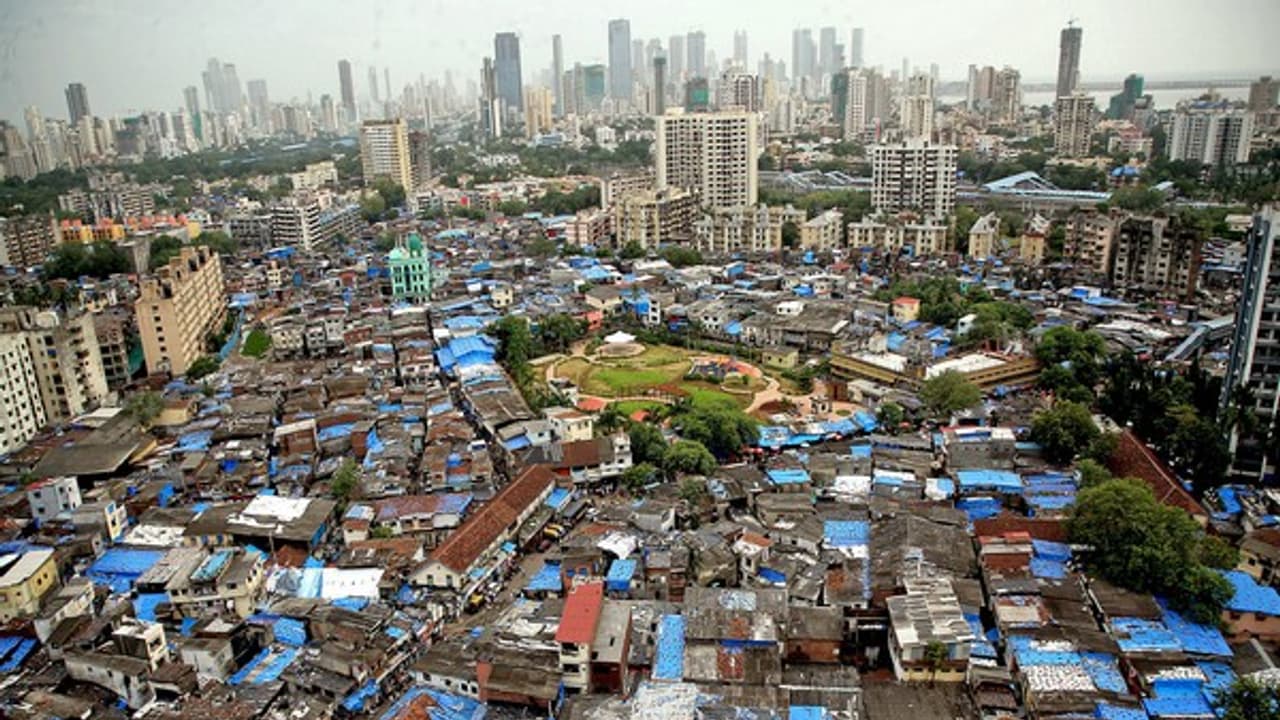
Mumbai’s slum redevelopment program is moving at a pace never seen before. The amount of land being redeveloped right now is more than the total land developed in the last three decades. New government policies, a cluster development framework, and the shortage of land in prime spots are the main reasons for this massive shift.
Something big is happening in Mumbai’s real estate scene. The city’s slum redevelopment program is currently moving at a speed that’s breaking all past records. To put it in perspective, the amount of slum land being redeveloped right now is more than all the land redeveloped since the Slum Rehabilitation Authority (SRA) was set up in 1995.
According to a report by the Hindustan Times, about 2,156 acres of slum land in Mumbai are currently undergoing redevelopment. This massive effort involves 1,202 different slum projects, which will provide new homes for around 3.21 lakh families.
What’s in the Pipeline and What’s Stuck
Besides the ongoing work, there are many more plans to make Mumbai slum-free.
Proposed Projects: There are proposals for 607 new slum projects spread across 1,015 acres. The goal is to provide proper housing for another 2.85 lakh families through these projects.
Stalled Projects: On the other hand, many projects are stuck in limbo. Due to legal issues, financial problems, and administrative hurdles, projects covering 595 acres are on hold. This affects 271 projects and the homes of more than 89,000 families.
To give you a comparison, between 1995 and 2026, only 631 slum projects were completed on just 556 acres of land, which provided housing for 2.94 lakh families. The scale of what’s happening now completely dwarfs the entire history of the program.
Step Inside Ambani School: Fees That Redefine Luxury Education, Read Details!
Other Housing Authorities in Maharashtra
It’s not just the SRA that builds affordable homes in Maharashtra. Other agencies also play a big role.
MHADA: The Maharashtra Housing and Area Development Authority is the main government body for affordable housing in the state. Since it was formed in 1977, MHADA has built a total of 5.27 lakh housing units across Maharashtra until November 2025, according to the state’s Economic Survey 2025-26.
CIDCO: The City and Industrial Development Corporation has also been building planned housing since 1970. By December 2025, it had constructed a total of 2.30 lakh housing units.
What is the Slum Rehabilitation Authority (SRA)?
The SRA is a government body in Maharashtra responsible for carrying out slum redevelopment projects. Started in 1995, it works on a unique model. Under this scheme, private real estate developers build proper houses for slum dwellers for free. In return, the government allows these developers to build extra apartments on the same land, which they can sell in the open market to recover their costs and make a profit.
Difference Between General Redevelopment and Slum Redevelopment
General Redevelopment: This involves tearing down old or unsafe but legally existing buildings and constructing new ones. The people living there are already the legal owners of their homes.
Slum Redevelopment: This is the process of clearing informal or unauthorized settlements (slums) and providing the eligible residents with modern, well-equipped homes. The developer who funds the project gets the right to build additional commercial or residential units for profit.
Mannat: Shah Rukh Khan’s Rs 18 Cr Buy Now Worth Rs 300 Cr! Read On
Why the Sudden Spike in Slum Redevelopment?
According to real estate experts, recent policy changes and the huge opportunities in Mumbai have attracted big corporate players to this sector.
1. Simpler Rules and Cluster Development:
Santosh Kumar, Vice Chairman of ANAROCK Group, says, “The ‘Slum Cluster Redevelopment Framework’ introduced by the Maharashtra government in November 2025 is the main reason for this change. Under this new rule, developers can acquire and develop large land parcels of 50 acres or more together, without needing separate consent from every single resident. Getting everyone’s approval used to be a huge challenge, which is why big companies stayed away. Now, with more development rights and higher FSI incentives, it has become financially very attractive.”
2. Land Scarcity and Premium Locations:
Pankaj Kapoor, founder of the real estate research firm Liases Foras, adds, “It’s not just the helpful government policies that have increased the number of projects and acres. A major factor is the severe shortage of vacant land within Mumbai city limits. Most importantly, there is high demand in Mumbai’s current real estate market, and many of these slums are located in the city’s most important and premium locations. This is what’s attracting investors.”
The Reality of Mumbai’s Land and Encroachment
Recent SRA research reveals a startling fact: slums occupy about 24% of Mumbai’s total land, but more than half of the city’s entire population lives in these areas.
A survey also found that in the last 14 years, about 58 hectares of government or collector land have been encroached upon. Officials estimate that this number could be significantly higher if land belonging to other government departments is included.
To find the exact extent of these encroachments, the SRA used advanced technology. They compared satellite imagery from the year 2000 with GIS (Geographic Information System) data from 2011 and 2025 to accurately map the changes in land use and identify encroachments.