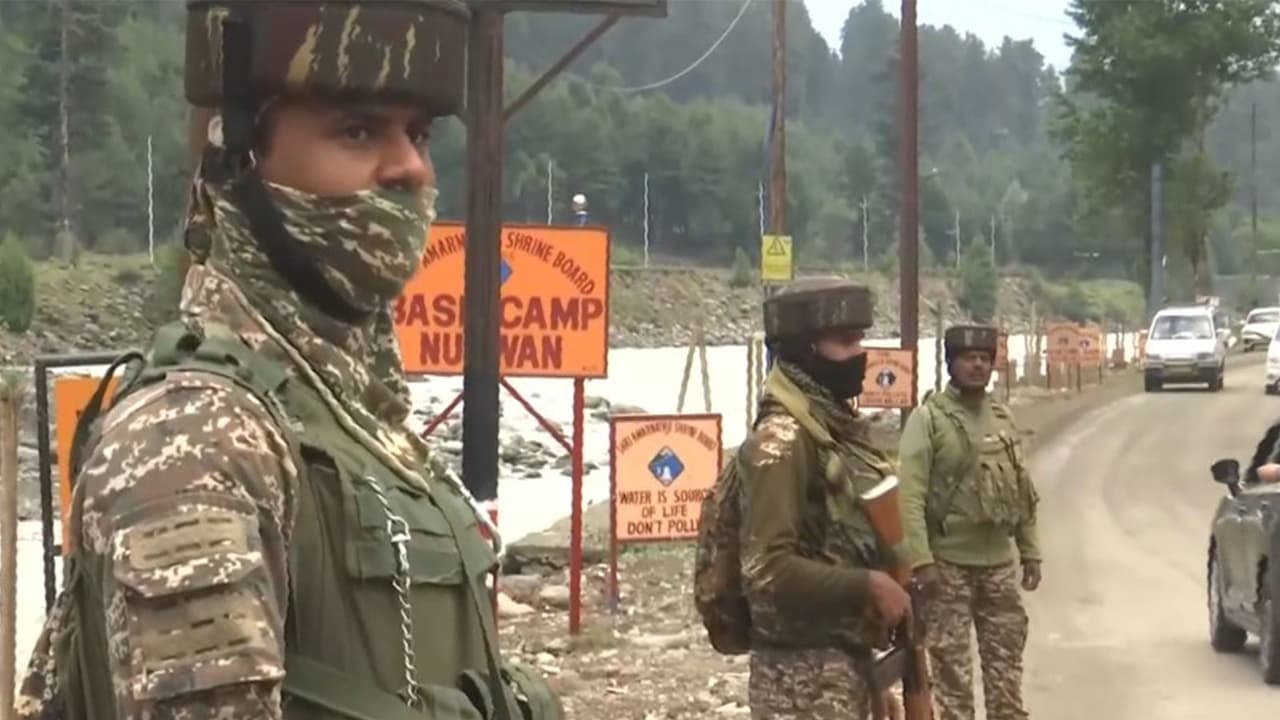
Security forces have created a multi-layered aerial surveillance and anti-drone grid for the Amarnath Yatra. The yatra routes, camps and hilly areas are being closely monitored with advanced technology like drones, IDDIS, anti-aircraft guns and for the first time LLLR radar.
Anantnag (Jammu and Kashmir) [भारत]June 30 (ANI): Security forces have set up a multi-layered aerial surveillance and anti-drone security grid along the Amarnath yatra route, and deployed advanced technologies to ensure foolproof security of pilgrims for the annual pilgrimage beginning on July 3.
24 hour surveillance by drone
Officials said all major security agencies including the Central Reserve Police Force (CRPF), Indian Army, Jammu and Kashmir Police and other partner security organizations are regularly operating drones. Drone flights are conducted during morning and evening hours, with additional flights being conducted as and when required as per Standard Operating Procedures (SOP).
Depending on their operational capability, the drones monitor areas ranging from five to 15 kilometres, providing real-time monitoring of the pilgrimage route, transit camps and surrounding hilly terrain. Around 100 transit camps established on both the routes of Amarnath Yatra (Pahalgam and Baltal) are under constant aerial surveillance. Apart from these camps, surveillance systems have also been installed at strategically located higher peaks to keep a close watch on the sensitive areas and activities on the route.
Impenetrable anti-drone protection shield
The entire anti-drone network is coordinated by the Army Air Defense (AAD), which oversees air security along the entire pilgrimage route. As part of the anti-drone security framework, the Integrated Drone Detection and Interceptor System (IDDIS) has once again been deployed after its successful use during last year’s visit. Officials said each security agency has to take prior permission before flying their drones to avoid any confusion or misidentification.
Both soft-kill and hard-kill capabilities
IDDIS is equipped with both soft-kill and hard-kill capabilities. The soft-kill mechanism neutralizes enemy drones by jamming their communication and navigation systems, while the hard-kill capability can physically destroy or shoot down any dangerous drone using laser-based interception technology.
Anti-aircraft guns also deployed
Apart from electronic counter measures, the Army has temporarily deployed L-70 and ZU anti-aircraft guns to provide protection from possible air threats during the Amarnath Yatra. These surface-to-air weapon systems can effectively secure areas within a radius of more than five kilometers around key locations.
LLLR radar used for the first time
In a significant technological upgrade this year, Low Level Lightweight Radar (LLLR) has been deployed for the first time during the Amarnath Yatra. This radar operates in two surveillance modes, capable of detecting aerial objects flying at low altitude at a distance of 20 to 50 kilometers. Once an unknown object is detected, the system immediately sends information to the central control room, allowing security forces to take quick and coordinated action.
Officials said the integrated surveillance network aims to ensure a safe and secure pilgrimage amid tight security arrangements in Jammu and Kashmir.
The 57-day annual pilgrimage begins on July 3 via two routes, including the traditional 48-km Nunwan-Pahalgam track in Anantnag and the shorter 14-km Baltal route in Ganderbal district. This journey will end on 28th August. (ANI)
(Except for the headline, this story has not been edited by Asianetnews Editorial staff and is published from a syndicated feed.)