Mpox, a viral disease that has drawn international attention because of outbreaks involving different virus variants, is the subject of a new study by Indian scientists. The research found that two virus forms, known as Clade Ib and Clade IIb, produced broadly similar symptoms and patterns of viral presence in infected rabbits. The findings offer useful information for understanding the disease and developing ways to evaluate potential treatments and preventive measures. However, the results come from an animal study and should not be interpreted as proof that both variants behave identically in humans.
Skin Lesions Appeared Around Five Days After Infection
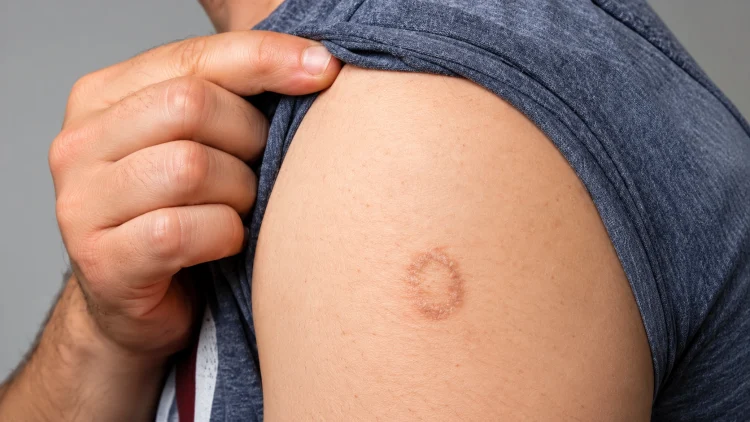
Researchers used New Zealand White rabbits to study the effects of the two Mpox virus clades. Following infection, the animals developed raised, reddish skin lesions at around five days. Some lesions became darker red over time and eventually formed scabs, reflecting changes in the affected skin as the disease progressed.
Over approximately two weeks, several of the lesions began to heal. The scientists reported no major differences in the symptoms or their severity between rabbits infected with Clade Ib and those infected with Clade IIb. This similarity suggests that, under the conditions tested, the two virus forms produced comparable clinical signs in the animal model.
The timing and appearance of the lesions were important observations because skin changes are among the recognised features of Mpox infection. Nevertheless, the course of infection in rabbits may differ from that in people. Further research is needed to establish how closely these observations reflect the disease’s progression in humans.
Virus Detected in Several Body Tissues
The investigation also examined tissue samples to determine where viral material could be detected after infection. The researchers reported evidence of the virus in samples from the nose, skin and testicular tissue. These findings indicate that the infection was not limited to the visible skin lesions in the animals studied.
Detecting viral genetic material in a tissue sample does not automatically establish that infectious virus is present there or that the tissue can transmit the infection. Additional laboratory testing may be required to determine whether the detected material represents active, infectious virus and to understand the significance of its presence.
The findings may help scientists investigate how Mpox affects different parts of the body and identify which tissues require closer examination in future studies. They may also help researchers refine animal models used to assess the disease and test possible medical interventions.
Viral Material Found in Rabbits Without Clear Symptoms
Another observation involved animals that did not display obvious signs of illness. In each of the two study groups, samples from one rabbit contained the virus’s genetic material despite the absence of clear clinical symptoms.
This result highlights an important distinction between visible illness and laboratory evidence of infection. An animal may not show readily identifiable symptoms even when testing detects viral material. However, the observation alone does not establish how frequently symptom-free infection occurs or whether the same pattern applies to people.
For researchers, such cases underline the value of combining clinical observations with laboratory analysis. Relying only on visible skin lesions could leave some infections undetected in an experimental setting, making diagnostic testing an important part of disease research.
Findings Could Support Research Into Treatments and Prevention
The Indian Council of Medical Research (ICMR) describes Mpox as a viral disease that can cause fever, body aches, swollen lymph nodes and skin lesions. Symptoms can vary, and the appearance of a rash is not necessarily identical in every infected person.
The comparison between Clade Ib and Clade IIb may provide a useful foundation for further studies evaluating antiviral medicines, vaccines and other preventive approaches. Scientists can use animal models to investigate disease progression and examine how potential interventions perform before moving to appropriate human research.
At the same time, the study’s conclusions need to be considered within their limits. Results obtained from rabbits cannot directly predict the severity, transmission or clinical course of infection in humans. Larger and more detailed investigations will be needed to understand whether the similarities observed in this experiment hold true across different populations and clinical settings.
The research adds to scientific efforts to understand Mpox and its different clades. Its most important contribution is the observation that the two variants produced broadly similar symptoms and tissue findings in the tested rabbits, providing researchers with further evidence to guide future investigations.