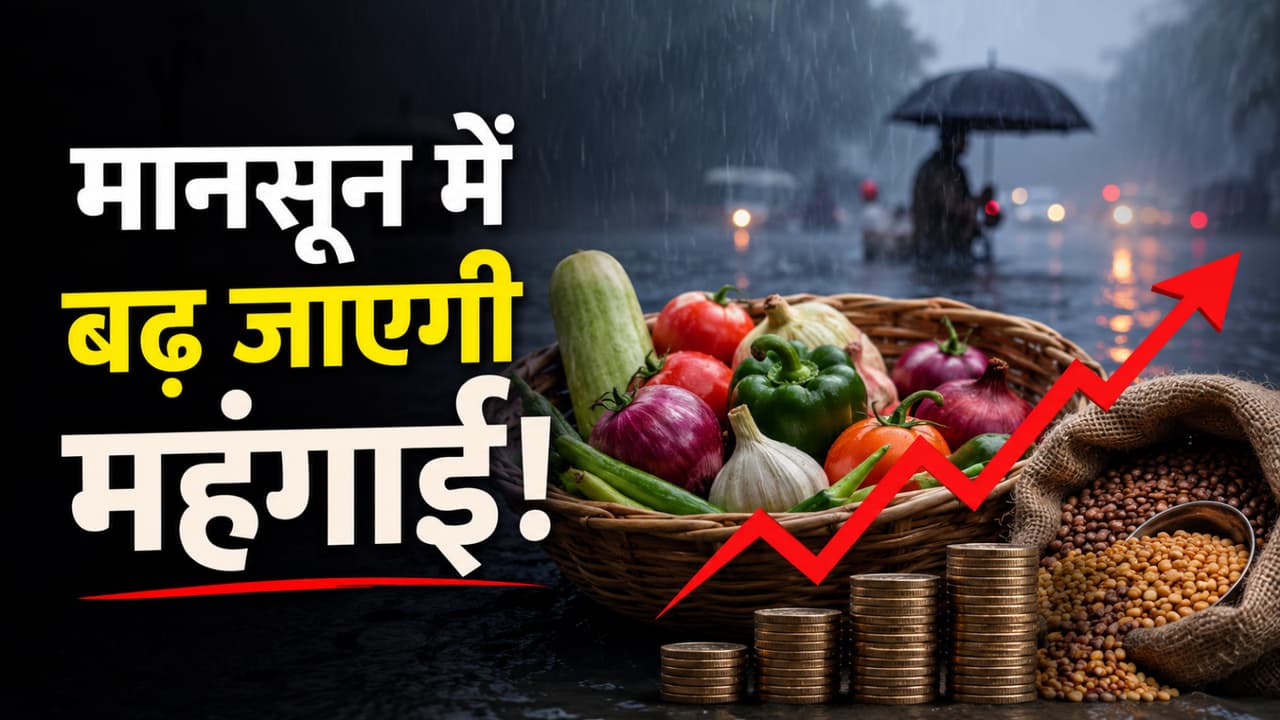
Monsoon 2026: Why is Monsoon 2026 considered so important for India’s economy? How can El Nino and weak rains affect farmers, inflation and rural markets? If the monsoon is below normal, what will be the impact on the pockets and kitchens of common people?
Monsoon And Inflation India: Monsoon has arrived in India, monsoon in India is not just water falling from the sky; It quenches the thirst of our fields, decides the movement of the stock market and gives direction to the country’s budget. A good rain brings prosperity to the country, while less rain spoils both the budget of the policies and the kitchen of the common man. This year, the monsoon of 2026 has once again brought a tough test for our economy. Former Finance Minister Pranab Mukherjee had rightly said that Monsoon is the real Finance Minister of India.
Shadow of El Nino and warning from weather department
The forecasts issued by the Indian Meteorological Department (IMD) for the south-west monsoon of 2026 are worrying. According to the Meteorological Department, the monsoon this year is expected to be around 90 percent of the Long Period Average (LPA), and there is a 60 percent chance of rainfall deficit. Monsoon has hit the Kerala coast on June 4, but the shadow of a very strong ‘El Niño’ that is rapidly developing in the Pacific Ocean is looming over it. This situation is indicating the weakest monsoon of the last decade.
Also read: Major action in Malviya Nagar fire: owner of Flourish Hotel arrested, investigation intensified
Double attack on farming and fertilizer
Along with the crisis of less rain in the sky, there is also bad news for Indian agriculture from the sea routes. India’s fertilizer supply has been badly affected due to ongoing tensions in West Asia and disruption in shipping in the Strait of Hormuz. The prices of urea and DAP in the international market have increased beyond the pre-war levels, due to which the government’s fertilizer subsidy bill may increase to Rs 2.75 to 3 lakh crore this year. Sensing the uncertainty of monsoon and the threat of El Nino, the government has also reduced its demand estimate for fertilizers for the kharif season of 2026 to 38.39 million tonnes.
Danger of inflation: Heat will reach your kitchen
When fields dry up, it directly impacts your plate. According to reports from ICICI Bank and ICRA, agricultural production may fall due to weak monsoon, which poses a serious risk of increasing food inflation. It is estimated that less rains may lead to a jump of up to 0.4 percent in retail inflation based on Consumer Price Index (CPI) during the financial year 2027, due to which the inflation rate may cross 4.5 percent. In particular, non-irrigated (rain-fed) crops like pulses, oilseeds, spices and coarse grains will be most affected because their irrigation is mainly dependent on rain.
Drying reservoirs: a deepening water crisis
Water shortage is not limited to farms only. According to recent data from the Central Water Commission (CWC), the water level in 13 major reservoirs of the country has fallen below 50 percent of their normal capacity. Water is depleting rapidly in the basin of South and Eastern India. This situation may create a major crisis for drinking water supply, irrigation and hydropower production in the future.
Impact on rural economy and FMCG sector
When farmer’s income decreases, the purchasing power (consumption) of entire rural India decreases. FMCG and automobile companies have become alert about the possibility of slowdown in rural demand. According to an estimate, a 1 per cent decline in below normal rainfall could reduce the growth rate of rural consumption by 0.5 to 0.7 per cent. Tractor sales are considered a key indicator of the rural economy, and ICRA estimates that the growth rate of tractor sales will fall sharply to just 1 to 4 per cent in FY2027, from around 19 per cent last year.
No panic, need planning
The situation is certainly challenging, but we have the means to deal with it. India today has better scientific knowledge, climate forecasting systems and stronger buffer stocks than ever before. El Nino does not always mean complete drought. What is needed is that the government, companies and farmers should plan to deal with this uncertainty and not panic. Only proper implementation of policies and water conservation at the rural level can overcome this economic and natural challenge.
Also read: LDA Anant Nagar: From 1BHK to 2BHK, is there a house for you in the new scheme of LDA?