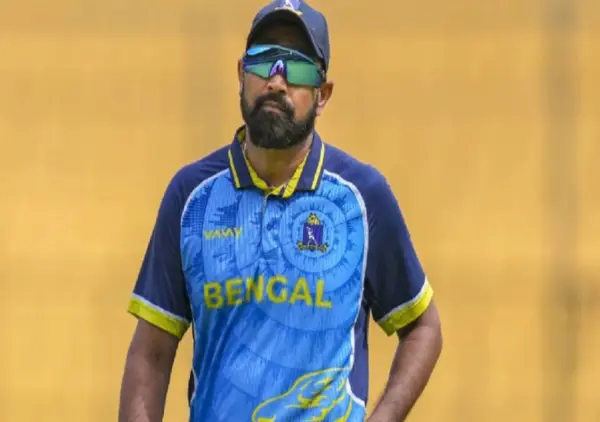
New Delhi:Mohammed Shami‘s continued absence from India’s squad has once again sparked debate, with questions being raised over whether his age is influencing the selectors’ decisions.
However, former India cricketer Aakash Chopra has dismissed the theory, pointing instead to the need for a fully fit Shami and India’s evolving bowling combination.
Shami, one of India’s most experienced fast bowlers, has not been part of the team’s recent plans despite his proven record in international cricket. His omission has led to speculation that India may be looking towards younger options as it prepares for the next phase of its Test and limited-overs teams.
Chopra, however, believes age alone should not be considered a decisive factor when evaluating a player of Shami’s calibre.
Aakash Chopra rejects age theory
The former India opener argued that India has never completely closed the door on senior players simply because of their age.
According to Chopra, the example of Virat Kohli and Rohit Sharma shows that experienced players can remain relevant when they continue to perform at the highest level.
His comments came amid the ongoing discussion around Shami’s future with the Indian team and whether his age could be working against him.
Shami is now in his mid-30s, but Chopra believes the bigger issue is whether the fast bowler is physically ready to handle international cricket rather than simply how old he is.
Virat Kohli and Rohit Sharma examples
Chopra pointed to Kohli and Rohit as examples of how India’s selection policy has evolved.
Both players continued to feature prominently for India well into their 30s, with their experience remaining an important part of the team’s setup.
The point is particularly relevant to Shami because fast bowlers face a different physical workload from batters. Maintaining fitness, rhythm and bowling intensity becomes increasingly important as a fast bowler gets older.
Therefore, the question surrounding Shami may be less about his birth date and more about whether he can consistently meet the physical demands of international cricket.
Shami’s experience remains valuable
Shami has been one of India’s most successful fast bowlers across formats.
His ability to generate seam movement, hit the right lengths consistently and reverse the ball when conditions allow has made him an important part of India’s bowling attack over the years.
He was also a key performer during India’s run to the 2023 ODI World Cup final, finishing the tournament as the leading wicket-taker.
His experience of playing in different conditions is another factor that could work in his favour if he is fully fit.
However, India now has several younger fast-bowling options, increasing competition for places.
Fitness could be the bigger concern
For a fast bowler, selection is closely linked to physical readiness.
Shami has dealt with fitness problems in recent years, including an ankle injury that required surgery after the 2023 World Cup. His return to competitive cricket has therefore been closely monitored.
The Indian team management must assess whether he can handle the workload required at international level and whether his current form warrants selection ahead of other options.
This makes his situation different from that of a batter who may be able to manage workload through playing fewer matches.
India have plenty of bowling options
India’s fast-bowling department has developed considerable depth.
Jasprit Bumrah remains the team’s premier pace option, while Mohammed Siraj, Arshdeep Singh and other emerging pacers have strengthened the competition for places.
The emergence of younger bowlers means the selectors have greater flexibility than they had during Shami’s peak years.
That does not necessarily mean Shami’s international career is over.
Instead, it means the veteran pacer must demonstrate that he can still provide a level of performance and fitness that justifies his inclusion.
Age is not necessarily the deciding factor
The debate around Shami highlights a broader issue in Indian cricket.
Age can become a factor when selecting players, particularly when teams are planning for the long term. But it is rarely the only consideration.
Performance, fitness, workload, current form, team balance and the requirements of a particular series all influence selection decisions.
Chopra’s reference to Kohli and Rohit reinforces that point.
If a senior player continues to perform and remains physically capable of meeting the demands of international cricket, age alone does not necessarily make him unsuitable.
Shami’s India future remains uncertain
For now, Shami’s immediate international future remains unclear.
India’s selectors will have to weigh his experience and proven ability against his fitness status and the performances of younger bowlers competing for the same positions.
If Shami can maintain his fitness and rediscover his best rhythm, his experience could still prove valuable in major international competitions.
The bigger question, therefore, may not be whether Shami is too old, but whether he is fit and effective enough to earn his place in India’s best XI.