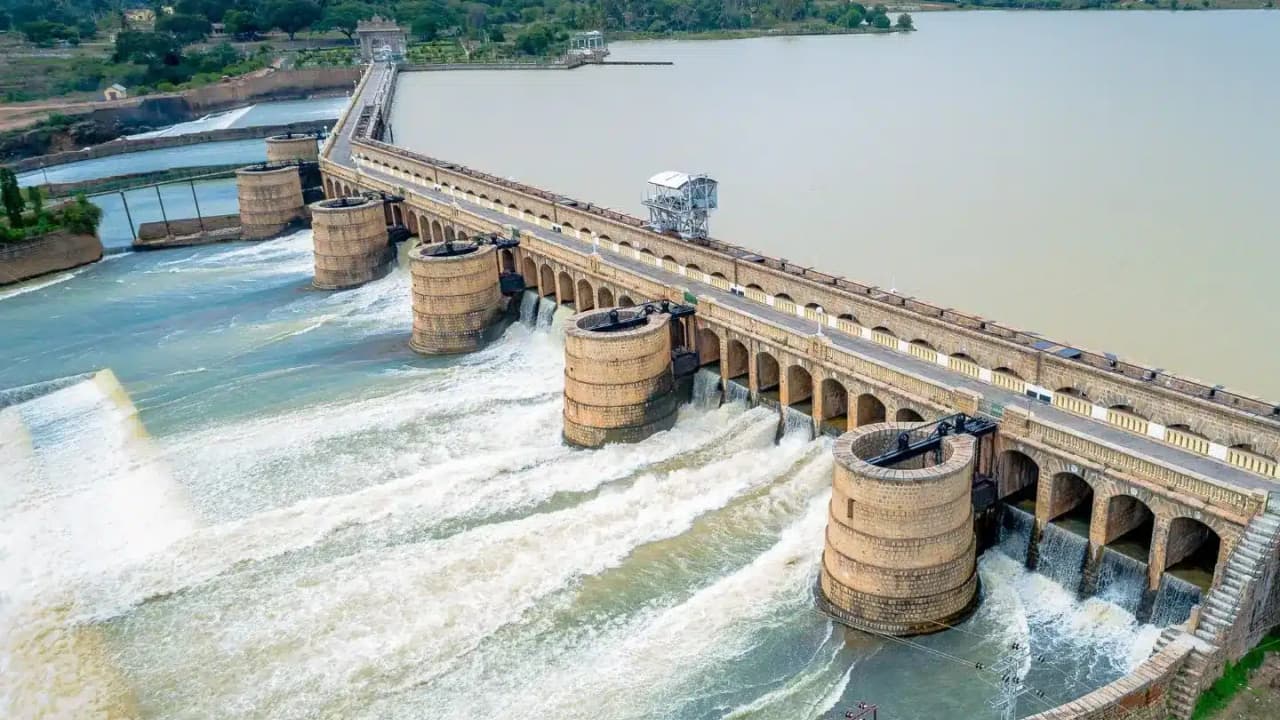
KRS Dam in Mandya has dropped to 99 feet, raising serious concerns over drinking water supply and irrigation in Karnataka. With low inflow and high outflow, officials warn of a worsening water crisis if monsoon rains are delayed further.
The situation in Mandya district is becoming increasingly concerning as the water level in the Krishna Raja Sagara Dam (KRS) continues to decline daily. The dam, a crucial lifeline for the region, has now dropped to just 99 feet, raising serious concerns over drinking water availability and irrigation needs. With monsoon rains yet to arrive, officials fear a worsening water crisis in the coming weeks.
KRS Dam Level Falls Below Critical Mark
The full capacity of the KRS dam is 124.80 feet, making the current level a significant decline. Although the reservoir has a total capacity of 22 TMC, nearly 7 TMC is classified as dead storage, leaving only about 15 TMC of usable water. Authorities are now under pressure to prioritise drinking water supply over agricultural usage due to limited availability.
Sharp Imbalance Between Inflow And Outflow
The situation has worsened due to a severe mismatch between inflow and outflow. The dam currently records an inflow of just 66 cusecs, while the outflow stands at 4,388 cusecs. This sharp difference is causing a continuous decline in water levels. Officials have warned that if rainfall does not improve by early June, regions dependent on Cauvery water could face a serious drinking water shortage.
Kabini Dam Also Witnessing Low Levels
The situation at the Kabini Dam is also concerning. The current water level stands at 2,260.81 feet (7.63 TMC) against a maximum capacity of 2,284 feet. Inflow is recorded at 112 cusecs, while outflow is 1,200 cusecs, indicating a steady decline in storage levels.
Rising Concerns Across Cauvery Basin
With both KRS and Kabini dams witnessing falling water levels, several districts in Karnataka are facing increasing water stress ahead of summer. The situation has raised alarm among officials, as delayed monsoon rains could severely impact both agriculture and drinking water supply. Authorities have urged immediate precautionary planning to manage the crisis effectively.