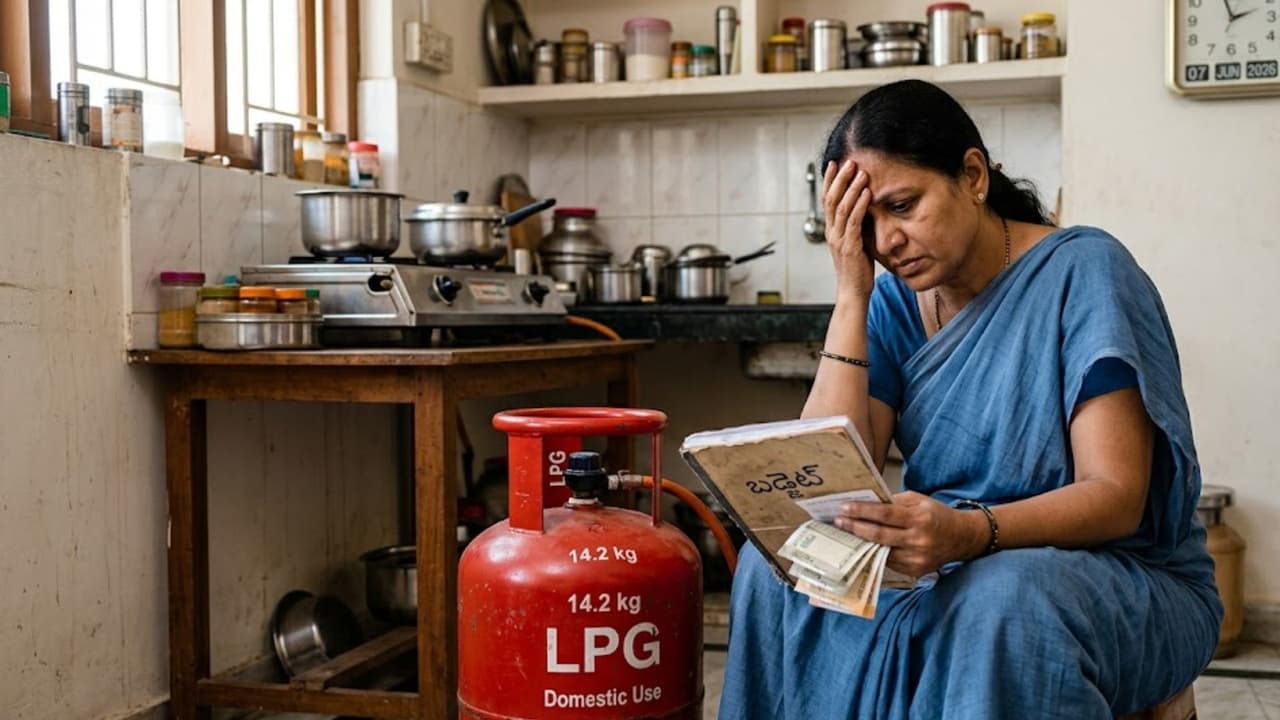
For families already feeling the pinch from the rising cost of daily essentials, here’s more bad news. Oil marketing companies have hiked the price of domestic cooking gas cylinders again. The new rates are already in effect from June 7.<img>Tensions in West Asia and uncertainty over crude oil supply are shaking up global energy markets. This has pushed up our gas import costs. Industry insiders say oil companies are facing a huge financial burden, making this price hike unavoidable. They announced a Rs. 29 increase on every 14.2 kg domestic cylinder, effective from June 7. This is the second such hike in the last three months.<img>With the new prices in effect, here’s what an LPG cylinder now costs in major cities. In Hyderabad, the price went up from Rs. 967 to Rs. 996. In Delhi, it’s up from Rs. 913 to Rs. 942, and in Mumbai, from Rs. 912.50 to Rs. 941.40. Other cities like Kolkata (Rs. 968), Chennai (Rs. 957.50), and Bengaluru (Rs. 944.50) also saw a jump. Patna now has the highest price in the country at Rs. 1031.50.<img>The central government’s subsidies do provide some relief to crores of families. However, public sector oil companies are still taking massive losses on domestic LPG sales. The government has stated that the actual cost to deliver a cylinder is much higher than its market price. In the last financial year alone, these companies lost thousands of crores. To ease this financial stress, the Union Cabinet even approved a special aid package. For beneficiaries under the Pradhan Mantri Ujjwala Yojana, the subsidy is directly deposited into their bank accounts.<img>It’s not just cooking gas. Prices of petrol, diesel, and CNG have also been climbing recently. We’ve seen a significant rise in petrol and diesel rates since mid-May, and CNG prices have also increased. On top of this, commercial gas cylinder prices have also been hiked multiple times. Financial experts believe this latest cooking gas price hike will squeeze the monthly budgets of middle and lower-middle-class families even more. They warn that this pressure on fuel prices is likely to continue until the global market situation stabilises.