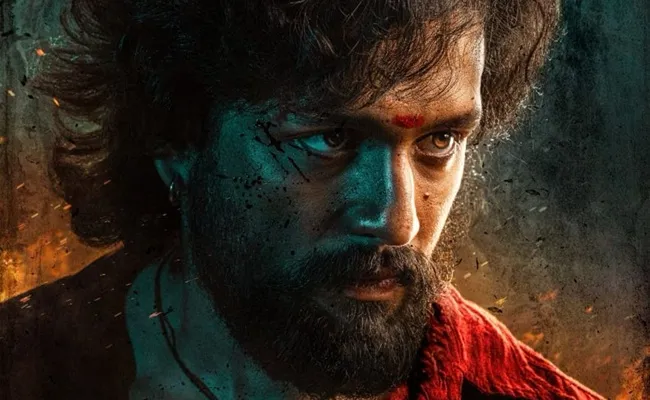
After a gap of nearly three years, Akhil Akkineni returns to the big screen with “Lenin.” The film is crucial not only for Akhil’s career but also for everyone associated with the project.
The trailer created strong buzz and raised expectations with its intense drama and rustic backdrop. Does the film live up to the promise it made?
Story:
Set in a village in Chittoor district during the 1990s, the story revolves around Lenin (Akhil Akkineni) and Vasanth, who share a bond stronger than that of brothers. Vasanth’s mother adopts the orphaned Lenin and raises him alongside her own son.
Circumstances force Lenin to sacrifice his love for Bharathi (Bhagyashri Borse) so that she can marry Vasanth. However, at the wedding, Bharathi stuns everyone by declaring that she is in love with Lenin and cannot marry Vasanth. Realizing that Lenin had given up his love for his sake, Vasanth graciously reunites the lovers, and Lenin and Bharathi get married.
Village politics, greed, and the conspiracies of those closest to them soon put both Lenin and Bharathi in grave danger. What drives Lenin to take up violence and seek revenge?
Performances:
Akhil Akkineni delivers a restrained performance, allowing the story to take center stage instead of relying on typical heroics. He comes into his own in the latter half, particularly during the climax, where he handles the emotional with conviction. There is a noticeable improvement in his acting. Though this is his first attempt at playing a rustic character, he fits the role reasonably well.
Bhagyashri Borse brings charm to the role of Bharathi and shares decent chemistry with Akhil. However, the romance between them lacks emotional depth and never becomes truly engaging.
Kannada actor Pramod leaves a strong impression as Vasanth, with his character gaining significant importance in the second half. Eeswari Rao stands out.
Shivaji is adequate in a brief role, but his character lacks a satisfying arc. Brahmaji appears in a minor role, while Sunil is largely underutilized.
Technical Aspects:
Thaman’s songs are one of the weaker aspects of the film. But his background score in the second half shines.
Leon Britto captures the rural landscape with appealing visuals. Though the film follows the familiar visual template of many recent village dramas, the cinematography remains consistent.
The production design (the entire village set) and production values are good. Editing is neat.
Highlights:
Some well-executed twists in the second half
Pre-interval sequence
Climax
Drawbacks:
Some twists feel too convenient
Similarities to other period revenge dramas
Lack of strong emotional connect
Underwhelming love story
Analysis
“Lenin” feels more like a carefully designed commercial package than an organically narrated story. After a series of disappointing films, Akhil Akkineni desperately needed a film that could restore confidence in his career, and “Lenin” appears to have been crafted with exactly that objective.
Compared to his previous outings, this is certainly a more engaging and satisfying effort.
At the same time, the film rarely feels fresh.
The story and screenplay borrow heavily from the template established by recent period revenge dramas such as “Rangasthalam” and “Pushpa.” The village setting, the 1990s backdrop, the local Jathara centered around the Draupadi deity, and the series of twists in the latter half all seem designed to recreate a familiar commercial formula rather than present something original.
Although the world-building is decent, the first hour moves at a sluggish pace. Very little of significance happens until the pre-interval twist, which finally injects momentum into the proceedings.
The second half is stronger. A couple of well-executed twists and an engaging climax keep the audience invested. While some of the narrative turns feel overly convenient, the latter half is consistently more engaging than the first.
The film also suffers from uneven character writing.
The major problem with this film is that it has too many characters, yet it fails to do justice to any of them by giving them a well-developed character arc. The emotional core is not established effectively, making it difficult to connect with the characters. Even the love story is limited to just four scenes, leaving it underdeveloped.
The character tracks of Shivaji, Getup Srinu, Praveen, Brahmaji, the actor who played Raghava Reddy, Satru, Sunil, and others are inadequately written. Instead, the entire narrative remains heavily focused on Vasanth, the character played by Pramod Panju. When that itself is enough to bring enough drama, why those many other characters is the question.
In fact, a few characters seem to have been reduced significantly during editing, leaving them without proper arcs or purpose.
Overall, “Lenin” is a calculated commercial entertainer aimed at giving Akhil Akkineni a much-needed comeback. It borrows liberally from successful films in the same genre but still manages to deliver a few effective twists and a reasonably engaging second half. While not everything works, it is undoubtedly a better outing than Akhil’s previous films. However, the film could have been far more impactful with stronger emotional writing and better-developed supporting characters. Even so, it offers enough mass appeal and commercial elements to satisfy its target audience, making it a fairly watchable one-time entertainer.