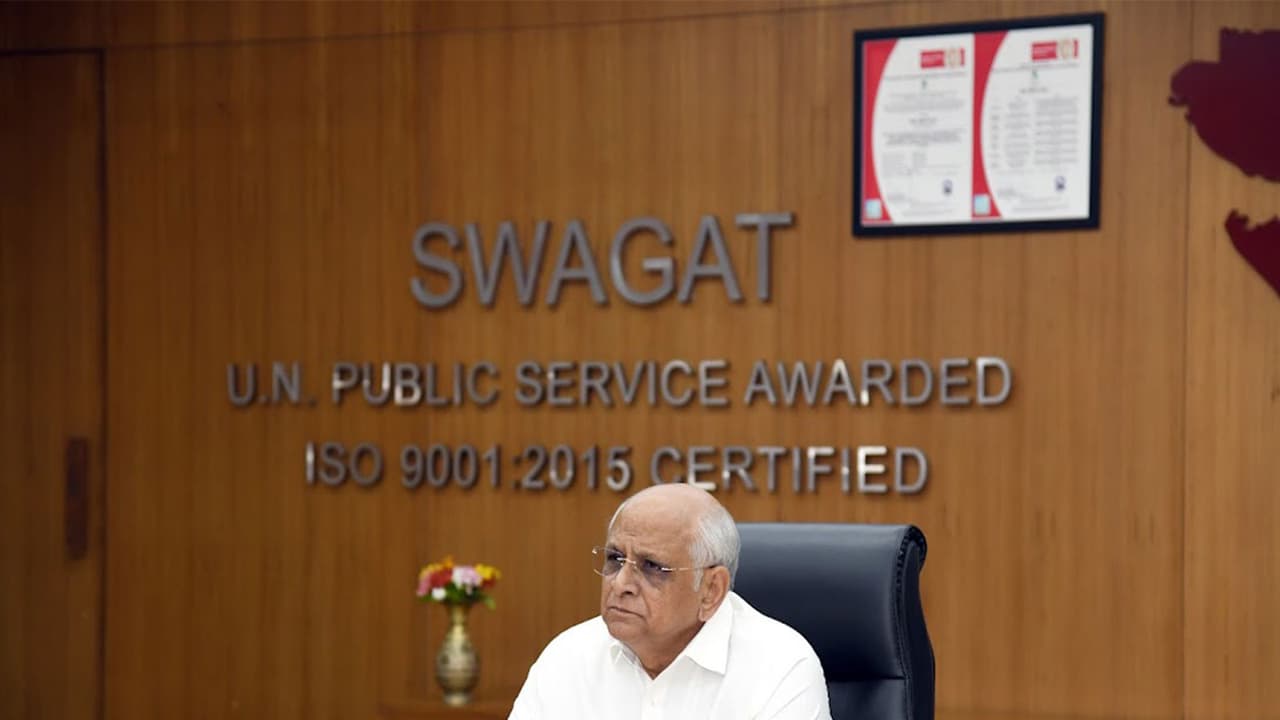
Now the allocation of government land will speed up in Gujarat. Chief Minister Bhupendra Patel has drastically increased the financial powers of collectors and DDOs. This decision will promote ease of doing business and work will be completed at the district level itself.
In a significant step to improve ease of doing business and streamline administrative processes, Gujarat Chief Minister Bhupendra Patel on Tuesday announced a substantial increase in the financial powers of district collectors and district development officers (DDOs) with respect to allocation of government land. According to the Chief Minister’s Office (CMO), the decision is aimed at expediting infrastructure development, industrial growth and social and public purpose projects by allowing matters to be resolved at the district level.
In this regard, the Chief Minister has decided to substantially increase the financial powers of District Collectors for allotment of government land and land grants for public undertakings and various purposes as well as the financial powers of DDOs for Gamtal plots. Under the leadership of Chief Minister Bhupendra Patel, the state government has consistently adopted the approach of improving ease of doing business by implementing administrative reforms and comprehensive simplification of procedures. Taking another important step in this direction, the Chief Minister has increased the powers of District Collectors and District Development Officers to speed up the process of government land allotment.
Financial limits increased for collectors
According to the release, the financial limit for district collectors to allot land up to 2 hectares to state government boards and corporations has been increased from Rs 15 lakh to Rs 1 crore. Similarly, the limit for allotment of land up to 1 hectare to central government departments for public purposes has been increased from Rs 15 lakh to Rs 50 lakh. Further broadening the scope of decision making at the local level, the financial limit for allotment of land for residential purposes for individuals and government employees has been increased from Rs 1 lakh to Rs 20 lakh. For co-operative housing societies, this limit has been increased from Rs 6 lakh to Rs 50 lakh, while the limit for allotment of land for commercial purposes through auction has been increased from Rs 1 lakh to Rs 5 lakh. Additionally, the financial limit for co-operative warehouses and other institutions has been increased from Rs 3 lakh to Rs 15 lakh.
DDO’s powers also increased
Similarly, the powers of District Development Officers (DDOs) for allotment of Gamtal plots have also been revised. The limit for individual residential plots has been increased from Rs 20,000 to Rs 1,00,000, while for co-operative housing societies the limit has been increased from Rs 1.5 lakh to Rs 7.5 lakh. For milk cooperative societies and rural grids, this limit has now been increased from Rs 20,000 to Rs 1,00,000.
What will be the benefit of the decision?
As a result of this decision of the Chief Minister, now the cases can be resolved at the district level only. Since land records and site related information are easily available at the local level, the administrative process will become shorter and more efficient. Further, this decision will enable faster allocation of government land for government projects and industrial and social purposes, thereby accelerating development work and employment generation.
This will also ensure that the possession price/premium amount for government land is deposited into the state treasury first. Since District Collectors and DDOs have now been empowered to take decisions at the local level, applicant institutions and government departments will find it easier to complete the follow-up processes at the district level itself.
According to the release, for allotment of land to State Government Boards/Corporations and Departments of the Government of India, if the possession price/premium is not paid within 90 days of being informed by the District Collector, the Collector will now have the power to grant extension till the completion of the three-year tenure of the District Land Appraisal Committee. This will reduce repetitive administrative processes. (ANI)
(Except for the headline, this story has not been edited by Asianetnews Editorial staff and is published from a syndicated feed.)