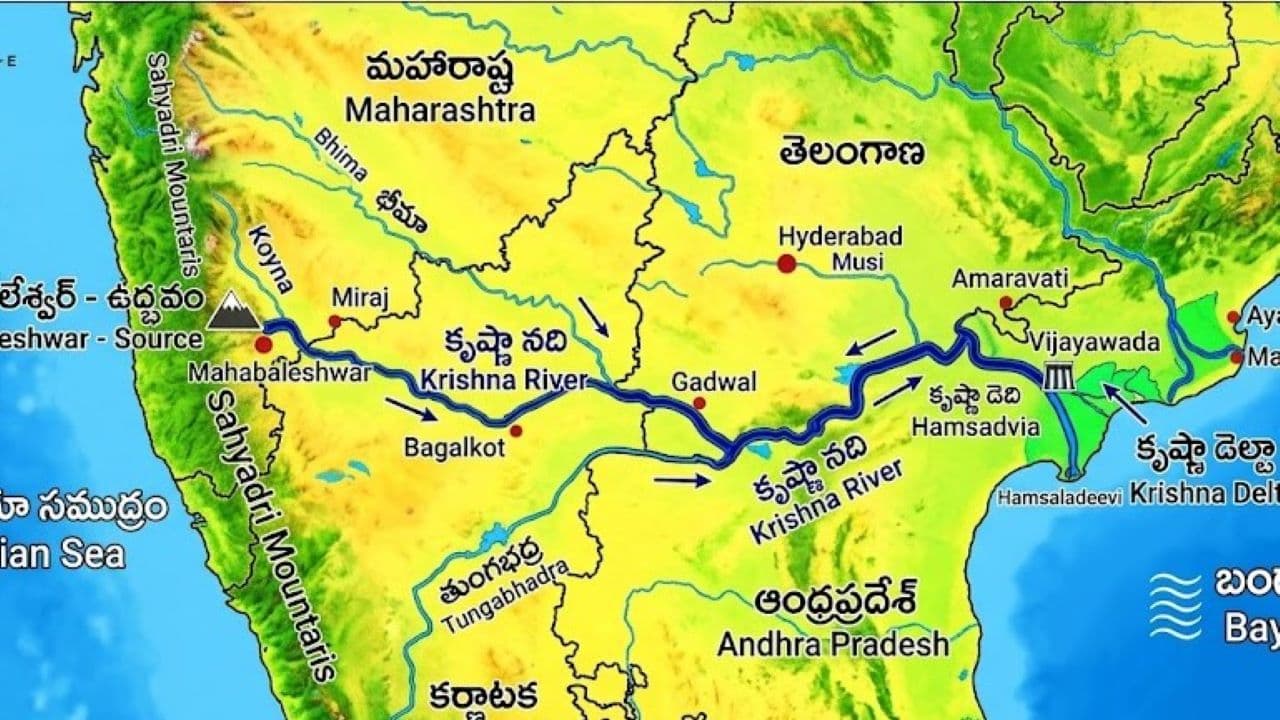
The southwest monsoons provide the main rainfall for the Krishna River basin. Central Water Commission data indicates that the basin receives its major rainfall between June and October. The region records significant rainfall especially during July, August, and September. The monsoons heavily influence the water flow in the Krishna River. The basin often faces flood situations during years of heavy rainfall.
Massive projects on the river
The Krishna River acts as a lifeline for the economy and agriculture of South India. The river basin hosts many massive irrigation and hydroelectric projects. The Koyna, Almatti, Narayanpur, Srisailam, Nagarjunasagar, Pulichintala, and Prakasam Barrage stand as key projects on this river. Authorities use the Krishna waters through these projects to meet irrigation, drinking water, and power generation needs.
A long journey despite the nearby sea
The Krishna River teaches us an interesting geography lesson. The land slope, mountains, and terrain decide a river’s journey. The river takes birth just 64 kilometers from the Arabian Sea. But it crosses the Deccan Plateau and travels east. The river gathers many tributaries, waters thousands of villages and farms, and finally ends its journey in the Bay of Bengal.