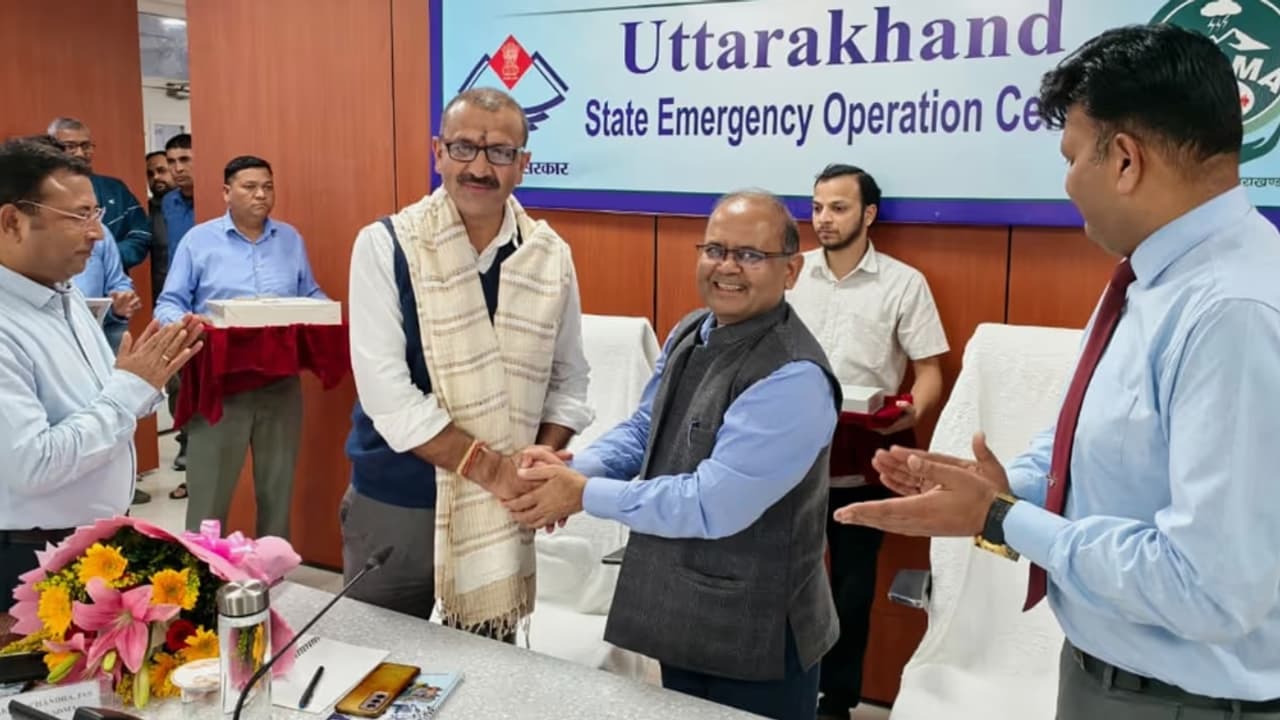
Himachal Pradesh official Deepak Rathore visits Dehradun to review Uttarakhand’s Kedarnath Yatra monitoring, real-time alerts, GLOF preparedness, Quick Response Teams and disaster management technology.
Monitoring weather changes, road conditions and rising pilgrim numbers is crucial during the Kedarnath Yatra. In Uttarakhand, live surveillance, real-time alerts and coordination between multiple agencies play an important role in managing these challenges. Now, Himachal Pradesh State Disaster Management Authority Vice-Chairman Deepak Rathore visited Dehradun to understand these systems and explore ways to strengthen disaster preparedness in the two Himalayan states.
During the visit, discussions covered Char Dham Yatra monitoring, glacier lake outburst floods (GLOFs), emergency response arrangements and the use of technology to improve disaster management.
How Is The Kedarnath Yatra Monitored?
The Char Dham Yatra attracts large numbers of pilgrims travelling through mountainous terrain, where changing weather and road conditions can create challenges. The Uttarakhand State Disaster Management Authority (USDMA) uses the State Emergency Operations Centre (SEOC) to support monitoring and emergency coordination.
During his Dehradun visit, Rathore was briefed on how the administration tracks the Kedarnath pilgrimage, monitors weather and route-related information, and coordinates with different agencies when necessary.
The objective is to gather and share information promptly so that authorities can respond to changing conditions and take appropriate measures to support pilgrim safety.
Real-Time Alerts For Weather And Road Disruptions
Heavy rainfall, landslides and road closures can affect travel across Himalayan regions. Timely alerts and effective communication are therefore essential for managing emergencies.
Rathore reviewed the functioning of the State Emergency Operations Centre and learned how information received from different sources and agencies is organised and communicated to the public. The system focuses on weather monitoring, real-time alerts and coordination among departments to help authorities respond to emerging risks.
GLOF Threats And Disaster Preparedness Discussed
Glacier lake outburst floods are another concern for Himalayan states. A GLOF occurs when water stored in a glacial lake is suddenly released, potentially causing destructive flooding downstream.
Rathore was briefed on Uttarakhand’s efforts to address this risk. He noted the similarities between the geographical conditions and disaster-related challenges faced by Uttarakhand and Himachal Pradesh, highlighting the value of sharing experiences and preparedness strategies.
Quick Response Teams At Tehsil Level
The visit also covered Quick Response Teams (QRTs) established at the tehsil level in Uttarakhand. These teams are intended to support faster action during emergencies and help deliver assistance according to local requirements.
Disaster Management and Rehabilitation Secretary Vinod Kumar Suman briefed Rathore on the authority’s initiatives, including efforts to improve coordination and strengthen relief and rescue operations through technology.
Bhudev App And Cooperation Between States
Rathore appreciated Uttarakhand’s standard operating procedures (SOPs) and Bhudev app. Officials also discussed greater cooperation between Uttarakhand and Himachal Pradesh in addressing landslides, heavy rainfall and other mountain-related hazards.
Several USDMA officials and disaster management experts attended the meeting, which focused on sharing practices and improving preparedness across the two states.