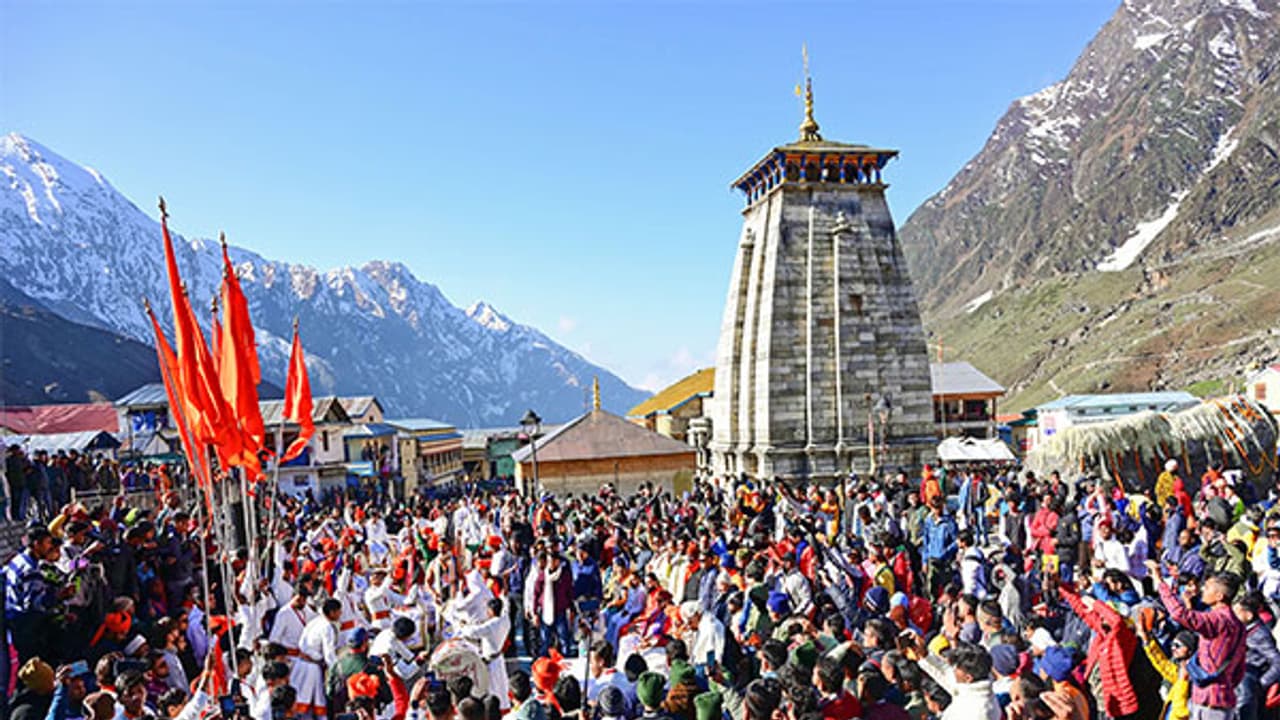
Uttarakhand’s Char Dham Yatra began on April 19. After Gangotri and Yamunotri, the doors of the Kedarnath Dham will be opened on April 22. The first thing done after opening the temple is removing the ‘Bhishma Shringar’ of Baba Kedarnath.
Kedarnath Temple Opening 2026: Every year, the Char Dham Yatra in Uttarakhand begins from Akshaya Tritiya. This yatra includes Gangotri-Yamunotri, Kedarnath, and Badrinath Dhams. The doors of the Gangotri and Yamunotri temples were opened for devotees on April 19. Now, on April 22, the Kedarnath temple’s doors will open to the general public. As soon as the temple opens, the first ritual is to remove Baba Kedarnath’s ‘Bhishma Shringar’. Read on to know more about this special decoration…
What is Bhishma Shringar and why is it done?
The Kedarnath temple remains closed during the winter due to heavy snowfall in the area. Every year, around Diwali, the temple is closed until Akshaya Tritiya. Before closing, the ‘Bhishma Shringar’ is performed on the Kedarnath Shivling. In this ritual, the Shivling is coated with 6 litres of pure ghee. After this, a specially prepared white cotton cloth is wrapped around it. This is done so that the Shivling is not affected by the harsh winter and remains in its natural form.
Who performs Baba Kedarnath’s Bhishma Shringar?
The Bhishma Shringar of Baba Kedarnath is performed by priests from the Veerashaiva Lingayat community of Karnataka. This entire process takes about 5 hours. After the shringar, seasonal fruits and dry fruits are offered to Baba Kedarnath. This offering is called ‘Argha’. After this, the doors of the Kedarnath Dham are closed.
Who opens the doors of Kedarnath Dham?
After Akshaya Tritiya, it is the priests from the Veerashaiva Lingayat community of Karnataka who open the doors of Kedarnath Dham and are the first to remove the Bhishma Shringar. After this, an ‘abhishek’ is performed on the Shivling with Ganga water and special mantras. Then, a ‘Panchamrit snan’ is done, and a special shringar is performed on Baba Kedarnath with new flowers, a ‘bhasm’ (ash) paste, and a sandalwood tilak. Only after all this are the general devotees allowed to have darshan.
Disclaimer
The information in this article has been sourced from religious texts, scholars, and astrologers. We are only a medium for bringing this information to you. Users should treat this information for informational purposes only.